
 English
  Français
  Tiếng Việt
  Italiano
  Nederlands
  Türkçe
  Svenska
  Polski
  Română
  Latviešu
  한국어
한국어  Русский
  Español
  Deutsch
  Українська
  Português
  العربية
  Indonesian
  Čeština
  Suomi
Suomi  Eesti
Eesti  Български
  Dansk
Dansk  Lietuvių
  Bokmål
  Slovenčina
  Slovenščina
  Ελληνικά
  Magyar
  עברית
עברית 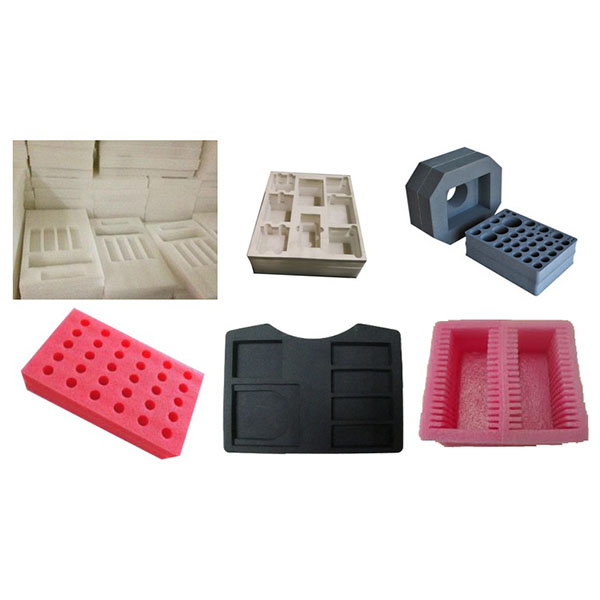
vacuum-formed foam parts for vortex instrument use
vacuum-formed foam parts are functional cushioning and protective components manufactured from foam materials using thermoforming or vacuum forming processes.
Description
vacuum-formed foam parts feature light weight, shock-absorbing cushioning, easy cutability, and precise conformity, and are commonly used as packaging inserts for precision products, instrument protection, electronic component separators, instrument brackets, display trays, and industrial vibration-damping components.
Applicable materials and specifications:
- Common foam types: polyethylene foam (PE foam), polyurethane foam (PU foam), EVA foam, cross-linked foams (XPE/XPEE), etc.; select the appropriate material based on cushioning, resilience, and durability requirements.
- Density and hardness: different density and hardness levels can be selected according to protection needs, ranging from ultra-soft shock-absorbing to firmer support materials.
- Thickness range: material thickness typically ranges from a few millimeters to several tens of millimeters; the final tray or liner thickness is determined by product shape and required protection level.
- Surface and functional treatments: supports surface lamination, antistatic treatment, flame-retardant formulations, or oil/moisture resistance treatments to meet various application specifications.
Key forming process points:
- Material preparation: choose homogeneous, uncontaminated foam raw materials; perform cutting or lamination pretreatment when necessary to meet forming size requirements.
- Heating control: uniformly heat the foam material to achieve good plastic deformation properties; temperature and dwell time must be precisely adjusted according to material type and thickness.
- Vacuum and pressure forming: use vacuum suction or a combined vacuum-pressure method to press the foam onto the mold, ensuring detail reproduction and uniform wall thickness distribution.
- Cooling and setting: cool promptly after forming and maintain mold positioning to ensure dimensional stability and shape retention.
- Post-processing: includes trimming, cutting, bonding, punching, or lamination of protective films, etc., to meet assembly and usage requirements.
Structure and design recommendations:
- Pocket and support design: optimize pocket depth and support points according to the shape of the protected item to ensure even load distribution and avoid local compression failures.
- Layering and zoning: use layered or zoned designs for areas with different sensitivity levels to provide differentiated cushioning protection.
- Removability and assembly: design openings or snap features for easy insertion and removal to improve assembly efficiency and usability.
- Stacking and space saving: consider stacking features of trays or liners to optimize transport and storage space utilization.
Advantages and features:
- Lightweight and effective cushioning: foam materials can provide excellent energy absorption and cushioning performance at very low weight.
- High formability and precise fit: the forming process can achieve complex contours and precise fits, enhancing product protection.
- Cost and lead-time advantages: tooling and processing costs are relatively economical, suitable for packaging inserts and small-to-medium batch custom production.
- Eco-friendly and recyclable options: recyclable or environmentally friendly material formulations can be selected to meet green packaging requirements.
- Multifunctionality: can integrate antistatic, flame-retardant, and oil-resistant treatments to expand application scenarios.
Typical application scenarios for vacuum-formed foam parts:
- Electronics and precision instruments: liners and separators for fragile items such as PCBs, modules, sensors, and lenses.
- Medical devices and reagent kits: instrument trays and cushioning/positioning for reagent containers.
- Industrial equipment and components: transport liners, vibration-damping pads, and protective trays for precision parts.
- Consumer products and displays: product display liners, presentation trays, and gift box fillers.
- Logistics and turnover: reusable turnover liners and packaging solutions compatible with automated sorting equipment.