
 English
  Français
  Tiếng Việt
  Italiano
  Nederlands
  Türkçe
  Svenska
  Polski
  Română
  Latviešu
  한국어
한국어  Русский
  Español
  Deutsch
  Українська
  Português
  العربية
  Indonesian
  Čeština
  Suomi
Suomi  Eesti
Eesti  Български
  Dansk
Dansk  Lietuvių
  Bokmål
  Slovenčina
  Slovenščina
  Ελληνικά
  Magyar
  עברית
עברית 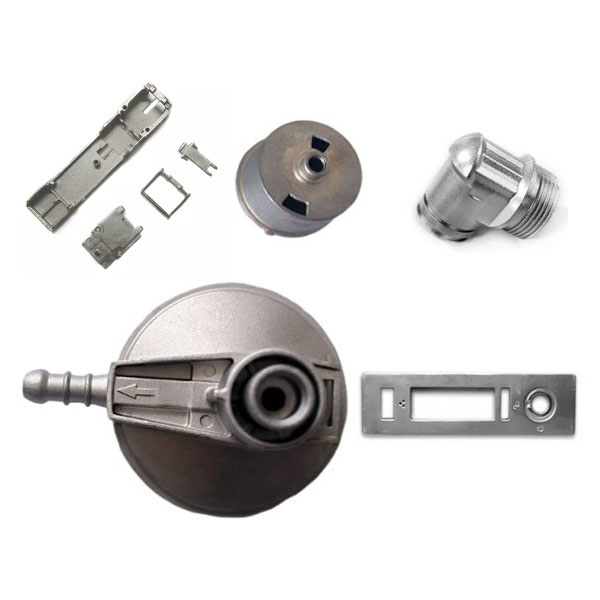
zinc alloy die cast parts for industrial and consumer use
Zinc alloy die-cast parts are produced by injecting molten zinc alloy into high-precision molds and cooling to form; this process is suitable for medium to high production volumes, complex geometries, and parts that require high surface quality.
Description
Zinc alloys have good fluidity and dimensional stability; the molded parts combine strength, corrosion resistance, and excellent surface finish, and are widely used in automotive, home appliances, electronics, hardware accessories, locks, and decorative components.
Typical specifications and tolerances for zinc alloy die-cast parts:
- Size range: Suitable for tiny precision parts as well as medium-sized structural components; specific dimensions are constrained by mold and gating system design.
- Wall thickness recommendations: Optimize wall thickness distribution according to structural and mechanical requirements to avoid too-thin sections that cause poor filling or too-thick sections that cause cold shuts and stress concentration.
- Tolerance control: High dimensional consistency can be achieved through mold design and process parameter control. Critical mating surfaces can be post-machined by turning, milling, or grinding to meet fit tolerances.
Design and mold recommendations:
- Gating system and venting: Reasonably design gates, runners, and vents to reduce porosity, shrinkage, and cold shuts; optimize filling sequence to reduce internal stresses.
- Cavities and parting lines: Optimize parting line locations to facilitate demolding and reduce secondary machining; use side-action slides or movable cores when necessary.
- Ribs and fillets: Use appropriate ribs and transition fillets to increase strength and improve flowability and filling performance.
- Allowance for post-processing: Reserve machining allowance for critical mounting faces or threads to facilitate achieving final fit dimensions.
Production process:
- Mold manufacturing and trial: Manufacture high-precision die-casting molds based on part drawings and perform trial runs and adjustments to confirm the mold and process parameters.
- Die casting forming: Perform injection, holding, and cooling cycles on the die casting machine according to confirmed parameters to obtain initial trial parts and record process data.
- Gate removal and cleaning: Automatically or manually remove gates and flash, perform degassing, cleaning, and necessary heat treatments (e.g., annealing).
- Finishing and surface treatment: Perform machining, thread tapping, plating, painting, or other surface treatment processes as required.
- Inspection and packaging: After dimensional, mechanical, and appearance inspections are completed, package and ship according to requirements.
Surface treatment and decoration:
- Plating: Nickel plating, chrome plating, zinc plating, etc., commonly used to improve corrosion resistance and decorative appearance.
- Coatings: Painting and powder coating provide a variety of colors and weather resistance.
- Chemical treatments: Conversion coatings and passivation can improve substrate corrosion resistance and enhance coating adhesion.
- Polishing and textures: Mirror polishing or specified texture treatments are used to enhance appearance or reduce the perception of scratches.
Applicable industries and application examples for zinc alloy die-cast parts:
- Automotive parts: instrument brackets, door lock assemblies, decorative parts, etc.
- Home appliances and hardware: control panels, handles, locks, and linkage parts.
- Consumer electronics: structural supports, connector housings, and heat dissipation brackets.
- Industrial equipment: gears, brackets, and functional mechanical components.
- Decorative and architectural hardware: handles, hinges, decorative covers, etc.