
 English
  Français
  Tiếng Việt
  Italiano
  Nederlands
  Türkçe
  Svenska
  Polski
  Română
  Latviešu
  한국어
한국어  Русский
  Español
  Deutsch
  Українська
  Português
  العربية
  Indonesian
  Čeština
  Suomi
Suomi  Eesti
Eesti  Български
  Dansk
Dansk  Lietuvių
  Bokmål
  Slovenčina
  Slovenščina
  Ελληνικά
  Magyar
  עברית
עברית 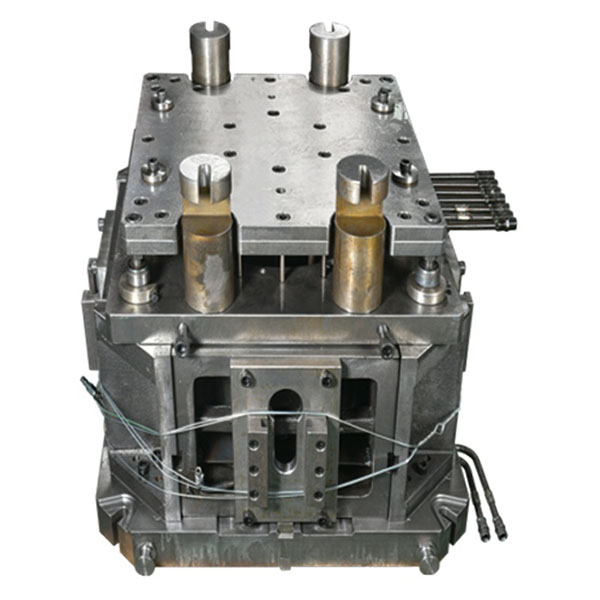
wheel hub low-pressure die casting mould is reliable
Wheel hub low-pressure die casting moulds feed metal by controlled injection and slow pressurization, combined with precise cooling and venting systems, achieving a dense metal microstructure, stable dimensional accuracy, and excellent mechanical properties.
Description
Wheel hub low-pressure die casting moulds are designed and manufactured specifically for producing wheel hub castings using the low-pressure casting process, suitable for high-volume production of wheel hubs for passenger cars, commercial vehicles, and industrial vehicles.
Structure and design key points:
- Cavity design: Optimize parting surfaces, vent grooves, and radii according to the wheel hub geometry to ensure uniform cavity filling and ease of cleaning.
- Runners and gating system: Design a reasonable bottom-pour or side-pour low-pressure gating system to control the melt rise rate and pressure, reducing trapped air and cold shuts.
- Cooling system: Arrange circulating cooling channels or embedded cooling pipes to uniformly control mould temperature, shorten the solidification cycle, and reduce thermal stress.
- Machining allowances and datum surfaces: Reserve machining allowances for subsequent finish machining of mating surfaces and design reliable clamping datums to ensure assembly accuracy.
- Ejection and demoulding mechanisms: Design robust ejection devices and necessary slider mechanisms to ensure reliable demoulding and part removal for complex cavities.
Manufacturing processes:
- Precision machining operations: Use CNC milling, wire EDM (including slow-feed wire cutting), sinker EDM, and precision grinding to ensure high accuracy of cavities and cores.
- Assembly and adjustment: Heat-treated components require precision assembly, fit inspection, and clearance correction to ensure mould closing accuracy and synchronized movement.
- Stress relief and rigidity treatment: Apply stress-relief procedures and rigidity reinforcement designs to the mould structure to prevent deformation and fatigue failure during long-term production.
Trial moulding and process validation:
- Trial moulding process: Conduct first-article trials to verify filling behavior, cooling effectiveness, and venting conditions, recording key parameters such as temperature, pressure, and rise curves.
- Defect analysis and correction: For defects (such as porosity, shrinkage, cold shuts, or local warpage), adjust the gate, cooling, or venting systems and correct the cavity if necessary.
- Process locking: After trial moulding, establish a stable process parameter file to facilitate repeatable mass production and quality control.
Typical application areas of wheel hub low-pressure die casting moulds:
- High-volume production of wheel hubs for passenger cars and commercial vehicles.
- Wheel hubs and connecting parts for special vehicles and construction machinery.
- Cast wheel hub parts requiring high strength, high density, and good surface quality.