
 English
  Français
  Tiếng Việt
  Italiano
  Nederlands
  Türkçe
  Svenska
  Polski
  Română
  Latviešu
  한국어
한국어  Русский
  Español
  Deutsch
  Українська
  Português
  العربية
  Indonesian
  Čeština
  Suomi
Suomi  Eesti
Eesti  Български
  Dansk
Dansk  Lietuvių
  Bokmål
  Slovenčina
  Slovenščina
  Ελληνικά
  Magyar
  עברית
עברית 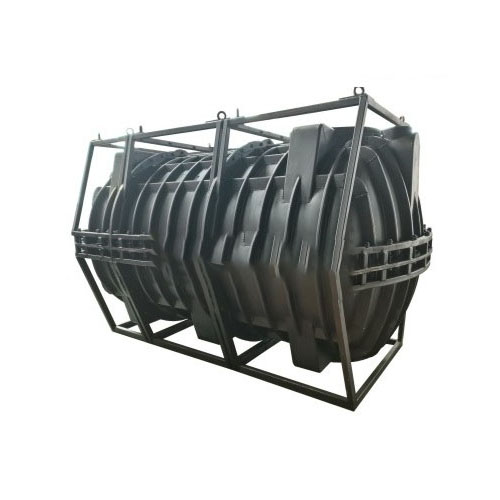
wastewater tank rotomolding mold for reliable storage
The wastewater tank rotomolding mold is specifically designed for rotomolding wastewater and septic tanks and is suitable for producing seamless, corrosion-resistant tanks and structural components with uniform wall thickness.
Description
The wastewater tank rotomolding mold features a rational parting and venting design, supports single-cavity or multi-cavity production configurations, and can accommodate tank models of various capacities and structural requirements, meeting the long-term reliability and weather-resistance needs of municipal, wastewater treatment, industrial, and agricultural applications.
Key features of the wastewater tank rotomolding mold:
- One-piece molding and structural integrity: Achieves seamless, integrated tank bodies through rotomolding, avoiding welding-related corrosion and stress concentrations, and improving sealing and structural strength.
- Uniform wall thickness and rib reinforcement design: Mold design is optimized to achieve uniform wall thickness and can integrate reinforcing ribs or stiffeners to enhance compressive and impact resistance.
- Durable mold materials and heat treatment: The mold body can be made from premium alloy steel or aluminum alloy and be subjected to heat treatment and surface hardening to increase wear resistance and service life.
- Precision machining and fittings interfaces: Uses high-precision machining such as CNC and EDM, and reserves installation positions for standardized flanges, pipe openings, and inserts to facilitate subsequent joint and accessory assembly.
- Thermal management and venting optimization: Internal thermal flow and venting channel design facilitate powder melting, flow, and solidification, reduce molding defects, and shorten cycle times.
- Modularity and interchangeable cores: Supports rapid replacement of cores, end caps, or inlet/outlet assemblies to flexibly produce tanks of different volumes, opening types, and accessory layouts, reducing changeover costs.
- Customizable surface treatments and textures: Can produce smooth, anti-fouling, or anti-slip textured surfaces and supports secondary surface treatment interfaces such as coating, laminating, or printed labeling to meet usage and identification requirements.
- Integrated accessory mounting positions: Pre-set flange locations, lifting eye positions, or inspection openings on the mold allow direct installation of standard accessories after molding, reducing secondary machining.
Applications of the wastewater tank rotomolding mold:
- Wastewater and septic tanks for urban and community wastewater treatment systems.
- Collection and storage tanks for agricultural farming and rural wastewater.
- Storage and transfer containers for industrial wastewater and process liquids.
- Replaceable tanks for mobile or containerized wastewater treatment units.
- Municipal emergency storage and temporary collection facilities.