
 English
  Français
  Tiếng Việt
  Italiano
  Nederlands
  Türkçe
  Svenska
  Polski
  Română
  Latviešu
  한국어
한국어  Русский
  Español
  Deutsch
  Українська
  Português
  العربية
  Indonesian
  Čeština
  Suomi
Suomi  Eesti
Eesti  Български
  Dansk
Dansk  Lietuvių
  Bokmål
  Slovenčina
  Slovenščina
  Ελληνικά
  Magyar
  עברית
עברית 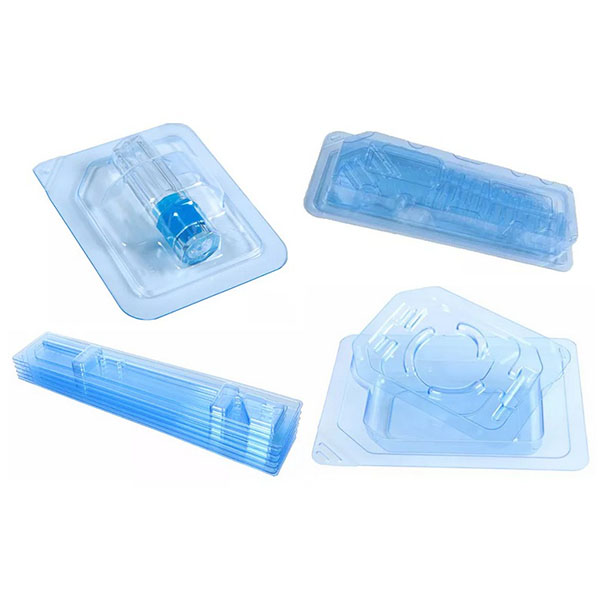
vacuum thermoformed sterile packaging for medical implants
vacuum thermoformed sterile packaging is manufactured from medical-grade thermoplastic sheets using vacuum forming or thermoforming processes combined with strict sterile handling and quality control procedures, and is designed to provide a sterile barrier, reliable fixation, convenient opening, and transport protection.
Description
vacuum thermoformed sterile packaging for medical implants is a high-performance packaging solution specifically designed for implant-grade medical devices and materials. It is suitable for implantable products with high cleanliness and protection requirements, such as joint replacements, spinal implants, cardiovascular devices, and dental implants.
Applicable materials and specifications
- Medical-grade materials: Common materials include medical-grade PET, medical-grade HIPS, medical-grade PS, medical-grade PC, and other thermoplastic sheets certified for biocompatibility and cleanroom use.
- Thickness and strength: Material thickness is typically between 0.3mm and 3mm or can be customized according to product requirements; material selection must balance formability, mechanical strength, and compatibility with sterile packaging.
- Surface and cleaning treatments: Supports post-ultrasonic-clean packaging, cleanroom lamination, and anti-reflective / scratch-resistant textured surfaces to improve usability and inspection convenience.
- Functional formulations: Optional antistatic, non-stick, flame-retardant, or weather-resistant formulations are available, but implantable packaging prioritizes formulations that have passed relevant medical regulations and biocompatibility verification.
Sterility and regulatory compliance:
- Sterile barrier: Packaging design must meet sterile barrier performance and be compatible with appropriate sterilization methods (such as ethylene oxide, irradiation, or plasma sterilization); materials and processes should be compatible with the chosen sterilization method.
- Compliance standards: It is recommended to follow applicable regulations and standards for the target market (such as ISO 11607, ISO 13485, FDA 21 CFR, etc.) for material selection, process validation, and documented management.
- Sterility validation: Includes microbiological barrier testing, leak testing, and post-sterilization integrity testing; provide shelf-life information and sterilization process SOPs and validation reports when necessary.
Key forming process points:
- Material preparation: Use cleanroom-grade sheets and perform cutting and pretreatment in a strictly clean environment to avoid introducing particles or contamination.
- Heating and forming: Set precise heating profiles to ensure even plasticization; use vacuum or combined vacuum-pressure processes to reproduce details and avoid film thinning.
- Molds and positioning: Aluminum or steel molds must be designed with venting slots, locating pins, and cooling channels; mold material and surface treatment selection must meet cleanroom and durability requirements.
- Cooling and demolding: Control cooling rates to ensure dimensional stability and surface flatness; avoid scuffs or microcracks during demolding.
- Post-processing and assembly: In a clean environment, perform CNC trimming, hot folding, ultrasonic welding, bonding, or insert assembly after forming, and inspect critical mating surfaces for quality.
Advantages and features:
- Sterility assurance: In combination with compliant sterilization processes, provides a reliable sterile barrier and integrity to meet the stringent requirements of implantable medical devices.
- Precise positioning: Thermoforming enables highly conforming trays that reduce transport vibration and assembly tolerance risks.
- Rapid customization and low-cost development: Compared with injection molding, tooling costs and sample lead times are lower, making it suitable for early validation and small-batch supply.
- Optional surface and functional features: Can provide transparent inspection windows, textured surfaces, or antistatic treatments to enhance usability and protection.
- Easy integration into the supply chain: Can be designed as trays and boxes compatible with automated feeding or cleanroom assembly lines to improve production efficiency.
Typical application scenarios for vacuum thermoformed sterile packaging:
- Joint and spinal implants: single-piece trays and set trays for hip, knee, and spinal implant components.
- Minimally invasive and cardiovascular devices: support and barrier packaging for precision instruments such as catheters, stents, and valves.
- Dental implants and accessories: sterile packaging boxes for dental implants, abutment screws, and supporting instruments.
- Disposable implant kits: separation and protection for suturing device accessories, insertion tools, and implant kits.
- Medical device kits: multi-component implant kits providing zoned positioning, assembly sequence guidance, and a sterile barrier.