
 English
  Français
  Tiếng Việt
  Italiano
  Nederlands
  Türkçe
  Svenska
  Polski
  Română
  Latviešu
  한국어
한국어  Русский
  Español
  Deutsch
  Українська
  Português
  العربية
  Indonesian
  Čeština
  Suomi
Suomi  Eesti
Eesti  Български
  Dansk
Dansk  Lietuvių
  Bokmål
  Slovenčina
  Slovenščina
  Ελληνικά
  Magyar
  עברית
עברית 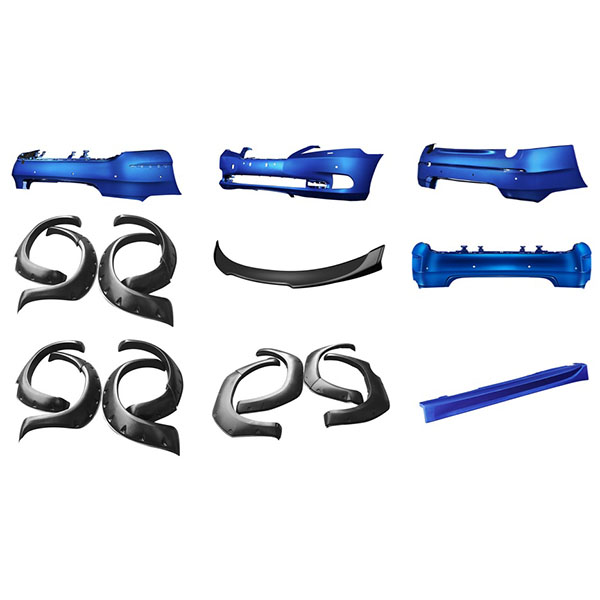
vacuum thermoformed automotive components for interiors
Vacuum thermoformed automotive components are a category of automotive plastic parts and accessories produced from thermoplastic sheets by vacuum or vacuum-pressure forming processes.
Description
The process for vacuum thermoformed automotive components is suitable for interior and exterior trim parts, small structural components, and decorative parts with large sizes or complex surfaces. It combines the advantages of lightweighting, high forming efficiency, strong surface decorability, and cost-effectiveness for low- to medium-volume production, making it appropriate for both mass production and customized requirements.
Key forming process points:
- Material preparation: Ensure sheets are flat, free of inclusions and scratches, and managed by batch; perform lamination or backing when necessary to enhance decorative appearance and structural strength.
- Heating and forming: Set uniform heating profiles and pre-stretch parameters according to material type and thickness; use vacuum or combined vacuum-pressure forming to ensure local detail reproduction and control wall thickness distribution.
- Mold design: Molds commonly use aluminum alloys or steel; optimize venting, locating pins, cooling channel and fixture designs. Mold surface treatment directly affects finished appearance and demolding performance.
- Cooling and demolding: Control cooling rates to ensure dimensional stability and avoid warpage; use appropriate fixtures and protections during demolding to prevent scratches or deformation.
- Trimming and post-processing: After forming, perform CNC trimming, punching, hot folding, hot pressing, ultrasonic welding, bonding or insert assembly, and apply painting or decorative treatments as required.
Advantages and features:
- Cost advantage: Lower tooling investment and faster sample delivery provide significant cost benefits for low- to medium-volume production.
- Lightweighting: Achieve vehicle lightweighting targets through material and structural optimization, aiding fuel economy and emissions control.
- Adaptability to large sizes and complex surfaces: Suitable for forming large-area or complex-curved components such as instrument panels and door panels.
- Strong surface customizability: Easily realize various textures and decorative processes to support differentiated brand design.
- Rapid response: Shorter mold and production cycles facilitate quick iteration, small-batch pilot runs, or limited-edition deliveries.
Typical application scenarios for vacuum thermoformed automotive components:
- Instrument panel covers and center console panels: Large-size parts that require both decorative surface and structural stability.
- Door inner panels, armrests and handle panels: Focus on tactile quality, wear resistance, and precise installation and locating features.
- Trunk trim panels and liners: Emphasize impact resistance, mounting interface design and weatherability.
- Headliners, sun visors and acoustic parts: Key requirements include light weight, sound absorption and surface texture quality.
- Exterior decorative covers, trim strips and vents: Balance appearance consistency with weatherability and fastening method requirements.