
 English
  Français
  Tiếng Việt
  Italiano
  Nederlands
  Türkçe
  Svenska
  Polski
  Română
  Latviešu
  한국어
한국어  Русский
  Español
  Deutsch
  Українська
  Português
  العربية
  Indonesian
  Čeština
  Suomi
Suomi  Eesti
Eesti  Български
  Dansk
Dansk  Lietuvių
  Bokmål
  Slovenčina
  Slovenščina
  Ελληνικά
  Magyar
  עברית
עברית 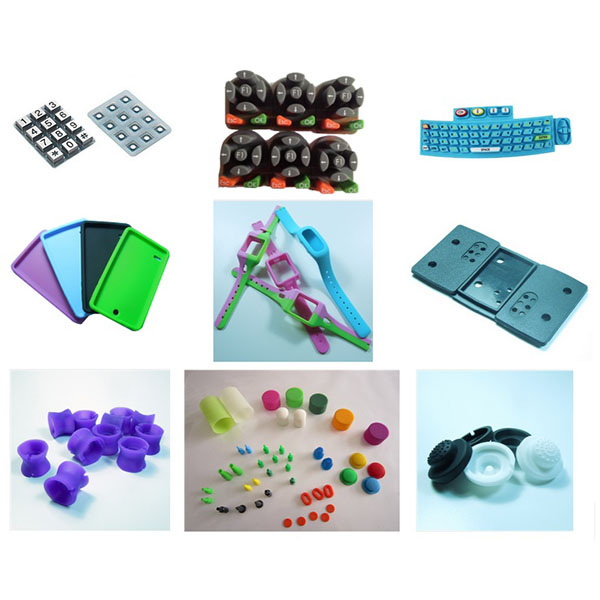
vacuum-formed silicone parts for precision sealing
Vacuum-formed silicone parts refer to the manufacturing method that uses vacuum-assisted processes to form silicone materials into functional components such as seals, cushioning parts, gaskets, masks, and catheter interfaces.
Description
The vacuum-assisted forming process for vacuum-formed silicone parts typically combines vacuum degassing, mold forming, and curing steps, which effectively reduce air bubbles and increase molding density, resulting in silicone products with smooth surfaces, dimensional stability, and reliable mechanical properties. These parts are widely applicable to electronics, electrical appliances, medical devices, automotive, household, and industrial equipment.
Applicable materials:
- Silicone types: Common materials include Liquid Silicone Rubber (LSR), High-Temperature Vulcanizing silicone (HTV), and Room-Temperature Vulcanizing silicone (RTV); formulations with different hardness and weather-resistance can be selected according to the intended use.
- Functional formulations: Options include high/low temperature resistant, oil resistant, aging resistant, flame-retardant, medical-grade, or food-grade formulations to meet various environmental and regulatory requirements.
- Coloring and fillers: Color concentrates or inert fillers can be used to adjust appearance, thermal conductivity, or flame-retardant properties, but their effects on mechanical performance and processing (e.g., flow and curing) must be evaluated.
Key molding process points for vacuum-formed silicone parts:
- Vacuum degassing: Pre-degas the silicone under vacuum before pouring to remove air introduced during mixing or compounding, reducing porosity defects after curing.
- Molds and forming: Choose metal molds, silicone molds, or composite molds based on product geometry; vacuum-assisted forming can aid material filling of complex cavities during injection or vacuum drawing to reproduce fine details.
- Curing and vulcanization: Control curing temperature and time to achieve the desired mechanical and elastic properties; LSR typically uses in-mold vulcanization (injection curing), while RTV cures at room temperature or with applied heat.
- Post-processing: Trimming, punching, cleaning, secondary bonding, or surface treatments (painting, printing) as required to meet assembly and appearance specifications.
Design and structural recommendations:
- Wall thickness and shrinkage: Design wall thickness appropriately to avoid insufficient strength from being too thin or uneven curing from being too thick; account for silicone shrinkage and compensate in the mold design.
- Gating and venting locations: Optimize pouring/gate and vent locations to reduce entrapped air and short-shot defects, ensuring dimensional stability for critical mating surfaces.
- Inserts and in-mold components: Metal inserts or plastic inserts can be preinstalled in the mold to achieve integrated structures, improving assembly efficiency and functional integration.
- Surface and texture: Mold surfaces can be finished matte, glossy, or with specific textures to achieve the desired appearance; pad printing or laser marking can be used for identification.
Advantages and features:
- Reduced porosity: Vacuum degassing and vacuum-assisted forming significantly reduce internal porosity, improving consistency and reliability of finished parts.
- Precision molding: Suitable for producing silicone parts with precise locating features, sealing fits, and complex internal cavities.
- Rapid prototyping and small-batch flexibility: Mold fabrication cost and lead time are relatively controllable, making the process suitable for quick validation and small-batch production.
- Diverse material properties: Silicone offers temperature resistance, aging resistance, weatherability, and excellent elasticity to meet special operating conditions.
- Easy integration: Can be combined with metal or plastic parts via insert molding or secondary bonding to form complex functional assemblies.
Typical application areas for vacuum-formed silicone parts:
- Electronics and communications: keyboard keys, sealing gaskets, connector seals, anti-vibration cushioning parts.
- Medical devices: catheter seals, mask seals, test fixtures, etc. (medical-grade materials and relevant certifications required).
- Automotive and transportation: sealing strips, cushioning pads, wire harness sleeves, and interface sealing components.
- Household and consumer products: kitchen and bathroom seals, baby product accessories, cushioning parts for wearable devices.
- Industrial equipment: pump and valve seals, instrument masks, and protective components.