
 English
  Français
  Tiếng Việt
  Italiano
  Nederlands
  Türkçe
  Svenska
  Polski
  Română
  Latviešu
  한국어
한국어  Русский
  Español
  Deutsch
  Українська
  Português
  العربية
  Indonesian
  Čeština
  Suomi
Suomi  Eesti
Eesti  Български
  Dansk
Dansk  Lietuvių
  Bokmål
  Slovenčina
  Slovenščina
  Ελληνικά
  Magyar
  עברית
עברית 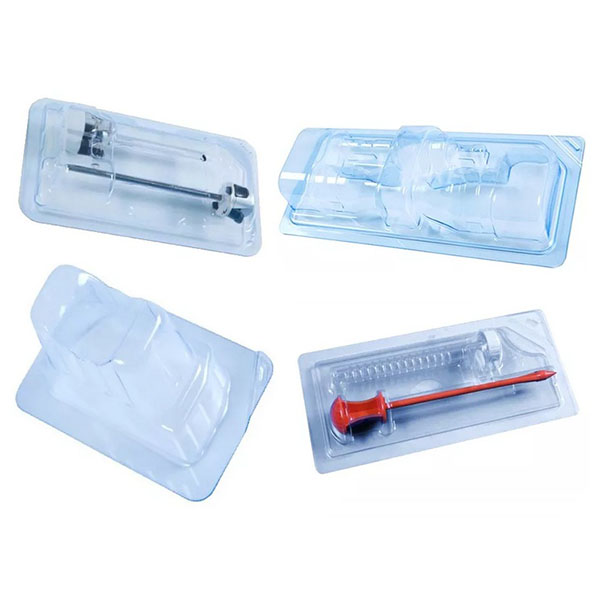
vacuum formed medical device packaging boxes sterile
vacuum-formed medical device packaging boxes can provide precise product cavities, secure fixation, and cushioning protection, making them suitable for disposable medical devices, surgical instruments, diagnostic kits, sample trays, and consumable packs.
Description
vacuum-formed medical device packaging boxes are a protective packaging solution manufactured from thermoplastic sheets by vacuum or vacuum-pressure forming processes. With excellent forming accuracy, sterilizability, and flexible size customization capabilities, vacuum-formed medical packaging has broad application value in sterile packaging, single-use packaging, and transport protection.
Main materials and specifications:
- Common materials: Medical grade PET, PVC, PS, HIPS, ABS, PP, etc.; appropriate materials or multilayer composite sheets can be selected based on sterilization method and mechanical requirements.
- Thickness range: Commonly 0.2 mm to 3.0 mm, customizable according to protection needs and rigidity requirements.
- Special formulations: Options include flame retardant, anti-static, low extractables, and biocompatible formulations to meet medical regulations and usage environment requirements.
- Surface and transparency: Support high transparency for visual inspection, or matte/frosted finishes to reduce glare.
Forming process key points:
- Material preparation: Ensure sheet surfaces are clean, free of scratches and contamination, and strictly manage batches to guarantee color and performance consistency. Lamination or backing may be applied when necessary to enhance strength and moisture resistance.
- Heating and forming: Set uniform heating profiles and pre-stretch parameters according to material characteristics; use vacuum or combined vacuum-pressure forming to ensure detail reproduction and control wall thickness distribution.
- Mold design: Molds are commonly made from aluminum alloys or steel; cavity design should consider ease of demolding, smooth venting, and cooling efficiency. Mold surface treatment determines formed surface quality.
- Trimming and post processing: After forming, perform CNC trimming, punching, bending or heat sealing, and reserve areas for labeling or sealing to facilitate subsequent boxing and packaging steps.
Sterility and cleanliness control:
- Production environment: It is recommended to perform critical post-processing and packaging operations in clean or controlled environments to reduce particulate and microbial contamination risks.
- Material sterilizability: Select sterilization methods appropriate to customer requirements (for example gamma irradiation, ethylene oxide, or steam sterilization) and validate material compatibility.
Typical application scenarios for vacuum-formed medical device packaging boxes:
- Disposable surgical instrument and consumable trays: Used for instrument fixation and arrangement inside sterile packs.
- Diagnostic kit and tube trays: Custom cavities sized to reagents and samples to facilitate transport and testing workflows.
- Medical device transport and storage boxes: Provide protection for devices during on-site and remote transport.
- Medical device display and sample trays: Used for sample display, pre-sale inspection, or spare parts management.