
 English
  Français
  Tiếng Việt
  Italiano
  Nederlands
  Türkçe
  Svenska
  Polski
  Română
  Latviešu
  한국어
한국어  Русский
  Español
  Deutsch
  Українська
  Português
  العربية
  Indonesian
  Čeština
  Suomi
Suomi  Eesti
Eesti  Български
  Dansk
Dansk  Lietuvių
  Bokmål
  Slovenčina
  Slovenščina
  Ελληνικά
  Magyar
  עברית
עברית 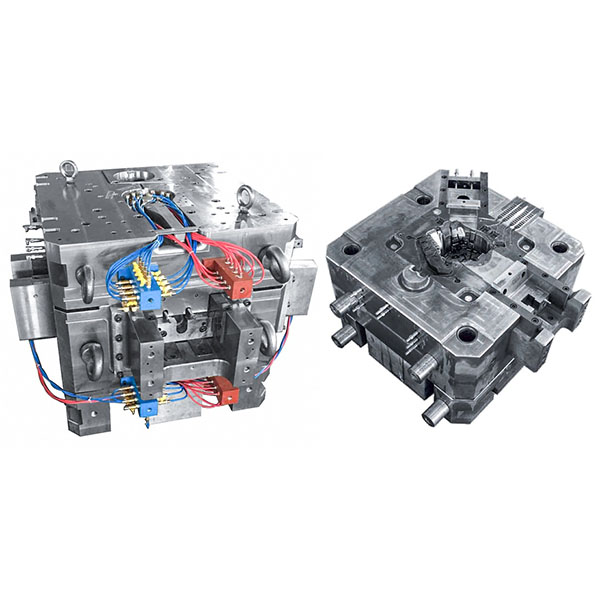
transmission housing die casting mold for automotive use
Transmission housing die casting mold is specifically designed for the structural and process requirements of transmission housings, targeting high-precision, high-strength, and mass-production demands.
Description
Transmission housing die casting mold, by optimizing the gating system, cooling circuits, and cavity machining, can consistently produce transmission housings with strict dimensional tolerances, excellent surface quality, and reliable mechanical properties. It is widely used in passenger cars, commercial vehicles, construction machinery, and other transmission system equipment.
Structure and design key points:
- Cavity and parting surface design: Optimize parting surface locations, cavity contours, and fillets according to the transmission housing’s geometry and assembly requirements to accommodate filling, venting, and subsequent machining operations.
- Gating and runner system: Design appropriate gates, runners, and cold-shut control measures; optimize melt flow velocity and filling sequence to reduce the risk of porosity, cold shuts, and stress concentration, ensuring casting density.
- Cooling system layout: Arrange uniform circulating cooling channels or locally reinforced cooling zones to control cavity temperature, shorten solidification time, and reduce thermal deformation to ensure dimensional stability.
- Venting and vacuum scheme: Design effective vent grooves or vacuum interfaces at locations prone to air entrapment or thin walls, and use vacuum extraction or online venting equipment to reduce trapped air, improving casting density and mechanical properties.
- Ejection and demolding mechanisms: Design reliable ejection systems, sliders, or inclined ejectors for complex structural areas to ensure smooth demolding without damaging surface accuracy.
- Machining allowances and locating datums: Reserve reasonable machining allowances for critical mating surfaces and assembly holes, and define clear locating datums to facilitate subsequent finishing and assembly inspection.
Manufacturing processes and assembly:
- Precision machining: Employ CNC roughing and finishing, wire EDM (WEDM), sinker EDM, precision grinding, and polishing to ensure the geometric accuracy and surface condition of cavities and cores.
- Heat treatment and stress relief: Apply standardized heat treatments and stress-relief processes to critical components to ensure mold-closing accuracy and synchronized motion after assembly.
- Precision assembly: Assemble the mold assembly to strict tolerances, perform fit checks and clearance adjustments to ensure consistent mold closing and repeatable locating accuracy.
- Piping and sealing: Machine high-precision sealing surfaces and cooling interfaces, and arrange pressure-resistant cooling and pneumatic systems to meet long-term high-intensity production requirements.
Typical application areas:
- Transmission housings and driveline housings for passenger cars and commercial vehicles.
- Housings for driveline components of construction and agricultural machinery.
- Enclosures for industrial drivetrains and heavy-duty gear reducers.
- Functional housing parts that require high strength, good heat dissipation, and strict dimensional control.