
 English
  Français
  Tiếng Việt
  Italiano
  Nederlands
  Türkçe
  Svenska
  Polski
  Română
  Latviešu
  한국어
한국어  Русский
  Español
  Deutsch
  Українська
  Português
  العربية
  Indonesian
  Čeština
  Suomi
Suomi  Eesti
Eesti  Български
  Dansk
Dansk  Lietuvių
  Bokmål
  Slovenčina
  Slovenščina
  Ελληνικά
  Magyar
  עברית
עברית 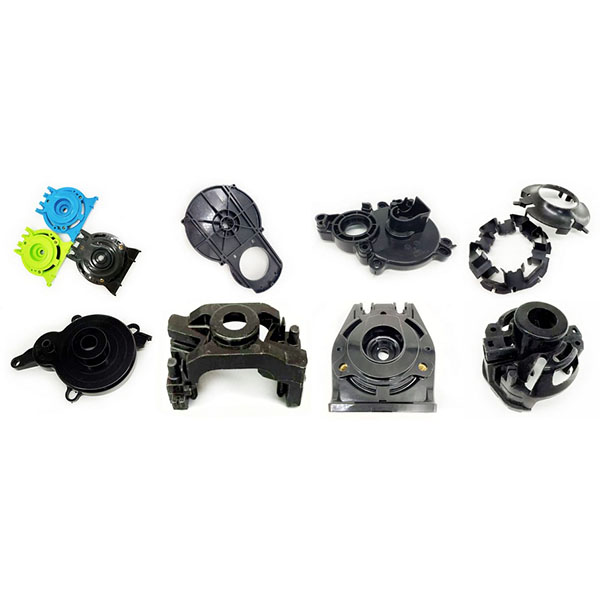
thermoset injection molded power tool components for use
Thermoset injection-molded power tool components are produced using thermoset resins through injection molding processes, suitable for power tool housings, handles, switch assemblies, insulating structural parts, and functional components used near high-temperature or high-voltage environments.
Description
Thermoset materials exhibit excellent heat resistance, electrical insulation, dimensional stability, and chemical resistance after curing, making them suitable for applications with high requirements for safety, durability, and electrical insulation.
Typical applications of thermoset injection-molded:
- 1. Housings and frames: protective structures that withstand mechanical impact and external environmental exposure.
- 2. Handles and grips: components that require wear resistance, weatherability, and specific surface feel and anti-slip performance.
- 3. Switches and key bases: providing reliable electrical insulation and temperature resistance.
- 4. Insulating isolation parts: used for electrical isolation between motors, wiring, and sensitive components.
- 5. Functional parts near heat sources or high temperatures: critical components that maintain structural stability and resist thermal aging.
Common materials and characteristics:
- 1. Phenolic resins (Phenolic): high heat resistance, excellent flame retardancy and electrical insulating properties, commonly used for motor end caps and supports.
- 2. Epoxy resins (Epoxy): notable adhesion and mechanical strength, suitable for parts requiring high bonding performance and chemical resistance.
- 3. Unsaturated polyester/phenolic blend systems: customized formulations balancing flowability and performance.
- 4. Fillers and reinforcements: glass fiber, carbon black, mineral fillers, etc., used to enhance strength, thermal conductivity, or flame retardancy.
- 5. Surface modification: anti-slip textures, coatings, or post-treatments to meet tactile and weatherability requirements.
Mold and design key points:
- 1. Pouring and curing control: curing of thermoset materials depends on temperature and reaction time; molds must support uniform heating, temperature control, and holding/curing stages.
- 2. Mold heat- and wear-resistant design: select appropriate mold steels and surface treatments to withstand high temperatures and chemical corrosion.
- 3. Runners and venting: properly design runners, gates, and venting locations to ensure full resin filling and avoid porosity or cold shuts.
- 4. Shrinkage and tolerance compensation: thermoset materials undergo some shrinkage after curing; compensation should be provided in the mold design and tolerances of critical mating surfaces controlled.
- 5. Ribs and structural supports: optimize wall thickness, rib layout, and stress distribution to prevent warpage or cracking.
- 6. Fixtures and demolding: consider draft angles, ejection mechanisms, and inspection fixtures to ensure efficient mass production.
Thermoset injection-molded processing and production flow:
- 1. Raw material preparation: measure resins, curing agents, and fillers according to formulations; preheating or degassing may be performed if necessary.
- 2. Injection and pressure curing: inject the mixture into the mold and achieve crosslinking curing by heating in the mold; control the curing temperature profile and time to ensure consistent performance.
- 3. Cooling and demolding: cool and eject the part after safe curing, avoiding demolding while still unstable at high temperature to prevent deformation.
- 4. Post-processing and assembly: deburring, machining, surface painting or plating, and secondary assembly or installation of metal inserts.
- 5. Surface and functional treatments: texturing, coating, sandblasting, or adding anti-slip layers can be performed to meet end-use experience requirements.