
 English
  Français
  Tiếng Việt
  Italiano
  Nederlands
  Türkçe
  Svenska
  Polski
  Română
  Latviešu
  한국어
한국어  Русский
  Español
  Deutsch
  Українська
  Português
  العربية
  Indonesian
  Čeština
  Suomi
Suomi  Eesti
Eesti  Български
  Dansk
Dansk  Lietuvių
  Bokmål
  Slovenčina
  Slovenščina
  Ελληνικά
  Magyar
  עברית
עברית 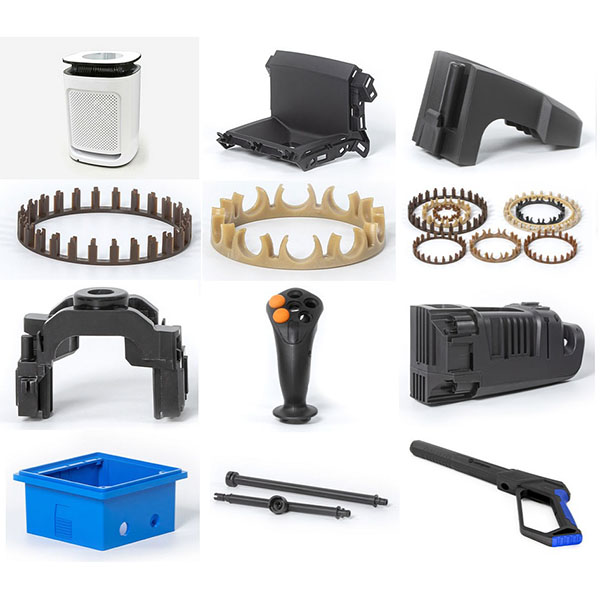
thermoplastic injection-molded consumer electronics parts
Thermoplastic injection-molded consumer electronics parts balance aesthetics, durability, and manufacturability, support high-precision dimensional fits and diverse surface treatments, and meet the rapid design iteration and shipping demands of consumer electronics products.
Description
Thermoplastic injection-molded consumer electronics parts are manufactured from engineering thermoplastic materials through injection molding and secondary processing techniques, and are widely used as structural and cosmetic components in consumer electronics such as smartphones, tablets, wearables, headphones, remote controls, chargers, and smart home terminals.
Typical applications of thermoplastic injection-molded consumer electronics parts:
- Enclosures and chassis structures: back covers, front frames, bezels, support frames and other external structural parts that carry and protect electronic modules.
- Panels and keys: function keys, touch key frames, sliding and press mechanisms that require consistent feel and wear resistance.
- Interfaces and support parts: USB/Type-C/HDMI ports, SIM trays, speaker grilles and antenna brackets.
- Fastening and guiding parts: standoffs, snaps, guide posts and brackets for reliable positioning and assembly connections.
- Thermal and structural airflow parts: air ducts, heatsink bracket supports, or thermal structures cooperating with metal parts (may require thermal fillers or thermal adhesive).
- Insulation and isolation components: electrical isolation holders, insulating gaskets and EMI shielding supports (used with conductive fillers).
- Sealing and cushioning elements: soft seal-ring carriers, cushioning pads and anti-vibration supports.
Common materials and characteristics:
- Polypropylene (PP): low cost and good moldability, suitable for non-load-bearing exterior parts and internal airflow components.
- Polycarbonate (PC) and PC alloys: high impact strength and good optical properties, commonly used for transparent or translucent housings and display windows.
- Polyoxymethylene (POM): low friction, wear resistance and dimensional stability, suitable for sliding parts and precision snaps.
- Polyamide (PA, glass-fiber reinforced): high strength and heat resistance, suitable for structural supports and high-stress components.
- Thermoplastic polyurethane (TPU): good elasticity, used for soft-touch keys, seals and cushioning areas.
- Liquid crystal polymer (LCP): high-frequency electrical performance and high-temperature stability, suitable for antenna brackets or precision connectors.
- Conductive/thermally conductive modified materials: filled with carbon black, copper powder, silver powder or thermally conductive particles to meet EMI shielding or thermal management requirements.
- Flame-retardant/weather-resistant modifications: flame retardants, UV stabilizers or anti-aging additives are commonly added to meet safety and reliability requirements for consumer electronics.
Injection molding process and production flow:
- Raw material preparation: add masterbatch, antioxidants, flame retardants, colorants and functional fillers according to the formulation; dry as necessary to prevent moisture-related defects.
- Injection molding: establish appropriate injection temperature profile, holding/packing and cooling cycles; use hot runners, balanced cooling and precision molds to ensure dimensional stability.
- Secondary processing: insert metal threaded inserts, punching, trimming, laser cutting or ultrasonic welding and other post-processes to meet assembly requirements.
- Surface treatment: painting, plating, heat transfer printing, UV printing or soft-touch coatings to enhance appearance and durability.
- Functional treatments: conductive coatings, flame-retardant treatments or localized surface modifications to achieve specific functions.
- Assembly and testing: assemble with electronic modules, perform functional tests, durability tests and final inspection before shipment.