
 English
  Français
  Tiếng Việt
  Italiano
  Nederlands
  Türkçe
  Svenska
  Polski
  Română
  Latviešu
  한국어
한국어  Русский
  Español
  Deutsch
  Українська
  Português
  العربية
  Indonesian
  Čeština
  Suomi
Suomi  Eesti
Eesti  Български
  Dansk
Dansk  Lietuvių
  Bokmål
  Slovenčina
  Slovenščina
  Ελληνικά
  Magyar
  עברית
עברית 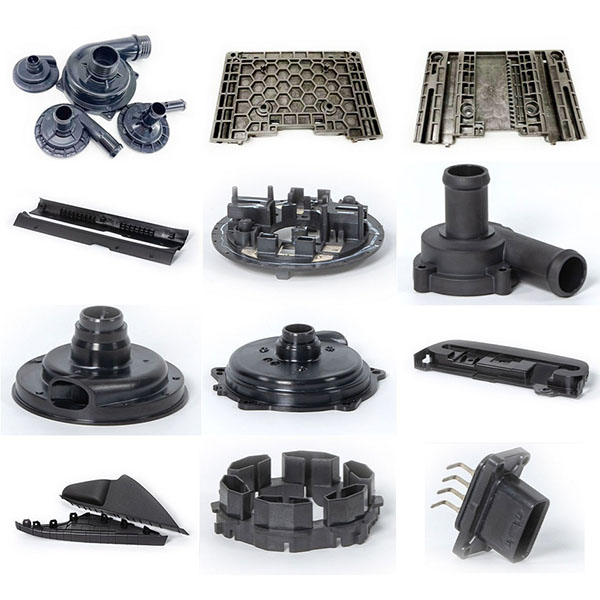
thermoplastic injection-molded automotive components
Thermoplastic injection-molded automotive components are manufactured from engineering thermoplastic materials using injection molding processes and are widely used for automotive interior and exterior trim, functional structural parts, and fluid transfer components.
Description
Thermoplastic materials combine lightweight properties, chemical resistance, impact resistance, and good dimensional stability, meeting the automotive industry’s stringent requirements for safety, reliability, cost, and suitability for mass production.
Typical applications of thermoplastic injection-molded automotive components:
- Interior trim: center consoles, door panels, trim strips, and dashboard cover components.
- Exterior trim: bumpers, grilles, decorative covers, and shields that require weatherability and impact resistance.
- Functional structural parts: brackets, clips, wire-retaining mounts, and air guide components for structural support.
- Thermal fluid and fuel system components: pump housings, hose fittings, cooling air ducts, and intake/exhaust guide parts (requiring oil and temperature resistance).
- Electrical and electronic enclosures: sensor housings, control unit enclosures, and connector covers (requiring good electrical insulation and heat resistance).
- Sealing and cushioning assemblies: gaskets, seal ring carriers, and energy-absorbing components.
Common materials and characteristics:
- Polypropylene (PP): low cost and good chemical resistance, commonly used for interior and exterior trim and low-stress structural parts.
- Polyamide (PA6/PA66, glass-fiber reinforced): high strength and wear resistance, suitable for load-bearing parts, gears, and worm gears.
- Polycarbonate (PC) and PC alloys: high impact toughness and transparent or translucent applications (lamp covers, instrument windows).
- Polyoxymethylene (POM): low friction and good dimensional stability, used for sliding fits and precision-machined parts.
- Thermoplastic polyurethane (TPU): combines elasticity and wear resistance, commonly used for seals, cushions, and weather-resistant parts.
- Modified and filled systems: glass-fiber reinforcement, mineral fillers, flame retardants, and conductive/thermally conductive additives to meet mechanical, flame-retardant, or functional requirements.
Injection molding process and production flow:
- Raw material preparation: mix masterbatch, fillers, and additives according to the formulation; dry as necessary to prevent moisture-related defects.
- Injection molding: set injection temperature, holding/packing profile, cooling time, and demolding cycle according to material characteristics; use appropriate clamp force and injection speed.
- Secondary machining: mill critical mating surfaces, drill holes, or use thermal expansion assembly for metal inserts.
- Surface treatment: painting, film lamination, plating, or heat transfer printing to enhance appearance and weatherability.
- Assembly and inspection: assemble with fixtures, install functional components, perform durability and environmental reliability tests, then package for shipment.