
 English
  Français
  Tiếng Việt
  Italiano
  Nederlands
  Türkçe
  Svenska
  Polski
  Română
  Latviešu
  한국어
한국어  Русский
  Español
  Deutsch
  Українська
  Português
  العربية
  Indonesian
  Čeština
  Suomi
Suomi  Eesti
Eesti  Български
  Dansk
Dansk  Lietuvių
  Bokmål
  Slovenčina
  Slovenščina
  Ελληνικά
  Magyar
  עברית
עברית 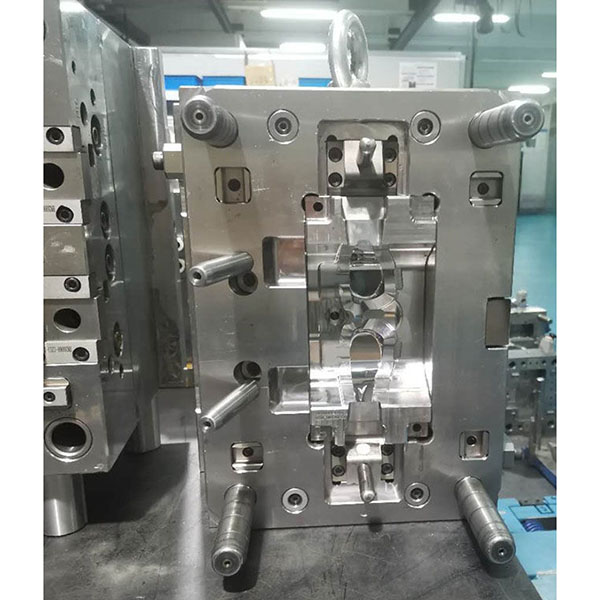
swimming goggles injection mold for superior comfort
Swimming goggles injection molds are used for efficient mass production of various goggle components, including frames, lens housings, strap interfaces, soft sealing overmolds, and complete assemblies.
Description
Swimming goggles injection molds emphasize precise lens positioning, sealing comfort, surface finish, and long-term durability, while balancing ergonomics and aesthetic appearance. They accommodate a variety of engineering plastics and elastomeric materials and are widely used in the manufacture of recreational goggles, competitive goggles, and accessories for diving and snorkeling equipment.
Product features and customer value:
- Precise lens positioning: ensures concentricity and perpendicularity between the lens and frame, reducing water leakage and optical deviation.
- Excellent sealing and comfort: soft overmolds and fine texture designs provide a comfortable fit and reduce pressure marks.
- High surface and appearance quality: supports mirror, matte, or fine texture finishes to meet branding, coating, and printing requirements.
- Multi-material and integrated processes: supports one-shot molding or secondary overmolding of rigid frames with soft seals, reducing assembly steps.
- Stable capacity and low unit cost: high cavity counts and optimized runner designs enable short cycles and high output, suitable for large-scale production.
Mold structure and design considerations:
- Cavity type and cavity count selection: choose single-cavity or multi-cavity molds based on part size and lens specifications, and arrange cavities to ensure balanced flow.
- Gating system: for high-appearance frames, prioritize hot-runner solutions; use micro gates or valve-pin gates for thin- or small-walled features to minimize gate marks.
- Cooling and temperature control: design differentiated cooling circuits for frame and soft-seal areas to maintain dimensional stability and shorten cycle time.
- Venting and ejection: provide sufficient venting and appropriate ejection/slider mechanisms for deep cavities, blind holes, or internal snap features to avoid burning or jamming.
- Multi-material and overmolding design: define proper injection sequences, parting surfaces, and ejection structures to ensure strong bonding and consistent appearance at soft/hard interfaces.
- Lens-contact and optical requirements: precisely control and polish lens-contact surfaces and frame mating faces; apply coatings or mirror-finishing processes when necessary.
Common materials and selection recommendations:
- Common rigid materials: PC, ABS, POM (for sliding parts), etc., used for frames and structural components.
- Common elastomers: TPE, TPR, and silicone (LSR) for soft seals and overmolded parts to improve wearing comfort and sealing.
- Selection considerations: optical transparency, UV resistance, chlorine resistance and weatherability, processing flowability, and cost balance. For competitive use, prioritize lightweight and high-strength formulations.
Injection molding process and mass-production flow:
- Trial molding and parameter verification: verify injection filling, lens positioning, soft/hard interface formation, and warpage behavior; adjust gate locations and wall-thickness distribution as needed.
- Multi-material/co-injection process control: set appropriate injection sequences, holding and cooling cycles to ensure bonding strength and consistent appearance.
- Process locking: determine injection speed, holding-pressure profile, mold temperature, and ejection rhythm; establish standard operating procedures (SOPs) and record key control points.
- Mass production and online inspection: use SPC to monitor critical dimensions, combined with online vision inspection and leak-testing equipment to ensure product consistency.
- Post-processing and assembly preparation: perform deburring, lens assembly, heat-staking or adhesive curing, and sealing/leakage testing.