
 English
  Français
  Tiếng Việt
  Italiano
  Nederlands
  Türkçe
  Svenska
  Polski
  Română
  Latviešu
  한국어
한국어  Русский
  Español
  Deutsch
  Українська
  Português
  العربية
  Indonesian
  Čeština
  Suomi
Suomi  Eesti
Eesti  Български
  Dansk
Dansk  Lietuvių
  Bokmål
  Slovenčina
  Slovenščina
  Ελληνικά
  Magyar
  עברית
עברית 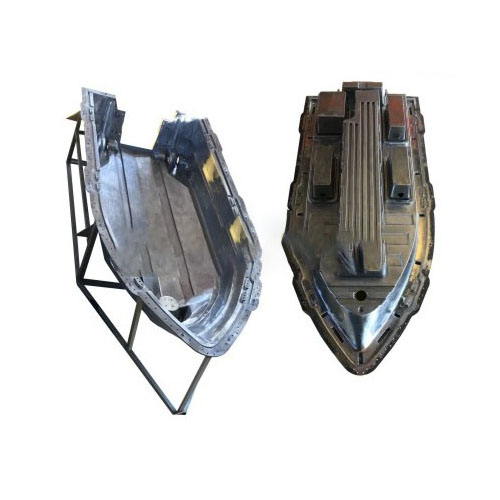
steel rotational molding mold for industrial applications
steel rotational molding mold is a rotational molding tool made from high-quality steel substrate, precision machined and surface-treated, suitable for the rotational molding process.
Steel rotational molding molds can be used to produce plastic products with uniform wall thickness, smooth surfaces, and complex hollow structures, and are widely applied in the mass production of industrial containers, playground equipment parts, vehicle equipment housings, furniture components, and various customized hollow parts.
Main features of steel rotational molding molds:
- Excellent durability: made from carbon steel or alloy steel, heat-treated and corrosion-protected, offering long service life, wear resistance, and suitability for large-volume production.
- High-precision machining: processed by CNC milling, wire cutting, welding, and fine grinding to ensure precise mold cavity fit, stable molded-part dimensions, and good interchangeability.
- Optimized cavity design: hollow cavity and venting systems are designed according to rotational molding characteristics to promote uniform melt coverage and cooling, reducing finished-product defects.
- Strong material compatibility: suitable for common rotational molding materials (such as PE, HDPE, LLDPE, EVA, etc.), producing parts with good toughness and impact resistance.
- Surface treatment and weather resistance: surfaces can be fine-ground, sandblasted, plated, or coated with anti-rust treatments; combined with subsequent UV or salt‑spray treatments on finished parts, this meets long-term outdoor use requirements.
- Easy maintenance and repair: supports split-mold and assembly designs for convenient disassembly, inspection, and localized repairs, reducing maintenance costs and downtime.
- Highly customizable: can provide tailored mold design and machining solutions according to product structure, dimensions, wall thickness, and assembly requirements.
Manufacturing process and quality control:
The manufacturing process for steel rotational molding molds includes material selection, heat treatment, CNC machining, welding assembly, surface finishing, and overall inspection. Critical operations use CMM measurement, form-and-position tolerance checks, and trial-molding calibration to ensure cavity consistency and acceptable molding yield. We recommend multiple cycle tests and data recording during the trial-molding phase to optimize mold cooling, venting, and rotation-speed parameters.
Typical application scenarios for steel rotational molding molds:
- Industrial and chemical storage tanks, transport containers, and protective covers.
- Hollow components for commercial and public facilities, such as seat shells and storage bins.
- Enclosures for professional equipment, and housings for medical and rehabilitation devices.
- Outdoor facilities and accessories.
- Various customized parts for education, training, and rehabilitation use.