
 English
  Français
  Tiếng Việt
  Italiano
  Nederlands
  Türkçe
  Svenska
  Polski
  Română
  Latviešu
  한국어
한국어  Русский
  Español
  Deutsch
  Українська
  Português
  العربية
  Indonesian
  Čeština
  Suomi
Suomi  Eesti
Eesti  Български
  Dansk
Dansk  Lietuvių
  Bokmål
  Slovenčina
  Slovenščina
  Ελληνικά
  Magyar
  עברית
עברית 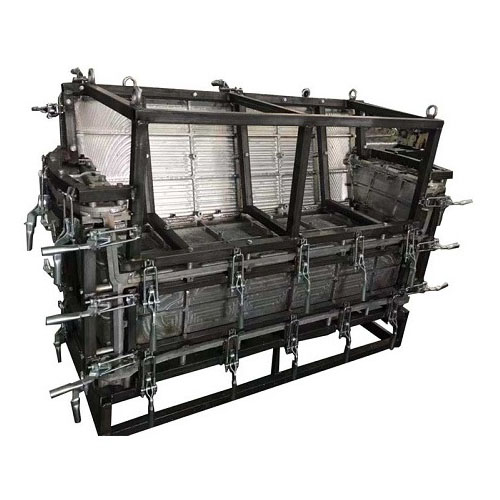
sofa rotomolding mold for premium commercial seating
The sofa rotomolding mold is specifically designed for rotomolding sofa shells and is suitable for producing seamless, one-piece sofa shells and structural components.
Description
The sofa rotomolding mold features a modular design, supporting multi-cavity or single-cavity production configurations. It accommodates sofas of various sizes and styles and meets the strength and aesthetic requirements of residential, commercial, hotel, and leisure applications.
Key features of the sofa rotomolding mold:
- One-piece molding: Achieves seamless, integrated sofa shells through rotomolding with no welds or stress concentrations, producing smooth surfaces, high strength, and excellent impact resistance.
- Durable mold materials: The mold body can be made from premium alloy steel or aluminum alloy, heat-treated and precision-machined for wear resistance, corrosion resistance, and long service life.
- Precision machining: Uses CNC, EDM (electrical discharge machining), and surface polishing to ensure dimensional stability of molded parts and accurate assembly fits.
- Efficiency optimization: Internal thermal management and venting are designed to facilitate powder melting and uniform distribution, shorten cycle times, and increase production capacity.
- Modularity and interchangeable cores: Supports rapid replacement of cores or accessories, enabling quick changes of styles and details, reducing development costs and changeover time.
- Customizable surface finishes and textures: Can produce various textures such as matte, leather-grain (pebble), and wood-grain, and provide interfaces for post-processing to meet different appearance requirements.
Applications of the sofa rotomolding mold:
- Indoor and outdoor sofa shells (Note: for outdoor use, choose weather-resistant materials and apply UV protection).
- Commercial seating, lounge chairs, and sofa assemblies.
- Custom seating for hotels, resorts, and public leisure spaces.
Customization and development process:
- Requirements confirmation: Specify dimensions, styling, materials, and production capacity; providing sketches or 3D models is preferred.
- Design review: Provide mold structure proposals, parting surface layout, discharge/venting schemes, and a preliminary quotation.
- Sample validation: Perform trial production and supply samples; after customer approval of appearance and dimensions, proceed to mass production.
- Mass production and delivery: Deliver according to confirmed inspection standards and packaging requirements, and provide mold maintenance instructions.