
 English
  Français
  Tiếng Việt
  Italiano
  Nederlands
  Türkçe
  Svenska
  Polski
  Română
  Latviešu
  한국어
한국어  Русский
  Español
  Deutsch
  Українська
  Português
  العربية
  Indonesian
  Čeština
  Suomi
Suomi  Eesti
Eesti  Български
  Dansk
Dansk  Lietuvių
  Bokmål
  Slovenčina
  Slovenščina
  Ελληνικά
  Magyar
  עברית
עברית 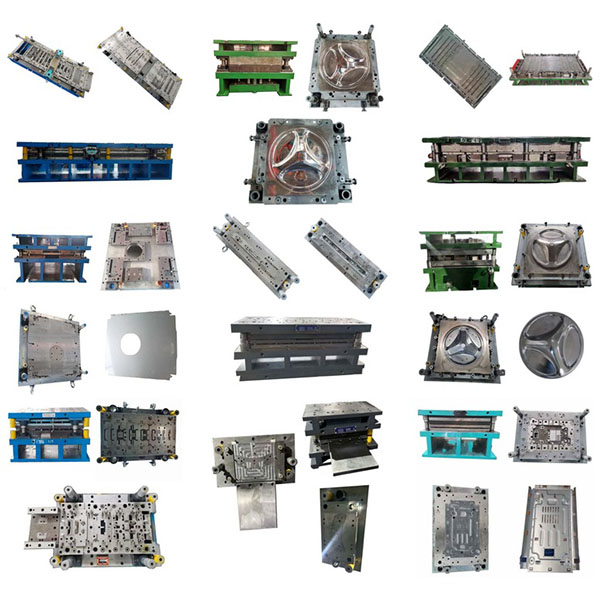
sheet metal stamping die solutions for manufacturing
sheet metal stamping dies are precision forming tools designed and manufactured specifically to perform blanking, bending, deep drawing, forming, and combined operations on thin sheet metals (such as cold-rolled steel, stainless steel, aluminum alloys, etc.).
Description
sheet metal stamping dies are used together with press machines to consistently reproduce part shapes and dimensions under high‑efficiency, mass‑production conditions. they are widely used for the mass production of sheet metal components such as housings, brackets, panels, and structural parts.
structure and materials:
- cavities and cores: precision machined and heat treated, with high surface hardness and good wear resistance to ensure long service life and stable formed dimensions.
- die frame and die base: made from high‑strength alloy steel or quenched structural steel to ensure assembly rigidity and resistance to deformation.
- guiding system: precision guide posts, guide bushes or roller guiding assemblies to ensure accurate positioning and repeatability between the upper and lower dies.
- spring elements, buffers and material‑pushing mechanisms: equipped with springs, sliders, stripper plates, scrap ejection and other functional components according to the part structure.
- surface treatment: critical forming surfaces undergo mirror finishing or surface treatments such as nitriding or nitrocarburizing to improve wear resistance and anti‑adhesion properties.
- common materials: mold steels such as h13, s136, 42crmo, skd11; die frames commonly use q235 or 45# steel.
main functions and process capabilities:
- blanking: high‑precision cutting of blanks.
- bending: control of bend angles and bend radii.
- deep drawing: production of deep‑drawn parts such as cup‑shaped and box‑shaped components.
- flanging, forming and shaping: realization of complex three‑dimensional geometries.
- progressive and compound die designs: single‑pass blanking or multi‑stage continuous processing to improve productivity and consistency.
- automation compatibility: compatible with feeders, automatic loading/unloading systems, robotic handling and other automation equipment.
typical applications:
- automotive body and chassis components (door panels, brackets, interior trim).
- household appliance housings and structural parts (refrigerators, washing machines, air‑conditioner panels).
- electronic and telecommunications equipment enclosures, frames and supports.
- industrial equipment and hardware parts (electrical cabinet panels, connectors, brackets).
- non‑standard sheet metal parts for precision instruments and medical devices.