
 English
  Français
  Tiếng Việt
  Italiano
  Nederlands
  Türkçe
  Svenska
  Polski
  Română
  Latviešu
  한국어
한국어  Русский
  Español
  Deutsch
  Українська
  Português
  العربية
  Indonesian
  Čeština
  Suomi
Suomi  Eesti
Eesti  Български
  Dansk
Dansk  Lietuvių
  Bokmål
  Slovenčina
  Slovenščina
  Ελληνικά
  Magyar
  עברית
עברית 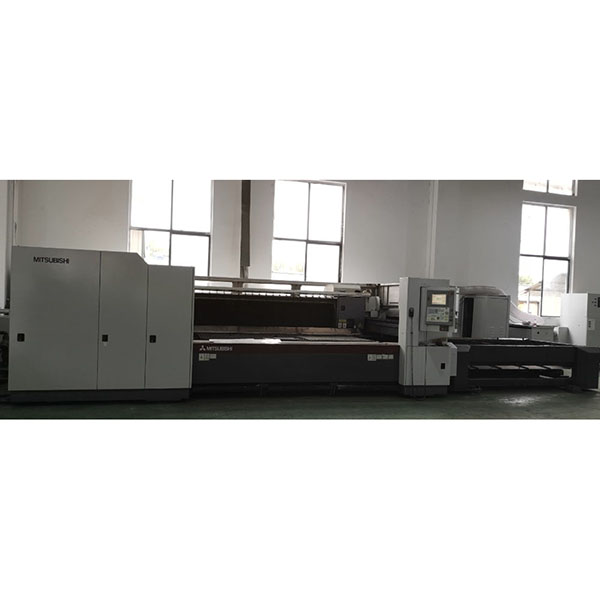
sheet metal laser cutting services for industrial use
Sheet metal laser cutting is a processing technique that uses a high-energy laser beam to perform high-precision cutting of metal sheets and is suitable for various materials such as stainless steel, carbon steel, aluminum alloys, and galvanized sheets..
Description
The sheet metal laser cutting process produces neat cut edges, a small heat-affected zone, narrow kerfs, and high precision, and is widely used in mechanical manufacturing, electronic enclosures, chassis and cabinets, automotive components, hardware fittings, and decorative metalwork.
Equipment and process flow for sheet metal laser cutting:
- Main equipment: fiber laser cutting machines, CO2 laser cutting machines, CNC motion platforms, and automated loading/unloading systems.
- Process flow: material preparation, programming (CAD, CAM), positioning fixtures, laser cutting, deburring, polishing (if required), inspection, surface treatment, assembly.
- Automation: supports automatic material changing, barcode recognition, and nesting optimization to improve material utilization and production efficiency.
Main advantages:
- High precision: narrow kerfs, smooth cross-sections, and tight dimensional tolerances, suitable for parts with strict fit requirements.
- Small heat-affected zone: cutting is achieved by high-speed localized heating, resulting in minimal distortion and discoloration, especially suitable for precision thin-sheet parts.
- High cutting efficiency: high degree of automation and excellent repeat positioning accuracy, suitable for mass production.
- Processing flexibility: capable of cutting complex contours, holes, and fine structures, accommodating a variety of special-shaped part requirements.
- Controllable cost: nesting optimization reduces material waste, and high equipment stability can lower per-piece costs.
Structural and design recommendations:
- Hole positions and spacing: to ensure cutting accuracy, it is recommended to leave appropriate wall widths and hole spacing in the design to avoid fractures or deformation of overly thin structures.
- Chamfers and deburring: for press-fit joints or exposed edges, consider adding chamfers or post-processing in the design stage to improve assembly and appearance.
- Material selection: choose suitable materials and thicknesses based on strength, welding, and surface treatment requirements; material recommendations and cost comparisons can be provided if needed.
Surface treatments and post-processing for sheet metal laser cutting:
- Common post-processing: deburring, bending, welding, drilling and tapping, milling, shot blasting, phosphating, powder coating, painting, electroplating, etc., supporting complete set processing and delivery.
- Finishing processes: for parts with high appearance or fit requirements, provide grinding, polishing, or localized finishing services.
Application areas:
Mechanical structural parts, electronic enclosures and panels, automotive and engineering components, lighting fixtures, instrument housings, hardware products, and decorative metal parts.