
 English
  Français
  Tiếng Việt
  Italiano
  Nederlands
  Türkçe
  Svenska
  Polski
  Română
  Latviešu
  한국어
한국어  Русский
  Español
  Deutsch
  Українська
  Português
  العربية
  Indonesian
  Čeština
  Suomi
Suomi  Eesti
Eesti  Български
  Dansk
Dansk  Lietuvių
  Bokmål
  Slovenčina
  Slovenščina
  Ελληνικά
  Magyar
  עברית
עברית 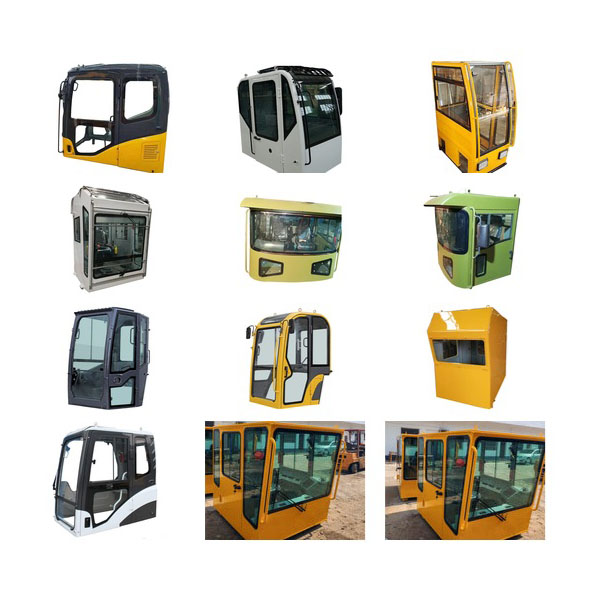
sheet metal fabrication for construction machinery cabins
Sheet metal fabrication for construction machinery cabins is the complete manufacturing process of producing cab outer shells, internal frames, and functional components from metal sheets through sheet metal processes such as cutting, bending, punching, welding, forming, and assembly.
Description
Finished sheet metal products for construction machinery cabins feature robust construction, vibration resistance, high rigidity, easy installation, and a balance of protection and comfort. They are widely used in cabs and related accessories for excavators, loaders, bulldozers, cranes, and other construction machinery.
Manufacturing processes and equipment:
- Cutting: laser cutting, plasma cutting, and CNC shearing are used for outer shell profiles, window openings, and cutouts.
- Bending and forming: CNC press brakes (CNC, Press Brake) are used to form cab hems, flanges, and mounting brackets, ensuring dimensional accuracy and assembly fit.
- Stamping and deep drawing: used to produce standard panels, reinforcement parts, and complex formed components.
- Welding: spot welding, MAG/MIG, TIG (argon arc) welding, and welding fixtures are used for body structure and frame welding to ensure structural strength and welding consistency.
- Machining and fine processing: milling, drilling, tapping, and reaming provide precision for fastener holes and locating holes.
- Surface treatment and assembly lines: shot blasting, phosphating, powder coating, painting, electrophoretic coating, electroplating, and automated assembly stations improve weather resistance and appearance consistency.
Structural design considerations and functionality:
- Safety and strength: design stiffening ribs, energy-absorbing zones, and load-bearing structures according to vehicle load and collision protection requirements to ensure operator safety.
- Vibration and noise control: reduce vibration transmission and noise through proper joints, damping materials, and support structures to enhance operator comfort.
- Visibility and opening layout: design windshield, side window and door openings and mounting structures to ensure visibility and sealing.
- Ergonomics and mounting: reserve standard mounting positions for control panels, displays, vents, air-conditioning interfaces, and seat mounting points to facilitate assembly and maintenance.
- Protection and sealing: design sealing grooves, rubber seals, and drainage channels for outdoor dust and rain protection to meet required protection levels.
- Grounding and cable routing: reserve cable ducts, fastening points, and grounding terminals for electronic devices, lighting, and control wiring to facilitate routing and EMC management.
Application areas:
- Cabs and accessories for excavators, loaders, bulldozers, cranes, and other construction machinery.
- Cab components for agricultural machinery, forestry machinery, and municipal engineering machinery.
- Machine rooms for mining equipment, cabs for special vehicles, and custom heavy equipment operator cabins.