
 English
  Français
  Tiếng Việt
  Italiano
  Nederlands
  Türkçe
  Svenska
  Polski
  Română
  Latviešu
  한국어
한국어  Русский
  Español
  Deutsch
  Українська
  Português
  العربية
  Indonesian
  Čeština
  Suomi
Suomi  Eesti
Eesti  Български
  Dansk
Dansk  Lietuvių
  Bokmål
  Slovenčina
  Slovenščina
  Ελληνικά
  Magyar
  עברית
עברית 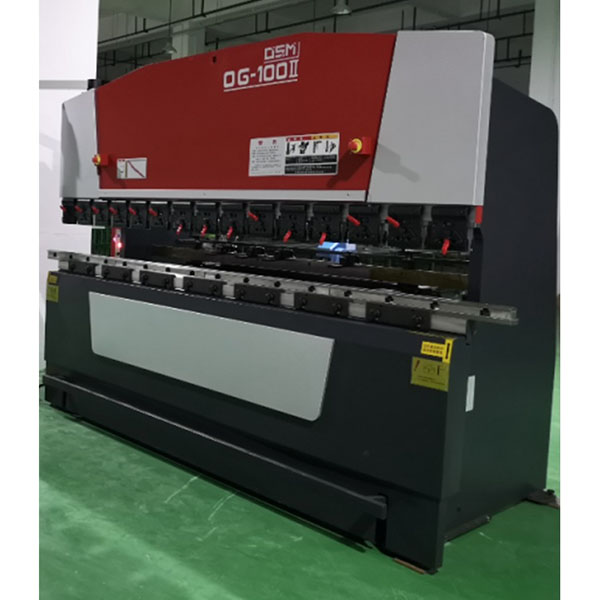
sheet metal bending for custom enclosures and brackets
The sheet metal bending process offers high forming accuracy, stable efficiency, good repeatability, and easy integration with other operations, and is widely used for medium-to-small batch and mass production of enclosures, brackets, panels, connectors and various structural parts.
Description
Sheet metal bending is a forming process in which metal sheets are bent to the required angles, flanges, and profiles using a press brake and appropriate dies.
Equipment and dies for sheet metal bending:
- CNC press brakes (CNC, Press Brake): suitable for complex parts and high-precision bends; support multi-step bending and automated loading/unloading.
- Hydraulic, electric, and servo press brakes: select different drive types according to production capacity and accuracy requirements to balance speed and energy consumption.
- Bending dies (V-dies, top punches, and specialized forming dies): choose suitable dies and die openings based on sheet thickness and bend angle; use specialized dies when necessary to protect the appearance or achieve complex forming.
- Auxiliary clamps and back supports (back gauges): ensure positioning accuracy, reduce springback error, and facilitate repeatable positioning and automated clamping.
Process types and workflow:
- Single-step bending and multi-step bending: determine the sequence and stations according to part geometry, and optimize the process route to reduce tool changes and part flipping.
- Springback compensation and sequence optimization: correct bend angles using material springback coefficients and optimize bending sequence to avoid interference and deformation.
- Bending integrated with other operations: can be combined with shearing, punching, laser cutting, welding, riveting, etc., to achieve an integrated production flow.
- Automation and robotic part handling: used to improve efficiency and consistency in medium-to-high volume environments.
Bending capability and accuracy:
- Bend angle accuracy: achieved through precision servo control, proper die selection and springback compensation; high angular accuracy and repeatability are possible (typical tolerances depend on material and equipment).
- Minimum inside bend radius and minimum flange length: set according to sheet thickness and material characteristics; feasible ranges are provided during process evaluation.
- Distortion and warpage control: control part deformation through合理 sequencing, clamping and support design, and subsequent correction processes.
Post-processing and surface treatments:
- Deburring and straightening/correction: perform deburring, straightening or correction after bending to ensure assembly accuracy.
- Surface treatment options: powder coating, painting, electroplating, anodizing (for aluminum), phosphating, or other corrosion protection and decorative treatments.
- Secondary processing: support welding, assembly, fastener installation or machining (such as tapping, milling holes) to provide complete component solutions.
Application areas of sheet metal bending:
- Enclosures and cabinets, communication and electronic equipment housings, control panels.
- Brackets, supports, connectors, chassis and mounting parts.
- Architectural decorative metal parts, ventilation panels and ducting.
- Appliance panels and white goods components.
- Industrial equipment frames, shelving, pallets and other structural components.