
 English
  Français
  Tiếng Việt
  Italiano
  Nederlands
  Türkçe
  Svenska
  Polski
  Română
  Latviešu
  한국어
한국어  Русский
  Español
  Deutsch
  Українська
  Português
  العربية
  Indonesian
  Čeština
  Suomi
Suomi  Eesti
Eesti  Български
  Dansk
Dansk  Lietuvių
  Bokmål
  Slovenčina
  Slovenščina
  Ελληνικά
  Magyar
  עברית
עברית 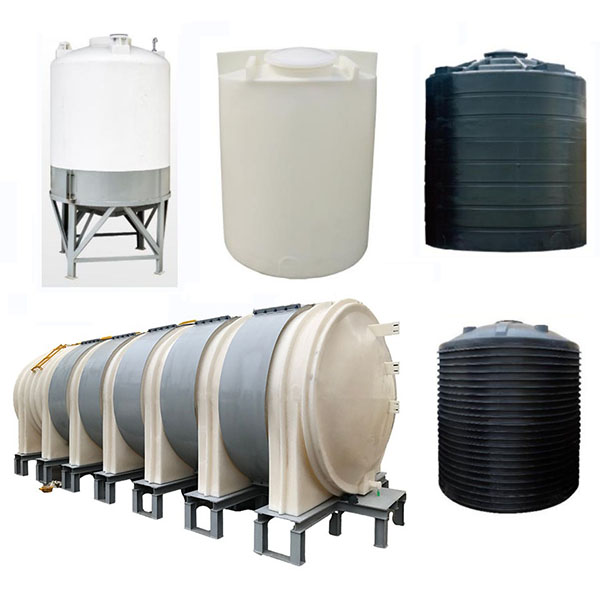
rotationally molded storage tank for industrial use
The rotationally molded storage tank is manufactured by a single-shot rotational molding process to form the shell, providing a seamless integral structure, excellent impact resistance, and good UV and weatherability.
Description
Appropriate materials and lining formulations can be selected based on the stored medium and the operating environment. Customization is supported for various capacities and installation methods, and these tanks are widely used for storage and transfer in industrial, agricultural, chemical, aquaculture, and municipal applications.
Main features of the rotationally molded storage tank:
- Seamless one-piece construction: the entire cavity has no welds or leak points, providing high structural strength and ease of cleaning and disinfection.
- Materials and corrosion resistance: commonly used rotomolding-grade PE, LLDPE, HDPE, etc.; chemical-resistant formulations or additional linings can be selected when necessary to accommodate acidic, alkaline, or organic solvent media.
- Excellent impact and weather resistance: structural design and material formulations enhance drop and compressive resistance, and UV stabilizers can be added for long-term outdoor use.
- Customizable capacities and shapes: supports a wide range of capacities from several dozen liters to several thousand liters, and can be customized as vertical tanks, horizontal tanks, or special-shaped tanks according to space and installation requirements.
- Fittings and accessories: flanges, threaded ports, discharge valves, level windows, mounting brackets, heating and insulation jackets, and other functional components can be reserved or fitted as required.
- Easy transport and installation: bases and lifting structures can be optimized for convenient on-site handling, mounting, and maintenance.
Typical application scenarios for rotationally molded storage tanks:
- Storage of industrial and chemical raw materials, batching tanks, and buffer tanks.
- Agricultural irrigation water tanks, liquid fertilizer tanks, and aquaculture water storage.
- Storage of potable and domestic water.
- Wastewater treatment, septic tanks, and reclaimed water systems.
- Short-term storage and transport of oils, lubricants, and non-strongly solvent liquids.