
 English
  Français
  Tiếng Việt
  Italiano
  Nederlands
  Türkçe
  Svenska
  Polski
  Română
  Latviešu
  한국어
한국어  Русский
  Español
  Deutsch
  Українська
  Português
  العربية
  Indonesian
  Čeština
  Suomi
Suomi  Eesti
Eesti  Български
  Dansk
Dansk  Lietuvių
  Bokmål
  Slovenčina
  Slovenščina
  Ελληνικά
  Magyar
  עברית
עברית 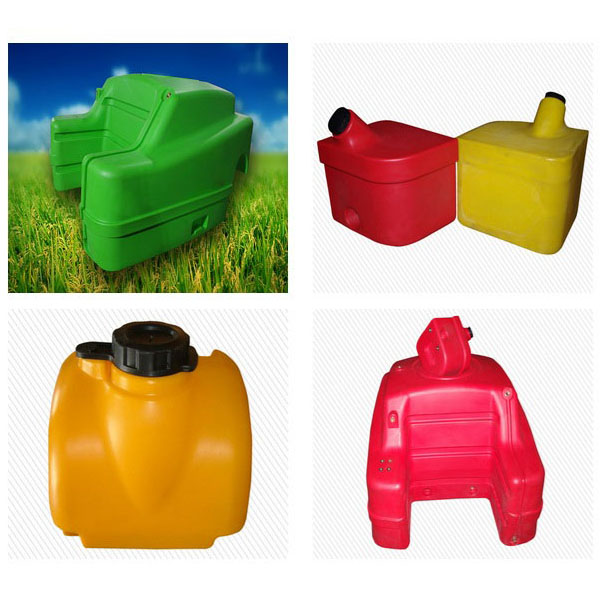
rotationally molded pesticide sprayer tank for farms
The rotationally molded pesticide sprayer tank is manufactured using a one-piece rotational molding process and is made from high-density polyethylene (HDPE) or engineering-grade polymers, specifically designed for agricultural spraying applications.
Description
The rotationally molded pesticide sprayer tank features a seamless, one-piece shell with excellent chemical resistance, UV and weather resistance, impact resistance, and lightweight characteristics. It provides a safe and reliable storage and delivery solution for pesticide liquids during field operations, mechanical towing, or mounted applications, and supports customization of capacities, fittings, and accessories to suit backpack, trailer-mounted, or vehicle-mounted spraying systems.
Main features of the rotationally molded pesticide sprayer tank:
- One-piece, seamless molding: Rotational molding produces a single-piece tank that eliminates welds and leak risks, improving overall strength and sealing.
- Excellent chemical resistance: Materials tolerate common pesticides, herbicides, and fertilizer solutions, reducing corrosion and aging.
- UV and weather resistance: Formulations include UV stabilizers for long-term outdoor use, keeping color stable and preventing brittleness.
- Impact resistance and durability: Designed to resist drops and collisions, suitable for field transport and mechanical vibration.
- Lightweight construction: Lighter than metal alternatives, easier to handle, install, and maintain, reducing overall equipment weight.
- Multifunctional interfaces: Can be configured with various inlet/outlet fittings, vent valves, filters, pressure ports, and pump mounts.
- Optional liners and partitions: Supports foam cushioning, internal baffles, or damping grids to reduce liquid surge (pitching effect) and protect the tank.
- Customizable appearance: Color, capacity markings, graduated scales, printing, or company logos can be customized for easier management and brand identification.
Structure and design details:
- Reinforcements and strengthened load zones: Localized thickening or internal ribs at mounting brackets, fastening points, and joints enhance durability.
- Filling and cleaning ports: Large-diameter lids facilitate filling and manual cleaning, equipped with sealing caps and vent valves to prevent spills and negative pressure.
- Sight windows and graduations: Transparent or semi-transparent sight panels and scale markings allow easy observation of liquid level and mixture control.
- Filters and safety valves: Integrated inlet filters and overflow/safety valves prevent debris entering pumps and release pressure during overpressure events to protect equipment.
- Mounting and installation methods: Supports bolt mounting, strap mounting, or dedicated bracket installation to fit various farm machines and transport platforms.
- Anti-surge design: Internal baffles or filling hole provisions can be designed to reduce liquid movement and improve stability.
Applicable scenarios:
- Field spraying operations, orchard spraying, greenhouse disinfection, and crop protection work.
- Liquid storage and delivery for tractor-drawn or three-point hitch spraying systems.
- Reserve pesticide tanks for small drones or vehicle-mounted spraying systems.
- Garden, lawn pest control, and public sanitation disinfection spraying tasks.