
 English
  Français
  Tiếng Việt
  Italiano
  Nederlands
  Türkçe
  Svenska
  Polski
  Română
  Latviešu
  한국어
한국어  Русский
  Español
  Deutsch
  Українська
  Português
  العربية
  Indonesian
  Čeština
  Suomi
Suomi  Eesti
Eesti  Български
  Dansk
Dansk  Lietuvių
  Bokmål
  Slovenčina
  Slovenščina
  Ελληνικά
  Magyar
  עברית
עברית 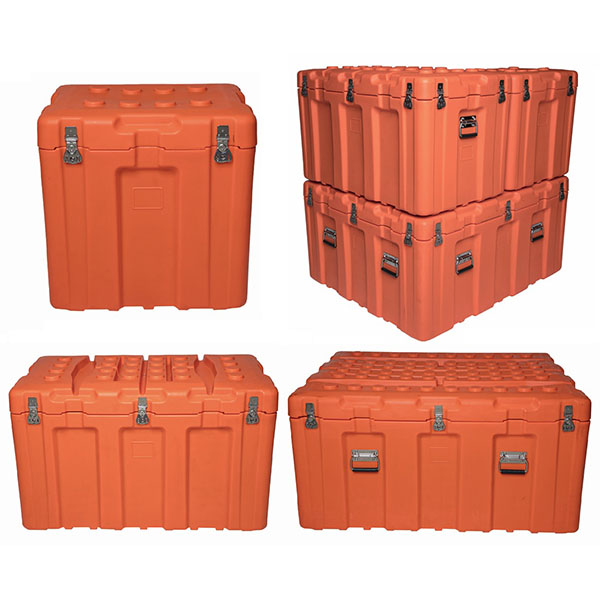
rotationally molded fire cabinet for marine use and field
The rotationally molded fire cabinet is produced by a one-piece rotational molding process to form a seamless cabinet with uniform wall thickness. The cabinet commonly uses weather-resistant engineering plastics (such as HDPE, LLDPE) or modified polymers, offering excellent corrosion resistance, UV resistance, impact resistance, and moisture resistance.
Description
The rotationally molded fire cabinet provides secure protection and convenient access for fire extinguishers, fire blankets, firefighting tools, and other equipment. It is suitable for a variety of scenarios including ships, vehicles, factories, warehouses, campuses, outdoor facilities, and emergency rescue equipment boxes.
Main features of the rotationally molded fire cabinet:
- One-piece, seamless construction: Rotational molding produces the cabinet in a single shot, eliminating welds and leak points, improving overall strength and sealing, and extending service life.
- Weather and corrosion resistance: Material formulations can include UV and antioxidant additives, making it suitable for long-term outdoor or marine environments and resistant to salt spray and chemical corrosion.
- Impact and crush resistance: The structural design balances rigidity and toughness to withstand handling, collisions, or accidental impacts, protecting internal firefighting equipment.
- Waterproof and dustproof: Sealed lid designs, rubber gaskets, or clip structures can be implemented to meet different protection level requirements and prevent moisture or dust ingress.
- Lightweight and easy to install: Lighter than comparable metal cabinets, facilitating handling and on-site installation, and compatible with various mounting methods (bolts, clamps, brackets, or recessed installation).
- Customizable: Supports customization of sizes, colors, door styles (single door, flip cover, drawer), locks (mechanical locks, padlocks, electronic locks), as well as company identification and warning signage.
- Multifunctional accessories: Can be equipped with extinguisher holders, quick-release clips, sight windows, drainage holes, ventilation slots, or internal foam linings and partitions to enable orderly storage and quick access.
Structure and design details:
- Reinforcements and strengthened load zones: Localized thickening or internal ribbing is applied at hinges, lock points, mounting holes, and edges to improve fatigue and shear resistance.
- Sealing and drainage design: Rubber sealing strips can be fitted at door seams, and drainage holes can be reserved or optionally installed at the cabinet bottom to prevent water accumulation and facilitate cleaning.
- Opening and locking: Options include rust-resistant hinges, quick-open handles, or anti-theft locks, and designs can support one-action quick removal of extinguishers.
- Internal fixation system: Adjustable extinguisher clamps, straps, or locating brackets are provided to fit extinguishers of different diameters and models.
- Visibility and labeling: Can be equipped with transparent windows or external scale/indicator plates to facilitate inspection and identification, and supports in-mold coloring or silk-screened safety markings.
Materials and process:
- Common materials: HDPE, LLDPE, or other engineering plastics; materials can be modified with UV stabilizers, flame retardants, or chemical-resistant additives per customer requirements.
- Molding process: Rotational molding in a single shot ensures uniform wall thickness, seamless construction, and reduced stress concentration.
- Surface treatment: Matte or gloss finishes, masterbatch coloring, silk-screening, or labeling are available, providing good scrub resistance.
Applicable scenarios:
- Storage of firefighting equipment on ships, ports, and offshore platforms.
- Industrial sites such as factory workshops, warehouses and logistics centers, yards, and substations.
- Vehicle-mounted boxes for vehicles, construction machinery, and rescue equipment.
- Indoor or outdoor fire safety points in communities, schools, shopping centers, and public venues.