
 English
  Français
  Tiếng Việt
  Italiano
  Nederlands
  Türkçe
  Svenska
  Polski
  Română
  Latviešu
  한국어
한국어  Русский
  Español
  Deutsch
  Українська
  Português
  العربية
  Indonesian
  Čeština
  Suomi
Suomi  Eesti
Eesti  Български
  Dansk
Dansk  Lietuvių
  Bokmål
  Slovenčina
  Slovenščina
  Ελληνικά
  Magyar
  עברית
עברית 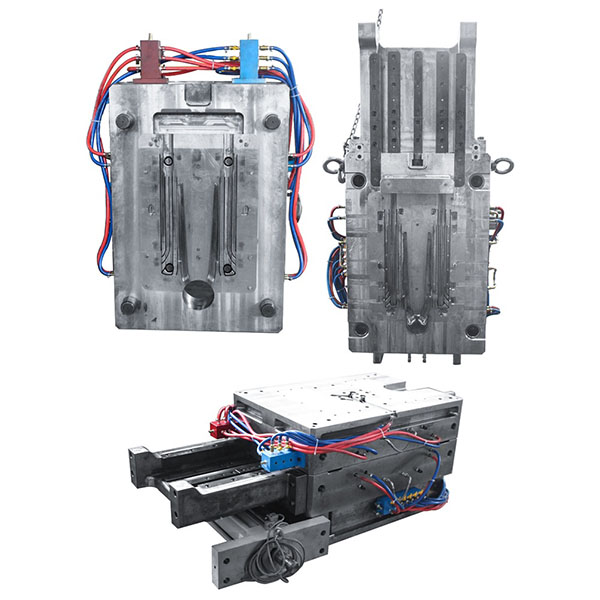
radiator die casting mold for high performance cooling
Radiator die casting molds are used for high-volume, high-precision manufacturing of radiators or heat dissipation components, such as automotive radiators, liquid coolers, and electronic heat sinks.
Radiator die casting mold is responsible for the critical functions of injecting molten metal, forming, venting, and cooling control, directly affecting fin accuracy, channel flow, wall thickness consistency, and surface quality. We provide a one-stop mold development and delivery service from design review, moldflow analysis, material selection, mold manufacturing, trial verification to mass production support.
Main materials and specifications:
- Common mold steels: H13, NAK80, P20, S136, and high-strength stainless steels, selected according to service life and alloy type.
- Applicable alloys: aluminum alloys, zinc alloys, or magnesium alloys, determined according to radiator structure and performance requirements.
- Cavity count and dimensions: Support single-cavity and multi-cavity designs; cavity number and layout can be optimized according to production capacity and part complexity.
- Cooling design: Built-in or external cooling circuits, insert-type coolers, or cold plate designs to control cavity temperature and shorten cycle times.
Design and engineering recommendations:
- Moldflow analysis: Use CAE moldflow simulation to evaluate pouring paths, filling sequence, fin filling and solidification routes to reduce the risk of porosity and cold shuts.
- Fin and channel design: Optimize fin thickness, spacing, and guide channels to ensure good cast filling and favorable heat dissipation performance.
- Parting lines and venting: Reasonably determine parting line locations and optimize venting design to reduce secondary machining and improve yield.
- Reinforced structure: Design ribs, locating guides, and replaceable cores for thin fins or complex channels to facilitate maintenance.
Trial molding and process optimization:
- First-piece trial: Produce initial die-cast trial parts, inspect fin morphology, wall thickness consistency, filling and cooling performance, and record process data.
- Defect analysis and correction: Adjust the gating system, venting, and temperature control based on defects such as flash, cold shuts, porosity, warpage, or surface defects, and perform localized repairs.
- Process confirmation: Determine injection speed, holding pressure, setting time, mold temperature, and demolding conditions; produce a trial report and process card for mass production replication.
Applicable industries and typical applications for Radiator die casting mold:
- Automotive industry: Radiators for automotive cooling systems, electronic cooling modules, and heat exchanger components.
- Electronics and communications: Heat sinks, radiator assemblies, and structural support components.
- Industrial equipment: Hydraulic radiators, cooling modules, and high-efficiency heat exchange units.
- New energy and power: Battery cooling modules and inverter radiators, etc.
Radiator die casting mold is used for high-volume, high-precision manufacturing of radiators or cooling components, such as automotive radiators, liquid coolers, and electronic heat sinks.