
 English
  Français
  Tiếng Việt
  Italiano
  Nederlands
  Türkçe
  Svenska
  Polski
  Română
  Latviešu
  한국어
한국어  Русский
  Español
  Deutsch
  Українська
  Português
  العربية
  Indonesian
  Čeština
  Suomi
Suomi  Eesti
Eesti  Български
  Dansk
Dansk  Lietuvių
  Bokmål
  Slovenčina
  Slovenščina
  Ελληνικά
  Magyar
  עברית
עברית 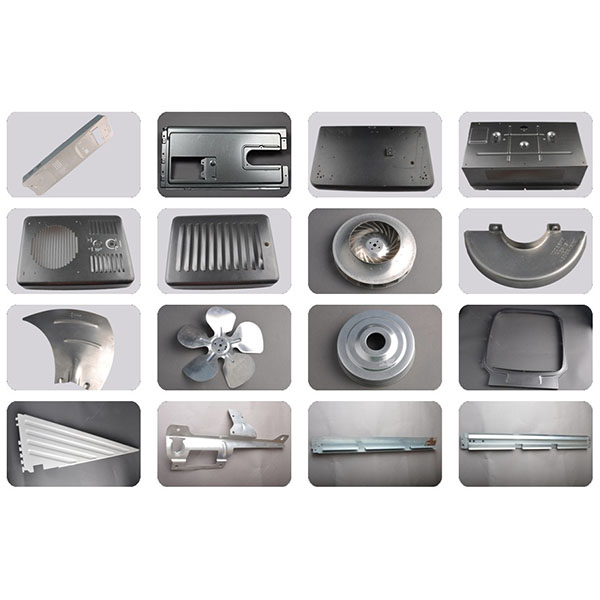
premium precision appliance component stampings for OEM
Appliance component stampings are precision metal parts mass-produced by stamping and forming processes, widely used for structural parts, brackets, conductive terminals, shields, and connectors in household appliances such as refrigerators, washing machines, air conditioners, microwave ovens, and induction cookers.
Description
Appliance component stampings offer high production capacity, stable dimensions, and good surface condition, meeting the appliance industry’s requirements for consistency, assembly fit, and cost control.
Main features of appliance component stampings:
- High production capacity and low unit cost: Compatible with continuous or high-speed stamping lines, suitable for large-volume production with low unit cost and stable lead times.
- Precise dimensions and consistency: Precision tooling and strict process control ensure dimensional tolerances and consistent assembly fit.
- Multiple materials and surface treatments: Support cold-rolled steel (SPCC), stainless steel (e.g., 304/430), copper and copper alloys, brass (H62), aluminum alloys, etc., and can undergo plating, tinning, phosphating, painting, and other surface treatments to meet functional and aesthetic requirements.
- Integration of multiple operations: Blanking, bending, deep drawing, forming, trimming, and other processes can be integrated in the die or completed in downstream operations, improving process efficiency.
Applicable parts and application scenarios for appliance component stampings:
- Structural brackets, mounting plates, inner supports and fasteners;
- Conductive terminals, connector tabs, and contact parts;
- Heat sinks, shields, and ventilation grilles;
- Decorative metal parts or functional small hardware;
- These parts typically require dimensional stability, surface treatments that meet corrosion resistance and electrical connection requirements, and compatibility with automated assembly lines.
Common materials and surface treatment recommendations:
- Materials: SPCC (cold-rolled steel) for general structural parts, suitable for plating or coatings; stainless steel for corrosion-resistant or exposed parts; copper and brass for conductive or easily solderable terminals; aluminum alloys for lightweight components.
- Surface treatments: Nickel plating, tin plating, zinc plating, electrophoresis, painting, or phosphating, etc.; choose processes based on corrosion resistance, plating requirements, and appearance standards. Conductive parts typically require specialized coatings to ensure solderability and electrical performance.
- Notes: Surface treatments must be compatible with the base material and subsequent processes (such as soldering or electroplating) to avoid delamination, discoloration, or adverse effects on conductivity.
Design and process control key points:
- Tolerances and fits: Define critical mating surfaces and allowable tolerances during the design phase; optimize die clearances and strip/blank structures to stabilize formed dimensions.
- Die rigidity and chip removal: Ensure die rigidity to reduce vibration and deformation; design chip removal and ejection structures properly to avoid jamming and surface damage.
- Springback compensation and operation sequencing: Design springback compensation for bent or formed parts; where necessary, split complex operations into stages to reduce scrap risk.
- Surface protection: Implement anti-scratch and anti-contamination measures during processing and assembly to ensure final appearance quality.