
 English
  Français
  Tiếng Việt
  Italiano
  Nederlands
  Türkçe
  Svenska
  Polski
  Română
  Latviešu
  한국어
한국어  Русский
  Español
  Deutsch
  Українська
  Português
  العربية
  Indonesian
  Čeština
  Suomi
Suomi  Eesti
Eesti  Български
  Dansk
Dansk  Lietuvių
  Bokmål
  Slovenčina
  Slovenščina
  Ελληνικά
  Magyar
  עברית
עברית 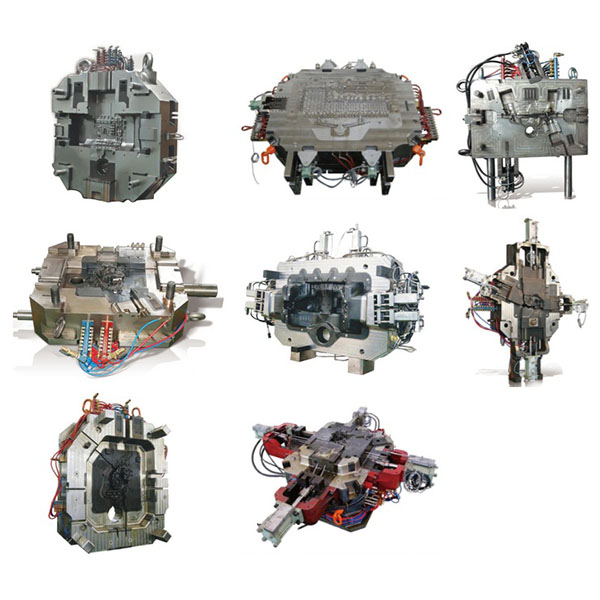
precision die casting mold for heavy-duty transmission
Precision die casting molds are specifically designed for high-precision, high-stability, and high-capacity mass production of metal parts, and are commonly used for die casting of light metals such as aluminum and zinc alloys.
Description
Precision die casting mold, by optimizing the gating system, cooling circuits and cavity machining processes, can achieve castings with tight dimensional tolerances, high repeatability, good surface finish, and stable mechanical properties. It is suitable for the production of critical components in the automotive, electronics, household appliance, and industrial equipment sectors.
Mold materials and surface treatments for precision die casting molds:
- Common mold materials: High heat-resistant and high thermal-fatigue-resistant mold steels are selected, and targeted heat treatments (such as quenching and tempering) are performed according to the casting alloy and production cadence to improve durability and thermal fatigue resistance.
- Surface reinforcement: Treatments such as nitriding, hard chrome plating, PVD coatings, or other surface processes are applied to cavity surfaces to reduce sticking, enhance wear resistance, and extend mold life.
- Sealing and corrosion protection: Corrosion protection treatments and precision fits are applied to cooling channels, sealing surfaces, and fittings to ensure long-term stable operation of injection, cooling, differential-pressure and vacuum systems.
Structure and design key points:
- Cavity and parting surface design: Optimize parting surface locations, vent slots, and fillets according to the part geometry and assembly requirements to balance filling, venting, and subsequent machining operations.
- Gating and runner system: Design appropriate gates, runners, and cold-shut control measures to optimize pouring rhythm and flow speed, reducing the risk of porosity, cold shuts, and stress concentration.
- Cooling system layout: Arrange uniform circulating cooling channels or local cooling circuits to ensure controllable cavity temperature, shorten solidification time, and reduce thermal deformation and dimensional drift.
- Venting and vacuum scheme: Design effective vent grooves or vacuum interfaces at key locations, and use vacuum extraction or online venting equipment to reduce trapped air and improve casting density.
- Ejection and demolding mechanisms: Design robust ejection systems, sliders, or parting mechanisms tailored to the part structure to ensure smooth demolding without damaging surface accuracy.
- Machining allowances and locating datums: Reserve reasonable machining allowances for subsequent precision machining of critical mating surfaces, and design clear locating datums and clamping structures to ensure final part yield.
Trial molding and process validation:
- First-article trial: Conduct first-piece trials to validate pouring and cooling curves, venting and vacuum effectiveness, demolding behavior, and record key parameters such as temperature, pressure, filling speed, and cooling flow rates.
- Defect analysis and optimization: For defects observed on samples (such as porosity, shrinkage, cold shuts, or warpage), adjust pouring process parameters, venting layout, or cooling strategy, and modify the cavity as necessary to eliminate defects.
- Process locking: After successful trial molding, generate a complete process parameter document (pouring curves, mold temperature, cooling flow rates, vacuum parameters, etc.) to facilitate subsequent stable mass production and quality control.
Typical application areas of precision die casting molds:
- Automotive powertrain and transmission components (such as housings, brackets, etc.).
- Structural and heat-dissipation parts for electronics and communications equipment.
- Housings for household appliances and structural parts for industrial equipment.
- Functional parts that require high precision, stable dimensions, and excellent surface quality.