
 English
  Français
  Tiếng Việt
  Italiano
  Nederlands
  Türkçe
  Svenska
  Polski
  Română
  Latviešu
  한국어
한국어  Русский
  Español
  Deutsch
  Українська
  Português
  العربية
  Indonesian
  Čeština
  Suomi
Suomi  Eesti
Eesti  Български
  Dansk
Dansk  Lietuvių
  Bokmål
  Slovenčina
  Slovenščina
  Ελληνικά
  Magyar
  עברית
עברית 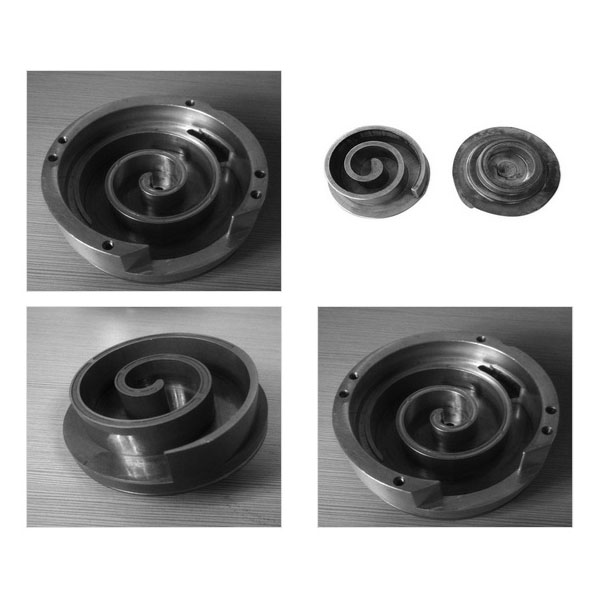
precision CNC machining of aluminum alloy scroll plates
We specialize in high‑precision CNC machining of aluminum alloy scroll plates, combining dedicated fixtures, thin‑wall machining techniques and dynamic/static balance control to ensure scroll plates have stable geometric form, excellent concentricity and surface finish, thereby improving compression efficiency and service life.
Aluminum alloy scroll plates (scroll plate) are widely used in refrigeration compressors, automotive superchargers, and air handling equipment.
Machining capabilities and equipment:
- Main equipment: 5‑axis machining centers, vertical and horizontal CNC machining centers, precision CNC lathes and turn‑mill multitasking machines, equipped with high‑rigidity tooling systems and dynamic balancing measurement equipment.
- Machining processes: one‑setup multi‑operation machining, precision contour milling, internal and external circular machining, thin‑wall surface milling, deep‑hole and small‑hole machining, mirror finishing, etc., suitable for stable machining of complex curves and symmetric or asymmetric scroll profiles.
- Tools and fixturing: use coated carbide tooling, specialized anti‑vibration fixtures and locating references to ensure deformation control of thin‑walled parts during heavy cutting and finishing stages.
Key CNC process points:
- Concentricity and axial clearance control: strictly control concentricity and axial clearance according to drawing fit requirements to ensure scroll meshing accuracy and reduce leakage and noise.
- Thermal deformation and residual stress management: reduce machining deformation and improve fit consistency by optimizing cutting parameters, segmented finishing, and necessary stress‑relief annealing.
- Surface quality control: perform mirror or low‑roughness treatments on sealing and mating surfaces to meet sealing and aerodynamic performance requirements.
Materials and blank forms:
- Common materials: aluminum alloys (e.g., 6061, 6063, 7075, etc.) and special lightweight alloys; select appropriate grades based on corrosion resistance, strength and weight requirements.
- Blank forms: plate stock, milled blanks or customer‑supplied blanks (blank). blank dimensions and machining sequences can be recommended based on machining allowance to reduce cost and ensure quality.
Surface treatments and post‑processing:
- Common treatments: anodizing (standard or hard), chemical cleaning, deburring, polishing and anti‑corrosion coatings, etc., to improve corrosion resistance, wear resistance and appearance consistency.
- Precision fitting and assembly: can provide mating part pre‑assembly, assembly clearance verification and dynamic balancing testing to ensure smooth operation after assembly.
Quality control and inspection:
- Inspection process: incoming inspection, first article inspection (FAI), in‑process inspections, final inspection and pre‑shipment inspection to establish complete traceable quality records.
- Inspection equipment: coordinate measuring machines (CMM), profilometers, surface roughness testers, dynamic balancing test benches and dedicated fixture gauges.
- Documentation support: provide inspection reports, first article reports, material test reports (MTR) and necessary process records and customer‑required quality certificates.
Delivery and customization services:
- Lead time and capacity: support single sample parts and mass production; samples and small batches can be expedited per customer urgent requests. Mass production lead times are confirmed based on quantity and process route.
- Custom development: accept customer drawings (STEP, IGES, DWG) or samples for process evaluation, fixture design and sample trial production to help optimize structure and reduce manufacturing costs.
Ordering instructions:
Please submit part drawings or samples and specify material grade, key dimensional tolerances, surface treatment requirements and estimated quantity. Upon receiving complete information we will provide process evaluation, quotation and lead time recommendations, and can arrange sample trial production and performance verification.