
 English
  Français
  Tiếng Việt
  Italiano
  Nederlands
  Türkçe
  Svenska
  Polski
  Română
  Latviešu
  한국어
한국어  Русский
  Español
  Deutsch
  Українська
  Português
  العربية
  Indonesian
  Čeština
  Suomi
Suomi  Eesti
Eesti  Български
  Dansk
Dansk  Lietuvių
  Bokmål
  Slovenčina
  Slovenščina
  Ελληνικά
  Magyar
  עברית
עברית 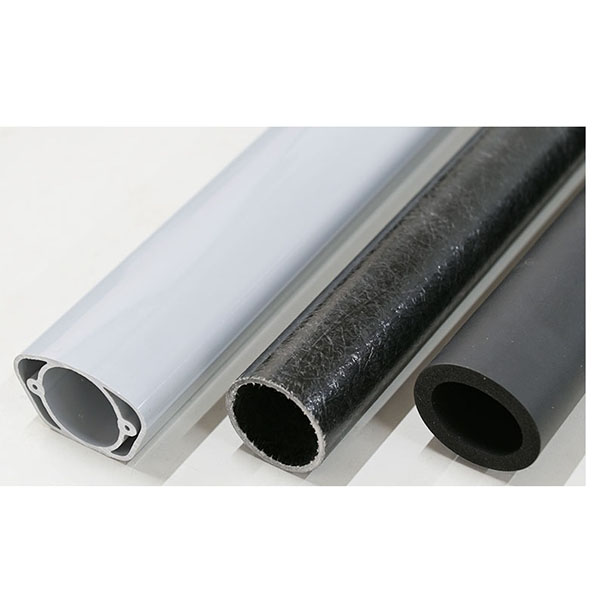
plastic tubing produced by extrusion and injection molding
Plastic tubing manufactured by extrusion and injection molding is a plastic tubing solution that balances high production capacity with precise dimensional control.
Description
Continuous, uniform tubing profiles are formed through the extrusion process, and when necessary injection molding is combined to integrally form end caps, fittings, or special structures. This approach can simultaneously meet requirements for strength, dimensional accuracy, surface finish, and functional connections, and is widely used in fields such as liquid and gas transmission, medical catheters, electronic wiring harness sleeving, industrial piping, and consumer hoses.
Process principles and workflow:
- Extrusion forming: Plastic pellets/masterbatch are melted and extruded, shaped through a die and cooled to solidify, producing continuous tubing. The extrusion process controls diameter and wall thickness consistency through die design and haul-off/traction speed.
- Injection molding: For products requiring integrated fittings, end caps, or special structures, after the tubing is cut or positioned online, additional structures are molded and joined to the tube by injection molding, or secondary processes such as clamping/heat-fusion are used to complete the assembly.
- Combined production: Extrusion and injection molding can be linked online or offline; online integration reduces intermediate steps, increases automation, and ensures assembly accuracy.
Design considerations:
- Diameter and wall thickness ratio: Design appropriate wall thickness based on fluid pressure and flexibility requirements, while considering tolerances caused by shrinkage and uneven cooling.
- Joints and integrated structures: Injection-molded end features should consider bonding and/or mechanical interlock designs with the tubing to ensure sealing and tensile resistance.
- Die and mold design: Extrusion dies, cooling sections, and injection molds must be jointly optimized to reduce warpage, interlayer delamination, and weld lines.
- Tolerances and test points: Define critical dimensions and allowable tolerances, and reserve inspection points to facilitate inline mass-production inspection.
Application areas of plastic tubing manufactured by extrusion and injection molding:
- Medical devices: infusion tubing, catheter sheaths, and medical device connection tubing (must comply with relevant biocompatibility and clean production requirements).
- Automotive and transportation: fuel lines, coolant lines, vacuum lines, and wire harness protective sleeves.
- Industrial and chemical: compressed air tubing, liquid transfer tubing, pneumatic tubing, and chemical-media transfer.
- Consumer and household: garden hoses, appliance water supply hoses, and air hoses.