
 English
  Français
  Tiếng Việt
  Italiano
  Nederlands
  Türkçe
  Svenska
  Polski
  Română
  Latviešu
  한국어
한국어  Русский
  Español
  Deutsch
  Українська
  Português
  العربية
  Indonesian
  Čeština
  Suomi
Suomi  Eesti
Eesti  Български
  Dansk
Dansk  Lietuvių
  Bokmål
  Slovenčina
  Slovenščina
  Ελληνικά
  Magyar
  עברית
עברית 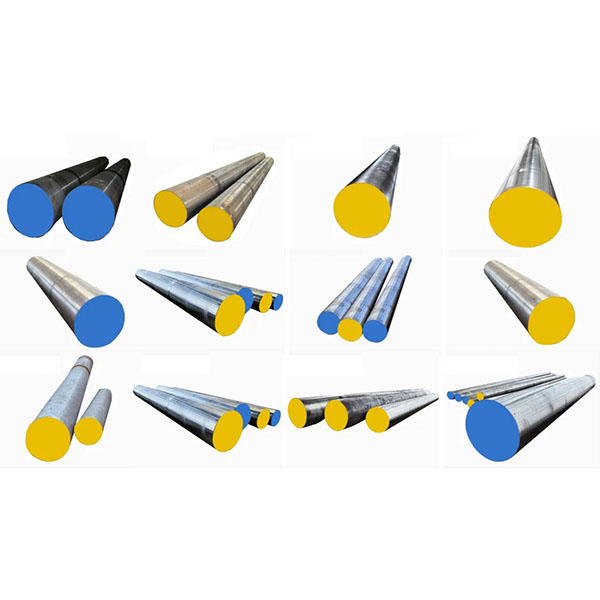
nickel-molybdenum steel forgings for enhanced service
Nickel-molybdenum steel forgings are made from alloy steels containing nickel and molybdenum through forging processes and are used for critical load-bearing and corrosion‑resistant components in severe service conditions.
The addition of nickel enhances the material’s toughness and corrosion resistance, while the presence of molybdenum increases high-temperature strength and creep resistance; together they enable parts to perform stably and reliably in chemical, marine, energy and high-temperature load environments.
Materials and specifications:
- Common grades: Common grades may include but are not limited to alloy steels containing nickel and molybdenum, selectable according to service environment and mechanical requirements.
- Dimensions and tolerances: We support customization of dimensions and tolerances based on customer drawings, 3D models or samples, meeting single-piece samples, small-batch pilot runs and mass production needs.
- Surfaces and interfaces: Mating surfaces, hole locations, keyways, threads and flanges can be machined as required, with technical specifications provided for surface hardness and geometric tolerances.
- Certification and inspection: Material test certificates (MTC), chemical composition and mechanical property reports can be provided, and third‑party inspection or customer witness inspection is supported.
Manufacturing process of nickel-molybdenum steel forgings:
- Forging forming: Closed-die or open-die forging is used to optimize metal flow lines, reduce internal defects, and ensure dense microstructure and uniform mechanical properties.
- Heat treatment: Normalizing, quenching + tempering, quench-and-temper, or specialized localized heat treatments are applied according to material composition and service conditions to achieve the required match of surface hardness and core toughness.
- Precision machining: CNC turning, milling, grinding, gear machining and deep-hole machining are used to finish critical mating surfaces and functional faces, ensuring dimensional accuracy and interchangeability.
- Surface strengthening and protection: Optional processes such as shot peening, nitriding, induction hardening or carbonitriding can be used to improve fatigue life; sandblasting, phosphating, coating, painting or thermal spray are applied to meet corrosion resistance and appearance requirements.
Performance characteristics:
- Excellent comprehensive mechanical properties: Provides high strength while maintaining good toughness, suitable for conditions subject to impact and shock loading.
- Outstanding corrosion resistance: Nickel increases corrosion resistance in aggressive media, suitable for chemical and marine applications.
- Good high-temperature performance: Molybdenum enhances strength, creep resistance and stability at medium-to-high temperatures.
- Exceptional fatigue life: The forged microstructure combined with appropriate heat treatment significantly reduces internal defects and improves service life under cyclic loading.
- Machining and assembly friendly: After precision machining, parts exhibit good dimensional stability and interchangeability, facilitating assembly and maintenance or replacement.
Applications:
Nickel-molybdenum steel forgings are widely used in chemical, oil & gas, marine engineering, boilers and thermal equipment, energy facilities, heavy machinery and other contexts requiring corrosion resistance, heat resistance and high strength, such as pump bodies, valve bodies, shafts, flanges, connecting rods and high-stress fasteners.