
 English
  Français
  Tiếng Việt
  Italiano
  Nederlands
  Türkçe
  Svenska
  Polski
  Română
  Latviešu
  한국어
한국어  Русский
  Español
  Deutsch
  Українська
  Português
  العربية
  Indonesian
  Čeština
  Suomi
Suomi  Eesti
Eesti  Български
  Dansk
Dansk  Lietuvių
  Bokmål
  Slovenčina
  Slovenščina
  Ελληνικά
  Magyar
  עברית
עברית 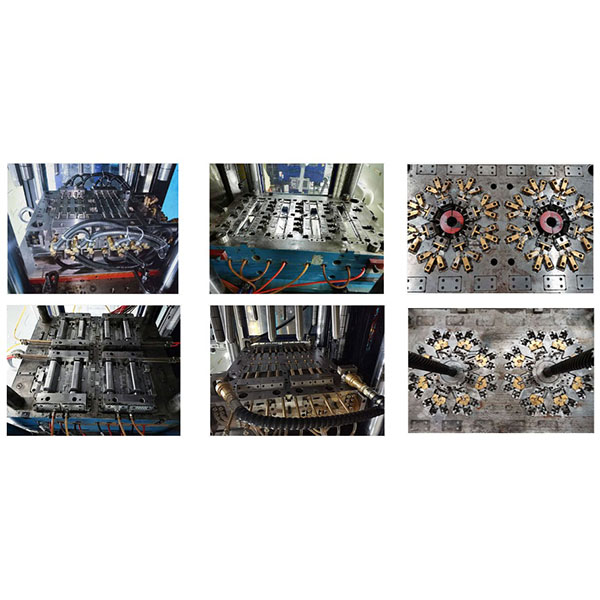
multi-cavity injection mold solutions for mass production
A multi-cavity injection mold is suitable for high-volume manufacturing of small to medium-sized parts; it can significantly increase production capacity, reduce per-piece mold cost, and improve production line supply efficiency.
Description
A multi-cavity injection mold is a type of mold in which multiple cavities are arranged within the same mold so that multiple finished parts can be produced simultaneously in a single clamp and injection cycle.
Typical application scenarios:
- Consumer electronics housings, small connectors, and fasteners that require large-volume supply.
- Automotive interior small parts, clips, and inserts produced in batches.
- Household and daily-use plastic accessories (such as hangers, buckles, and decorative parts).
- Disposable medical device parts or small sterilizable accessories (depending on material and certification requirements).
- Small packaging and consumer product parts with short cycle times.
Main forms:
- Multiple identical cavities: each cavity has the same shape and size, suitable for mass production of a single part type.
- Family mold: different cavities within the same mold produce multiple different parts, suitable for producing sets or matched components.
- Stack mold: higher cavity counts are achieved by stacking upper and lower or multiple layers of cavities, saving floor space and increasing output.
- Multi-cavity mold with a hot runner: uses a hot runner system to supply material evenly, reducing waste and improving filling balance.
Design points and engineering considerations:
- Runner and gate balance: design cold or hot runner layouts reasonably, and use valve gates or balanced distribution when necessary to ensure consistent filling across cavities.
- Balanced cooling circuits: provide equivalent cooling paths for each cavity to avoid warpage or dimensional variation caused by temperature differences.
- Cavity consistency control: use precision machining and strict tolerance control to ensure dimensional consistency and surface quality among cavities.
- Mold rigidity and structure: the mold base, cores, and cavity layout must ensure uniform force distribution during clamping to prevent deformation and flash.
- Injection machine matching: confirm that injection volume, clamp force, and machine performance meet the injection and holding requirements for the simultaneous cavity count.
- Venting and ejection design: properly arrange venting grooves, ejector pins, and ejection mechanisms to ensure complete part removal without damaging the appearance.
- Maintenance and serviceability: design for replaceable cores, access for hot runner maintenance, and easy-to-clean structures to reduce long-term maintenance costs.
Advantages of multi-cavity injection molds:
- Significantly increase production capacity and reduce unit cost per part (especially for small parts with short cycle times).
- Improve continuous supply capability for production lines, reducing mold change frequency and downtime.
- Achieve more consistent product quality under stable process conditions.
Limitations and risks of multi-cavity injection molds:
- High mold manufacturing cost, complex structure, and long development and trial-molding cycles.
- Increased difficulty in maintaining cavity consistency, requiring stricter process control and support from moldflow analysis.
- Higher requirements for injection machine capability, and a single failure can impact a large number of parts.