
 English
  Français
  Tiếng Việt
  Italiano
  Nederlands
  Türkçe
  Svenska
  Polski
  Română
  Latviešu
  한국어
한국어  Русский
  Español
  Deutsch
  Українська
  Português
  العربية
  Indonesian
  Čeština
  Suomi
Suomi  Eesti
Eesti  Български
  Dansk
Dansk  Lietuvių
  Bokmål
  Slovenčina
  Slovenščina
  Ελληνικά
  Magyar
  עברית
עברית 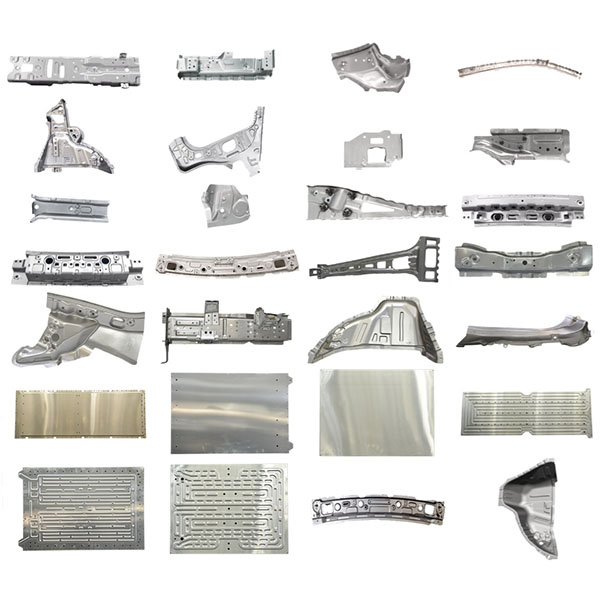
manufacturing of automotive stamped hardware parts
Manufacturing of automotive stamped hardware parts refers to the process of using stamping, deep drawing, trimming, bending and forming processes, together with dedicated dies and presses, to transform metal sheet into automotive components.
The scope of automotive stamped hardware parts includes connectors, clips, retainers, brackets, small mounts for suspension components, decorative covers, and other structural and functional hardware parts, suitable for mass-produced, standardized automotive component manufacturing.
Main processes and capabilities for manufacturing automotive stamped hardware parts:
- Blanking and feeding: Using punching, cutting or drop-off blanking methods to quickly obtain blanks that provide dimensionally stable raw parts for subsequent forming.
- Progressive and transfer die forming: Employing progressive dies, transfer dies, or deep-drawing dies to complete integrated multi-step processing for high productivity and complex forming.
- Deep drawing and bending: Providing single- or multi-stage deep drawing, bending and springback-control processes for parts with three-dimensional shapes.
- Shaping and trimming: Achieving assembly and functional requirements through subsequent operations such as reshaping, trimming, punching and bending.
- Secondary operations: Offering spot welding, riveting, pre-treatment, electroplating, painting, and laser cutting as supporting processes to meet assembly and surface-finish requirements.
Materials and thickness range for automotive stamped hardware parts:
Common materials include cold‑rolled steel, hot‑rolled steel, stainless steel, aluminum alloys, copper and copper alloys. Typical sheet thickness ranges from 0.3 mm to 3.0 mm (adjustable based on part function and design requirements); specific material grades and thicknesses should be determined during engineering review to ensure formability and mechanical performance.
Quality and tolerance control:
- Dimensional control: Use precise locating, precision die machining and stable feeding systems to ensure key dimension tolerances and product consistency.
- Surface and burr control: Optimize cutting edges and blanking clearances, combined with appropriate lubrication and protective measures, to reduce burrs and scratches and lower downstream processing costs.
- Process monitoring: Implement first-article inspection, online piece counting and sampling of critical dimensions, as well as monitoring of production parameters (force, displacement, cycle time) to detect abnormalities in a timely manner.
- Quality systems: Support inspection and documentation management in accordance with customer requirements such as ISO/TS or IATF automotive quality systems.
Die design and tryout services:
- Die design and manufacture: Provide design and manufacture of blanking dies, progressive dies, transfer dies and deep-drawing dies, supporting material simulation, strip layout and life-cycle analysis.
- Tryout and sampling: Deliver a first-article report after tryout, including key dimensions, appearance, burrs and forming-defect analysis, and optimize the die or process parameters based on tryout results.
- Maintenance and spare parts: Offer die maintenance plans, consumable spare parts supply and on-site rapid repair support to minimize downtime.
Surface treatment and downstream processes:
Provide surface treatments according to part function and appearance requirements, such as phosphating, electroplating, painting, e-coating and anodizing (for aluminum parts), as well as necessary heat treatment or stress-relief measures to ensure corrosion resistance and assembly performance.