
 English
  Français
  Tiếng Việt
  Italiano
  Nederlands
  Türkçe
  Svenska
  Polski
  Română
  Latviešu
  한국어
한국어  Русский
  Español
  Deutsch
  Українська
  Português
  العربية
  Indonesian
  Čeština
  Suomi
Suomi  Eesti
Eesti  Български
  Dansk
Dansk  Lietuvių
  Bokmål
  Slovenčina
  Slovenščina
  Ελληνικά
  Magyar
  עברית
עברית 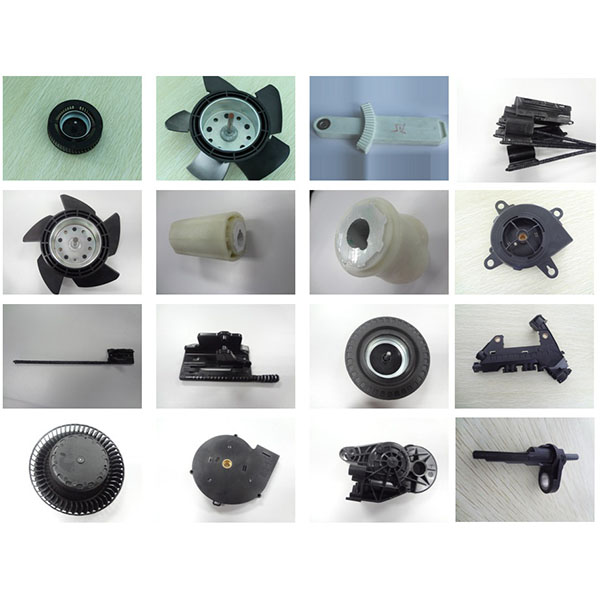
insert molding molds for overmolded durable metal parts
Insert molding molds are used to integrally form metal or other prefabricated inserts with plastic during injection molding, and are widely applied to structural components that require enhanced connections, precise positioning, or guiding functions.
Description
Insert molding molds enable precise positioning and reliable fastening of inserts, as well as excellent plastic encapsulation of metal surfaces. They meet the strength, corrosion resistance, and high-volume production requirements of automotive, home appliance, electronics, hardware, and other industries.
Applicable part types:
- Threaded inserts, metal sleeves, and riveted inserts: used to provide reliable threaded connections or high-strength fastening points.
- Bushings and bearing housings: plastic-overmolded or plastic-bodied parts that offer low friction and wear resistance in combination with metal components.
- Clips and quick-fit parts: single-piece or composite parts designed for fast assembly and reliable positioning.
- End caps, covers, and seals: end components that balance sealing, waterproofing, and structural strength requirements.
- Composite structural parts: metal–plastic integrated components (insert-molding) and two-color / two-shot molded parts (2K, 2-shot).
Common materials and characteristics:
- Plastic substrates: PA6, PA66, POM, PBT, PC, ABS, etc., balancing strength, wear resistance, and dimensional stability.
- Elastomeric materials: TPE and TPU for soft overmolding, sealing, or vibration/noise reduction.
- Metal inserts: stainless steel, brass, galvanized steel, or aluminum alloys providing threads, reinforcement, and guiding functions.
- Functional modifications: glass-filling, flame retardant, corrosion resistance, UV stabilization, or low-friction additives customized per requirements.
Machining and injection molding process flow:
- Insert pre-loading and feeding: support automated feeding and vision-based positioning; manual insert placement may be used for small sample runs but must ensure consistency.
- Insert molding (IMI): inject molten plastic into a mold with inserts fixed in place, strictly controlling injection speed, packing, and hold time to ensure bond strength and low residual stress.
- Secondary overmolding and 2K molding: use secondary molding or two-shot injection for parts requiring soft–hard combinations.
- Cooling and thermal treatment: control cooling cycles, annealing, and tempering according to material properties to reduce warpage and internal stress.
- Post-processing and assembly: deburring, cleaning, adhesive application, threaded insert installation, and surface treatments such as painting or plating.
Advantages and application value of insert molding molds:
- Improve assembly reliability: provide robust connection points directly in thin-walled or complex structures, reducing downstream assembly steps.
- Reduce total cost: integrated production reduces component count and assembly time, favorable for scaling production.
- Enhance product durability: appropriate material and structural design improves corrosion resistance, fatigue performance, and environmental adaptability.
- Support customization: flexibly adjust materials, insert types, and surface treatments to meet functional requirements.