
 English
  Français
  Tiếng Việt
  Italiano
  Nederlands
  Türkçe
  Svenska
  Polski
  Română
  Latviešu
  한국어
한국어  Русский
  Español
  Deutsch
  Українська
  Português
  العربية
  Indonesian
  Čeština
  Suomi
Suomi  Eesti
Eesti  Български
  Dansk
Dansk  Lietuvių
  Bokmål
  Slovenčina
  Slovenščina
  Ελληνικά
  Magyar
  עברית
עברית 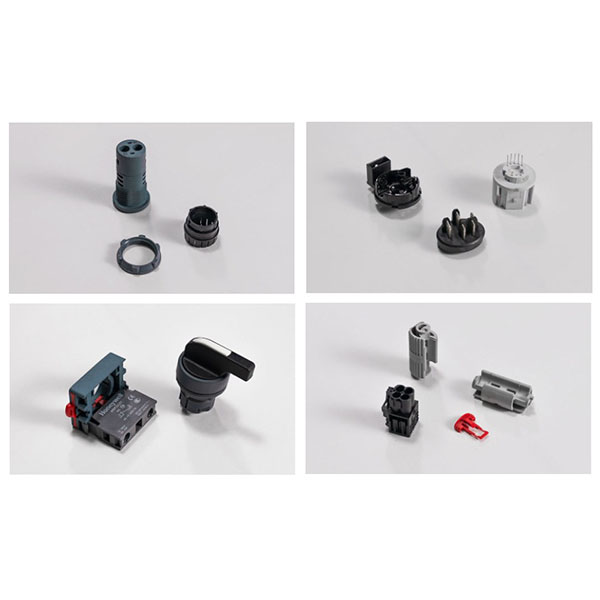
injection moulds for household appliance plastic parts
Injection moulds for household appliance plastic parts are high-precision molds custom-designed and manufactured for housings, functional parts, and structural components of household appliances.
Description
Injection moulds for household appliance plastic parts emphasize dimensional repeatability, surface quality, balanced cooling, and high production capacity. They support the full process from concept samples to mass production and are widely used in the manufacture of plastic components for products such as washing machines, refrigerators, microwave ovens, vacuum cleaners, air conditioners, and small household appliances.
Applicable part types:
- Enclosures: front and rear housings, panels, and decorative covers.
- Functional parts: fan blades, air-guide components, brackets, and baffles.
- Connectors and assembly parts: snap-fits, rivet fittings, guide rails, and slots.
- Precision small parts: buttons, handles, knobs, and guide posts.
Design key points for injection moulds for household appliance plastic parts:
- Cavities and parting lines: Ensure cavity accuracy and a reasonable parting-line layout to facilitate demolding and post-processing.
- Cooling system: Use balanced cooling circuit designs to shorten cycle times and ensure dimensional stability and low warpage.
- Gating system: Properly select gate types and locations; use hot-runner systems when necessary to reduce sprues and shorten cycles.
- Venting and runners: Provide sufficient venting to prevent burn marks and porosity, and optimize runners to avoid short shots.
- Testing and flow analysis: Use mold flow analysis (Moldflow) to optimize gating, cooling, and rib layout, reducing the number of mold trials.
Mold materials and machining accuracy:
- Material selection recommendations: Choose suitable mold steel based on part loading, operating temperature, weather resistance, and surface requirements.
- Heat treatment and hardness: Apply appropriate heat treatment and polishing to cores and cavities to ensure wear resistance and consistent surface finish.
- Tolerance control: Define critical dimensional tolerances according to part function to ensure assembly and interchangeability.
Key process parameters and control:
- Injection pressure and rate: Adjust according to material and cavity characteristics to ensure complete filling and reduce warpage.
- Mold temperature and melt temperature: Precisely control to ensure surface quality and consistent material properties.
- Packing/holding and cooling time: Optimize based on material shrinkage behavior to control dimensions and reduce internal stresses.
- Automation and inspection: Recommended integration with robotic part removal, inline visual inspection, and SPC data logging to achieve stable yields.
Surface finishing and post-processing:
- Surface finishes: Support glossy, matte, satin, and textured finishes to meet appearance design requirements.
- Secondary processes: Surface treatments such as painting, electroplating, heat transfer printing, laser marking, or labeling can be integrated as required.
- Deburring and assembly: Molded chamfer designs and automated deburring equipment improve subsequent assembly efficiency.