
 English
  Français
  Tiếng Việt
  Italiano
  Nederlands
  Türkçe
  Svenska
  Polski
  Română
  Latviešu
  한국어
한국어  Русский
  Español
  Deutsch
  Українська
  Português
  العربية
  Indonesian
  Čeština
  Suomi
Suomi  Eesti
Eesti  Български
  Dansk
Dansk  Lietuvių
  Bokmål
  Slovenčina
  Slovenščina
  Ελληνικά
  Magyar
  עברית
עברית 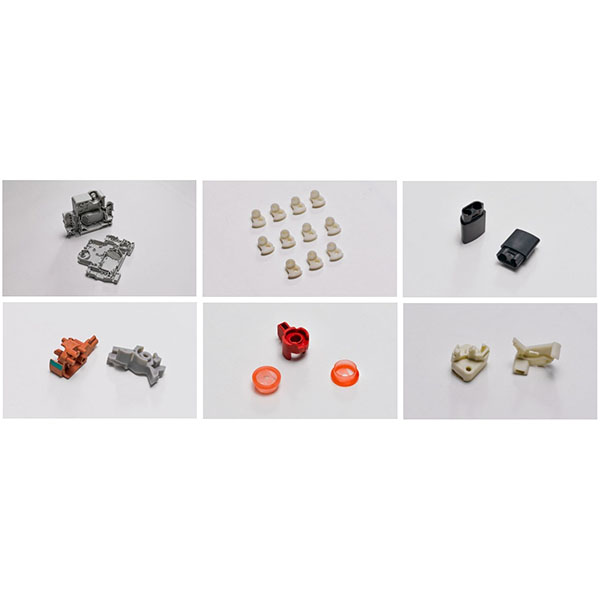
injection molds for low-voltage electrical plastic parts
Injection molds, by optimizing cavity design, gating systems, and cooling layout, ensure molded parts meet strict electrical insulation, heat resistance, and aging resistance requirements, and are suitable for mass production of plastic parts for circuit breakers, terminal blocks, housings, buttons, and other low-voltage distribution devices.
Description
Injection molds for low-voltage electrical plastic parts are specifically designed for the insulation, safety, and assembly precision of low-voltage electrical components.
Mold structure and equipment requirements:
- Cavities and parting surfaces: Optimize parting line locations according to product assembly positioning and external geometry to ensure easy demolding without affecting critical mating surfaces.
- Gates and runners: Select appropriate gate types and locations to reduce short shots, burning, and flash; design hot-runner or cold-runner systems based on production volume and cost trade-offs.
- Cooling and temperature control: Uniform cooling circuits reduce internal stresses, shorten cycle times, and maintain dimensional stability.
- Injection molding machine selection: Choose injection molding machines with appropriate tonnage and precision according to the materials and product size, equipped with stable temperature control and metering systems.
Manufacturing process and key parameters:
- Injection parameters: Optimize injection speed, holding pressure, and backpressure to prevent warpage and internal stresses.
- Mold temperature and melt temperature: Set appropriate mold and melt temperatures according to material characteristics to ensure molding stability and surface quality.
- Degassing and venting: Provide vent grooves or use vacuum assistance in areas prone to air entrapment to reduce porosity and burn defects.
- Post-processing: Deburring, annealing (if required), assembly fit-hole inspection, and functional testing.
Typical application areas of Injection molds:
- Insulation parts and housings for low-voltage circuit breakers and contactors.
- Buttons, handles, and terminal blocks for control boxes and distribution cabinets.
- Safety protective parts for household and commercial appliances.
- Functional plastic parts that require high insulation and dimensional stability.