
 English
  Français
  Tiếng Việt
  Italiano
  Nederlands
  Türkçe
  Svenska
  Polski
  Română
  Latviešu
  한국어
한국어  Русский
  Español
  Deutsch
  Українська
  Português
  العربية
  Indonesian
  Čeština
  Suomi
Suomi  Eesti
Eesti  Български
  Dansk
Dansk  Lietuvių
  Bokmål
  Slovenčina
  Slovenščina
  Ελληνικά
  Magyar
  עברית
עברית 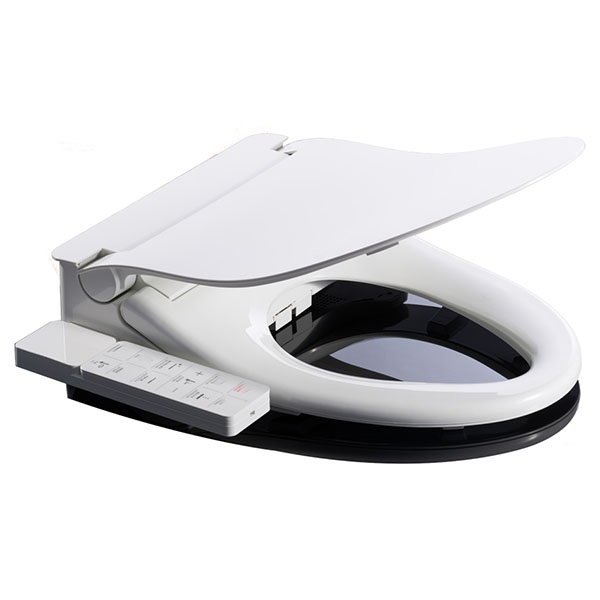
injection molding and mold making for toilet seats
Injection molding and mold making for toilet seats provide an integrated solution from mold design and manufacturing to injection molding and secondary assembly.
Description
Injection molds for toilet seats are suitable for toilet seats of various materials and constructions, including standard plastic seats, soft-close seats, seats with cushioned hinges, and seats with heating/cleaning functions. They emphasize appearance quality, dimensional consistency, structural strength, and long-term durability, and widely serve sanitary-ware manufacturers, OEM, ODM customers, and the aftermarket parts market.
Applicable product types:
- Standard plastic toilet seats: PP, HDPE, etc.
- Soft-close silent toilet seats with damping hinges.
- High-end seats with heating and deodorizing functions.
- One-piece integrated seats and detachable quick-fit seats.
- Children’s and accessibility-adapted seats and special-specification customizations.
Common materials and characteristics:
- PP: Good chemical resistance, low cost, moderate toughness; commonly used for standard toilet seats.
- ABS or PC/ABS: High strength and easy surface treatment; suitable for styles that require good appearance and high rigidity.
- TPE, TPR (thermoplastic elastomers): Used for soft edges, sealing rings, or surface overmolding to improve feel and slip resistance.
- Plastic additives: Anti-yellowing, flame retardant, antibacterial, and weather-resistant additives can be formulated as required to meet functional and regulatory needs.
Design key points for injection molds:
- Cavity structure: Use closed or multi-cavity mold designs to meet production capacity requirements, ensuring cavity machining accuracy and consistent mirror or textured surface finishes.
- Parting line and demolding: Reasonably arrange parting lines and demolding mechanisms to avoid prominent parting marks and to ensure easy demolding and mold longevity.
- Gating system: Choose hot-runner or cold-runner systems based on production volume, and reasonably position gates to reduce warpage, sinks, and flow marks.
- Cooling circuits: Balanced cooling design to shorten cycle time and ensure dimensional stability, with special attention to cooling balance at sections with thickness variation.
- Hinges and connection features: Molds should consider the insert molding of hinge inserts or metal fittings, ensuring fit tolerances and functional reliability.
- Surface texture and finish: Select matte, glossy, or textured finishes according to product positioning, and allow for polishing and texture processing in mold design.
Injection molding process and production flow:
- Injection parameter control: Precisely control melt temperature, injection speed, packing/holding, and cooling time to control shrinkage and avoid warpage and internal stress.
- Multi-process integration: For seats that require assembly of damping hinges, metal inserts, or electronic components, in-mold assembly or inline injection plus assembly linkage can be implemented.
- Post-processing: Include deburring, trimming, hot bending, hinge assembly, painting, electroplating, and printing as required.
- Automation and capacity: Adopt automated part removal, visual inspection, and robotic assembly to improve yields and reduce labor costs, adapting to large-scale production needs.