
 English
  Français
  Tiếng Việt
  Italiano
  Nederlands
  Türkçe
  Svenska
  Polski
  Română
  Latviešu
  한국어
한국어  Русский
  Español
  Deutsch
  Українська
  Português
  العربية
  Indonesian
  Čeština
  Suomi
Suomi  Eesti
Eesti  Български
  Dansk
Dansk  Lietuvių
  Bokmål
  Slovenčina
  Slovenščina
  Ελληνικά
  Magyar
  עברית
עברית 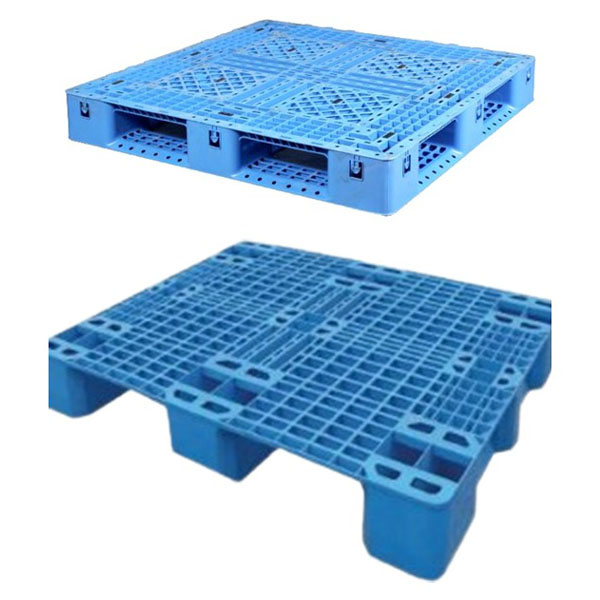
injection-molded plastic pallets for goods handling
injection-molded plastic pallets are manufactured by injection molding of engineering plastics as one-piece or modular assemblies, and are suitable for logistics handling, warehouse turnover, cold chain transport, and automated high-bay storage systems.
Description
Compared with traditional wooden or pressed pallets, injection-molded pallets offer advantages such as dimensional stability, corrosion resistance, easy cleaning, long service life, and recyclability, making them suitable for high-frequency handling and standardized operations.
Core features:
- High strength and uniform load-bearing: Through structural optimization and ribbing design, they achieve excellent static and dynamic load performance, ensuring stable operation with forklifts, hand trucks, and automated handling equipment.
- Dimensional accuracy and interchangeability: Precision molds guarantee consistent pallet geometry, facilitating seamless compatibility with racks, turnover boxes, and transport equipment.
- Weather and chemical resistance: Common materials such as HDPE, PP, and PA provide good resistance to water, oil, acids, and alkalis, making them suitable for cold chain, chemical, and humid environments.
- Lightweight and impact resistant: Lighter than metal pallets, they are easier for manual handling; material toughness improves impact resistance and reduces the risk of damage during transport.
- Hygiene and easy cleaning: Smooth surfaces and good drainage design make them suitable for industries with high hygiene requirements—such as food, pharmaceutical, and electronics—and easy to pressure-wash and disinfect.
- Recyclable and eco-friendly: Made from recyclable plastics, they support reuse and reprocessing, meeting green logistics and sustainability requirements.
- Customization capabilities: Support customization of size, load rating, entry type (four-way, two-way), anti-slip textures, nesting/folding designs, or pallet corner markings as required.
Strength and testing:
- Load capacity: Static, dynamic, and concentrated loads are designed per customer requirements, with load test data provided.
- Impact and fatigue resistance: Simulated handling and stacking conditions are used for cyclic impact and fatigue testing to evaluate service life.
- Environmental adaptability: Low-temperature impact tests, heat aging, and UV aging tests ensure stable performance under different climate conditions.
- Hygiene testing: For food-contact grade materials, relevant tests can be provided or cleanliness requirements specified by the customer can be met.
Application scenarios for injection-molded plastic pallets:
- Logistics and handling: Compatible with forklifts, stackers, conveyors, and other handling equipment for goods turnover in factories, warehouses, and distribution centers.
- Cold chain transport: Low-temperature-resistant materials and waterproof design suitable for refrigerated and frozen food as well as pharmaceutical transport.
- Automated warehousing: High dimensional consistency makes them suitable for automated sorting and AGV/ASRS systems.
- Manufacturing and assembly lines: Used for parts transport, work-in-progress storage, and material conveyance on production lines.
- Medical and food industries: Optional sanitary-compliant materials and smooth surface designs facilitate cleaning and disinfection.