
 English
  Français
  Tiếng Việt
  Italiano
  Nederlands
  Türkçe
  Svenska
  Polski
  Română
  Latviešu
  한국어
한국어  Русский
  Español
  Deutsch
  Українська
  Português
  العربية
  Indonesian
  Čeština
  Suomi
Suomi  Eesti
Eesti  Български
  Dansk
Dansk  Lietuvių
  Bokmål
  Slovenčina
  Slovenščina
  Ελληνικά
  Magyar
  עברית
עברית 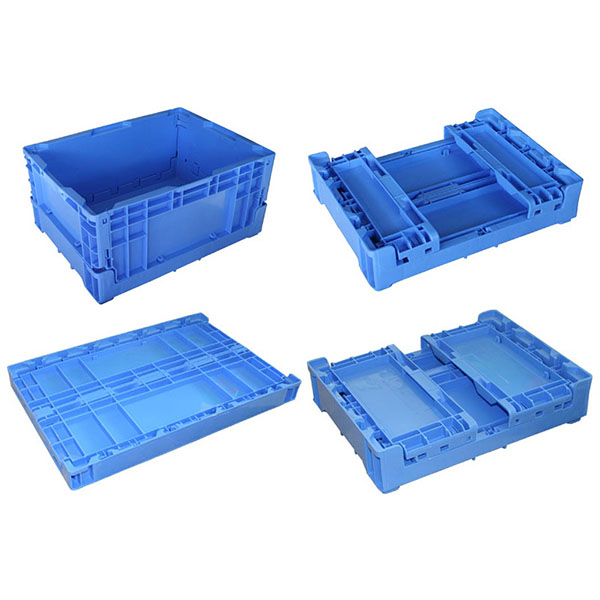
injection molded folding box is ideal for compact storage
The folding structure of the injection-molded folding box allows for quick assembly and compact folding for return, making it suitable for logistics, warehousing, retail display, and household storage among other scenarios and serving as an ideal solution to improve space utilization and transportation efficiency.
Injection-molded folding boxes are manufactured using high-precision injection molding processes and combine sturdy durability with flexible foldable storage.
Main materials and specifications:
-
Common materials: engineering plastics such as polypropylene (PP) and high density polyethylene (HDPE), offering good strength, impact resistance, and weatherability.
-
Dimensions and load capacity: sizes can be customized per customer requirements; standard specifications can carry anywhere from several dozen kilograms up to several hundred kilograms, with exact load capacity depending on structural design and wall thickness.
-
Colors and formulations: support custom color injection molding, color masterbatch, UV resistant formulations, and flame-retardant formulations (please specify if special requirements exist).
Structure and process features:
-
Folding mechanism: uses wear-resistant hinges and integrated snap-fit design for smooth folding, high durability, quick opening and closing, and one-touch locking functionality.
-
Reinforcement design: strategically placed ribs and load-bearing beams improve compressive and bending strength and ensure stack stability.
-
Mold technology: compatible with multi-cavity or single-cavity molds; hot runner systems and insert designs support efficient mass production and cost control.
-
Surface treatments: optional matte or glossy textures, silk-screened logos, heat transfer printing, painting, and other processes to enhance brand recognition and surface quality.
Performance and durability:
-
Weather resistance: material formulations can be enhanced for heat and cold resistance and UV aging resistance to suit various indoor and outdoor environments.
-
Chemical resistance: good resistance to common cleaning agents and mild chemical media, making the box easy to clean and maintain.
-
Service life: structural optimization and high-quality raw materials ensure long-term repeated folding use without prone-to-failure fatigue.
Application scenarios:
-
Logistics and supply chain: suitable for returnable logistics, order picking, reverse logistics, and in-warehouse handling.
-
Retail: standardized containers for display, presentation, and inventory management.
-
Industrial manufacturing: parts turnover, assembly line feeding, and storage of semi-finished products.
-
Home and office: daily storage and transport for clothing, toys, files, and more.