
 English
  Français
  Tiếng Việt
  Italiano
  Nederlands
  Türkçe
  Svenska
  Polski
  Română
  Latviešu
  한국어
한국어  Русский
  Español
  Deutsch
  Українська
  Português
  العربية
  Indonesian
  Čeština
  Suomi
Suomi  Eesti
Eesti  Български
  Dansk
Dansk  Lietuvių
  Bokmål
  Slovenčina
  Slovenščina
  Ελληνικά
  Magyar
  עברית
עברית 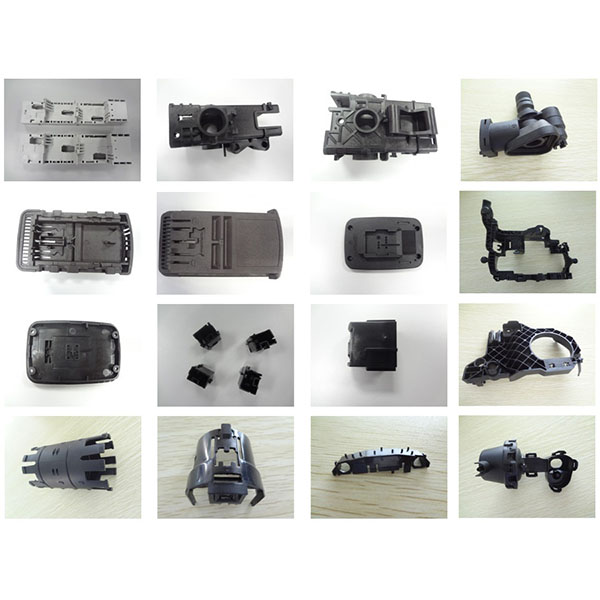
injection-molded engineering plastic parts for OEM
Injection-molded engineering plastic parts refer to functional components manufactured by injection molding using engineering-grade thermoplastic materials, suitable for mass production of structural parts, connectors, housings, guides, and functional assemblies.
Description
Injection-molded engineering plastic parts combine excellent mechanical properties, heat resistance, and dimensional stability, and are widely used in automotive, electronic and electrical, industrial equipment, medical device, and consumer product fields.
Design considerations for Injection-molded engineering plastic parts:
- Wall thickness and shrinkage: Reasonably control wall thickness distribution to reduce warpage and internal stresses, and adopt uniform wall thickness and flow-oriented design.
- Ribs and stiffeners: Improve rigidity through ribs while avoiding stress concentration and filling issues.
- Gates and venting: Properly arrange gates and vent grooves to prevent short shots, burn marks, and porosity defects.
- Tolerances and fits: Precisely design mating surfaces and locating features, taking mold machining and injection molding tolerances into account to facilitate subsequent assembly.
Mold and process requirements:
- Mold precision: Use high-precision cavities and parting-line design to ensure dimensional consistency and long-term durability.
- Gating system: Select hot-runner or cold-runner systems according to production volume and product requirements, and optimize runner and gate locations.
- Cooling and temperature control: Design balanced cooling circuits and use stable mold temperature control equipment to shorten cycle time while ensuring dimensional stability.
- Equipment selection: Choose injection molding machines with appropriate tonnage and precision based on material characteristics and product size; equip automation for part removal and secondary process integration when necessary.
Key process parameters and process control:
- Injection speed and pressure: Optimize to ensure complete filling and reduce short shots and internal stresses.
- Packing/holding and cooling time: Adjust according to material shrinkage and crystallization behavior to ensure dimensional accuracy and surface quality.
- Backpressure and melt temperature: Control melt homogeneity to improve weld lines and internal defects.
- SPC and online monitoring: Record pressure/time/temperature curves, implement statistical process control, and adjust parameters promptly.
Quality inspection and reliability verification:
- Appearance inspection: Check surface defects, color consistency, flow marks, and bubbles.
- Dimensional inspection: Measure and record critical dimensions using calipers, profile projectors, or CMM.
- Mechanical and functional testing: Tensile, impact, fatigue, and fit-strength tests.
- Environmental suitability: Heat resistance, humidity resistance, chemical resistance, and aging tests to assess long-term reliability.
Typical application scenarios for Injection-molded engineering plastic parts:
- Automotive parts: sensor brackets, interior trim, connectors, and guide components.
- Electronics and electrical: housings, panels, thermal management parts, and structural supports.
- Industrial equipment: gears, valve bodies, fixed clamps, and functional assemblies.
- Medical and consumer products: structural supports, housings, and functional interface parts.