
 English
  Français
  Tiếng Việt
  Italiano
  Nederlands
  Türkçe
  Svenska
  Polski
  Română
  Latviešu
  한국어
한국어  Русский
  Español
  Deutsch
  Українська
  Português
  العربية
  Indonesian
  Čeština
  Suomi
Suomi  Eesti
Eesti  Български
  Dansk
Dansk  Lietuvių
  Bokmål
  Slovenčina
  Slovenščina
  Ελληνικά
  Magyar
  עברית
עברית 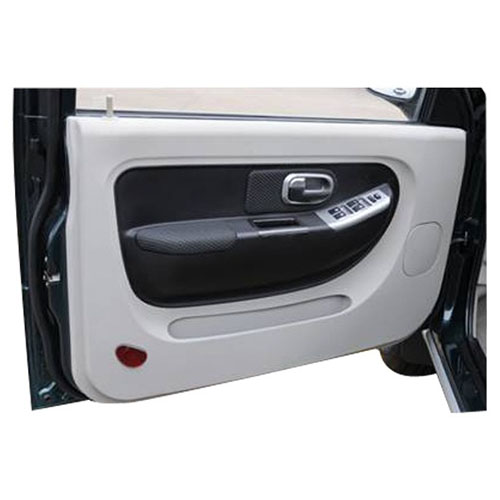
injection-molded car door panel for heavy duty vehicles
The injection-molded car door panel is an interior and exterior door trim component manufactured by injection molding, suitable for passenger cars, commercial vehicles, and special vehicle door body structures.
Description
The injection-molded car door panel is based on engineering plastic materials and high-precision tooling; through structural reinforcement and precise-fit design, it meets impact and vibration strength requirements while offering good surface appearance, weather resistance, and assembly consistency, making it an important component for door lightweighting and modular assembly.
Core features:
- Precision injection molding: High-precision molds and stable injection processes ensure consistent critical mating surfaces and snap-fit dimensions, facilitating rapid assembly and mass production; supports one-shot molding or multi-cavity combined molding processes.
- Diverse material options: Common materials include PP, ABS, PC/ABS copolymers, TPO, PA, etc.; materials can be selected according to mechanical, temperature, and surface requirements, and support glass-fiber reinforcement, flame-retardant, or weather-resistant modified formulations.
- Structural reinforcement and lightweighting: Through optimization of reinforcing ribs, webs, and honeycomb/grille structures, rigidity and mass control are balanced to meet load-bearing and anti-deformation requirements while reducing weight.
- Surface quality and decorative treatments: Supports glossy or textured finishes, painting, soft-touch coatings, anodized parts and decorative trim insertions, silk-screening, and heat transfer; colors and textures can be customized to OEM requirements or customer samples.
- Installation and functional integration: Can reserve or embed standoffs, metal inserts, snap-fit locations, locating pins, and wiring harness channels; supports integrated installation of door handles, speakers, trim, airbags, and latch mechanisms.
- Durability and environmental performance: Materials and processes meet requirements for high/low temperature cycling, salt spray, and UV aging; surfaces are wear- and stain-resistant; recycled material ratios can be used on request and comply with industry environmental regulations such as RoHS and REACH where applicable.
- Noise insulation and sealing design: By providing built-in slots for sound-deadening materials, reserved gasket grooves, and optimized joints, in-cabin NVH performance is improved while ensuring sealing and waterproofing.
Production and delivery capabilities for the injection-molded car door panel:
- Mold development and sampling: Provide mold design reviews, CAE structural verification, trial molding, and small-batch sample validation services.
- Mass production capability: Possess medium-to-large scale injection molding capacity, supporting delivery of fully assembled parts or semi-finished products.
- Packaging and logistics: Provide dedicated protective packaging solutions according to door panel size, and support staged deliveries and JIT services.
Application scenarios for the injection-molded car door panel:
- Interior and exterior door panels and door trim components for passenger cars, commercial vehicles, and special-purpose vehicles.
- Door covers for construction vehicles, agricultural machinery, or engineering equipment customized as required.
- Bulk supply for automotive repair, modification, or replacement parts markets.