
 English
  Français
  Tiếng Việt
  Italiano
  Nederlands
  Türkçe
  Svenska
  Polski
  Română
  Latviešu
  한국어
한국어  Русский
  Español
  Deutsch
  Українська
  Português
  العربية
  Indonesian
  Čeština
  Suomi
Suomi  Eesti
Eesti  Български
  Dansk
Dansk  Lietuvių
  Bokmål
  Slovenčina
  Slovenščina
  Ελληνικά
  Magyar
  עברית
עברית 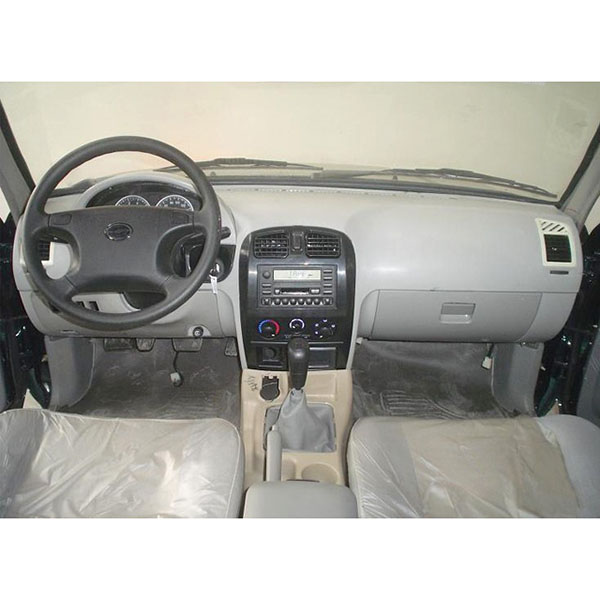
injection-molded automotive dashboard for vehicles
The injection-molded automotive dashboard is an instrument panel and center-console assembly manufactured by injection molding, suitable for passenger cars, commercial vehicles, and special vehicles.
Description
The injection-molded automotive dashboard uses engineering plastics as the base material, combined with high-precision tooling and structured design. Through integral molding or multi-piece assembly, it achieves high strength, lightweighting, and excellent surface quality, meeting whole-vehicle assembly and NVH (noise, vibration, and harshness) control requirements.
Core features:
- Precision injection molding: High-precision molds and stable injection processes ensure consistent critical mating surfaces, tolerance control, and snap-fit reliability, facilitating production-line assembly and maintenance replacement.
- Diverse material options: Common materials include PP, ABS, PC/ABS, TPO, PBT, etc.; glass-fiber reinforcement, flame-retardant modifications, and weather-resistant formulations are supported to meet strength, temperature, and surface requirements.
- Structural and functional integration: Reinforcing ribs, support frames, insert locations, and wiring-harness channels can be integrated in one-shot or modular designs; provisions can be reserved for speakers, air-conditioning vents, sensors, and airbag installation.
- Surface and tactile treatments: Supports glossy or textured finishes, painting, soft-touch coatings, leather-grain film, silk-screening, and heat transfer processes to meet interior styling and durability requirements.
- Sound insulation and thermal management: Built-in slots for sound-deadening materials and heat-dissipation flow structures improve in-cabin NVH performance and optimize electronic component cooling.
- Durability and safety: Materials and structural designs support high/low temperature cycling, UV resistance, chemical corrosion resistance, and impact performance, complying with vehicle safety and service-life requirements.
Technical specifications and customizable options:
- Dimensions and wall thickness: Wall thickness distribution is optimized according to vehicle cavity structure, with strict tolerance control on critical mating surfaces.
- Fastening and connection methods: Various clip types, rivet points, embedded metal standoffs, or self-tapping screw bosses can be designed to suit assembly processes.
- Surface levels: Offer multiple surface treatments from as-molded plastics to painted plus soft-touch layers; colors and textures can be customized to OEM or customer samples.
- Functional modules: Can integrate instrument display openings, air vents, button and touch-panel provisions, speaker supports, and airbag mounting structures.
Application scenarios:
- Dashboards, center consoles, and trim components for passenger cars, SUVs, MPVs, and commercial vehicles.
- Custom instrument and control console panels for special-purpose and construction vehicles.
- Bulk supply for automotive repair, modification, and replacement parts markets.