
 English
  Français
  Tiếng Việt
  Italiano
  Nederlands
  Türkçe
  Svenska
  Polski
  Română
  Latviešu
  한국어
한국어  Русский
  Español
  Deutsch
  Українська
  Português
  العربية
  Indonesian
  Čeština
  Suomi
Suomi  Eesti
Eesti  Български
  Dansk
Dansk  Lietuvių
  Bokmål
  Slovenčina
  Slovenščina
  Ελληνικά
  Magyar
  עברית
עברית 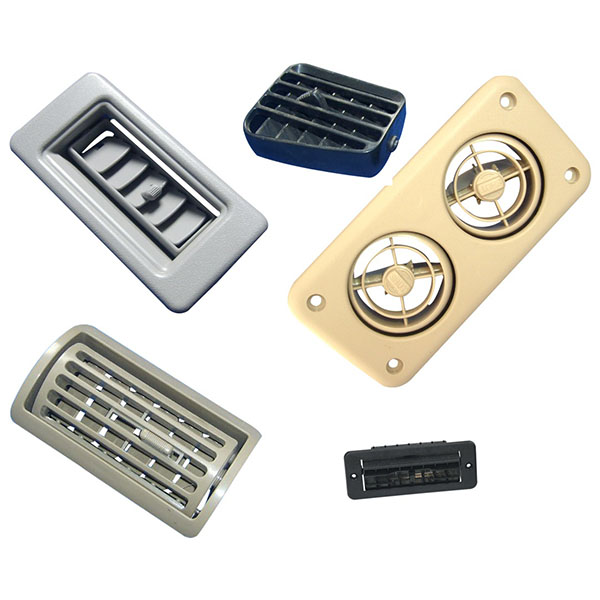
injection-molded air conditioner vent for HVAC use cases
The injection-molded air conditioner vent is an air outlet component manufactured using injection molding technology, suitable for household and commercial HVAC systems, indoor fresh-air systems, cabinet and electronic equipment ventilation outlets, and similar scenarios.
Description
The injection-molded air conditioner vent uses engineering plastic as the base material and, through mold-based mass production, ensures dimensional consistency and structural strength. Combined with a low-noise aerodynamic design and various surface treatment processes, it meets air distribution performance requirements while also addressing appearance and durability.
Core features of the injection-molded air conditioner vent:
- Precision injection molding: high-precision molds and stable injection processes ensure consistent vent dimensions and accurate fits, facilitating rapid assembly and mass production.
- Multiple material options: common materials include ABS, PC, PP, POM, etc.; flame-retardant (UL94), weather-resistant/UV-resistant formulations and chemical-resistance grades are available, and material formulations can be customized according to the operating environment.
- Optimized aerodynamic design: louvers and guide structures are optimized via aerodynamic simulation to provide uniform airflow distribution and reduce flow noise, supporting fixed or adjustable-angle louver designs.
- Surface and appearance treatments: supports texturing, glossy/matte spraying, silk-screen printing, heat transfer printing, painting, and other surface treatments; colors can be customized to RAL/Pantone or customer samples, ensuring high visual consistency.
- Installation and fastening options: offers embedded snap-fits, screw holes, flanges, or slot-type mounting structures to accommodate different panel thicknesses and installation conditions; supports gaskets or sponge seals to enhance sealing performance.
- Functional integration: can integrate filter slots, flame-retardant baffles, deflectors, orientation locking mechanisms, or airtight valves; provisions for mounting sensors/anemometers can be reserved to enable intelligent monitoring.
- Durability and easy maintenance: shell formulations provide impact and aging resistance; louver designs allow easy removal and cleaning, suitable for long-term use and maintenance.
Application scenarios:
- Supply outlets and terminal grilles for residential and commercial air conditioning systems and central air-conditioning;
- Supply and return outlets for fresh air/purification systems;
- Ventilation and heat-dissipation guide components for cabinets, servers, and precision equipment;
- Air vents for automobiles or special vehicles (if customized to vehicle specifications);
- Custom ventilation solutions for medical equipment, laboratories, and cold-chain equipment.