
 English
  Français
  Tiếng Việt
  Italiano
  Nederlands
  Türkçe
  Svenska
  Polski
  Română
  Latviešu
  한국어
한국어  Русский
  Español
  Deutsch
  Українська
  Português
  العربية
  Indonesian
  Čeština
  Suomi
Suomi  Eesti
Eesti  Български
  Dansk
Dansk  Lietuvių
  Bokmål
  Slovenčina
  Slovenščina
  Ελληνικά
  Magyar
  עברית
עברית 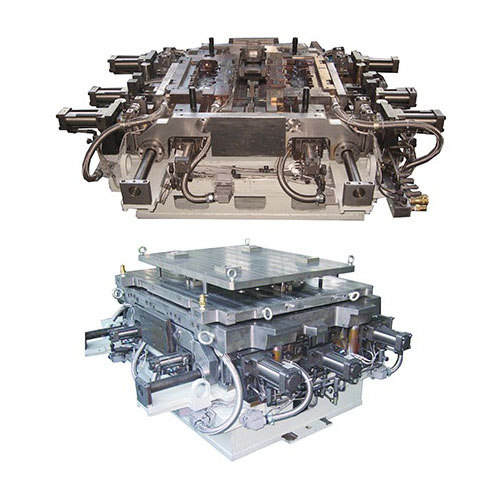
hot-box core box casting mold for heavy-duty use and more
hot-box core box casting mold is a specialized mold for producing heat-cured sand cores, suitable for sand-core production in the foundry industry where rapid forming, high output and stable dimensions are required.
hot-box core box casting mold, combined with the hot-box process, cures a sand mixture containing a heat-curing agent by placing it into the mold cavity and applying heat, enabling the rapid production of sand cores with good surface finish and stable geometric dimensions to meet continuous and high-volume casting demands. Mold materials and structures can be selected from aluminum alloys, engineering plastics or steels according to core size, complexity and production requirements, and critical wear areas can be treated for wear resistance or surface hardened.
Main features and advantages:
- High production efficiency: the hot-box process cures quickly and is suitable for assembly-line production, significantly increasing output and reducing unit cost.
- Dimensional stability and repeatability: precision machining of the mold and temperature-control design ensure consistent core dimensions, facilitating interchangeability of castings and subsequent assembly.
- Support for complex structures: capable of forming thin-walled, deep, multi-cavity and complex internal-geometry sand cores, meeting the internal design requirements of complex castings.
- Excellent surface quality: sand cores have smooth surfaces, which benefits the internal surface quality of castings and reduces cleaning and rework.
- Durable and easy to maintain: molds use sound structural design and wear-resistant materials, allowing local replacement and routine maintenance to reduce downtime.
- Customizable: cavity shapes, core ejection ports, vent locations and temperature-control systems can be customized according to drawings, samples or on-site data to suit different processes and production lines.
Materials and process control:
hot-box core box casting mold commonly uses high-precision aluminum alloys, engineering plastics such as polyamides, and low-carbon or alloy steels; material selection depends on production volume, service life and thermal conductivity requirements. Key manufacturing steps include CAD/CAE design, mold machining (CNC milling, wire EDM, mirror polishing, etc.), assembly, commissioning and trial production. For the heat-curing process, heating channels, insulation structures and temperature control systems must be properly designed to ensure uniform core curing and minimize thermal deformation.
Quality assurance and inspection:
- Dimensional inspection: use gauges or CMM to ensure that mold and trial cores meet the design tolerances.
- Surface quality inspection: check mold cavity and core surfaces to ensure core surface roughness meets process requirements.
- Temperature control and curing validation: verify core curing behavior and internal strength through temperature monitoring and cure-time validation.
- Durability testing: conduct life tests under actual production conditions to assess mold wear and determine necessary maintenance intervals.
- Final inspection before shipment: provide inspection records and required technical specifications to ensure smooth installation and commissioning after delivery.
Typical applications and recommendations:
hot-box core box casting mold is widely used in foundry sand-core production lines, especially for castings that require complex internal cavities such as engine blocks, pump housings, valve bodies and gear housings.