
 English
  Français
  Tiếng Việt
  Italiano
  Nederlands
  Türkçe
  Svenska
  Polski
  Română
  Latviešu
  한국어
한국어  Русский
  Español
  Deutsch
  Українська
  Português
  العربية
  Indonesian
  Čeština
  Suomi
Suomi  Eesti
Eesti  Български
  Dansk
Dansk  Lietuvių
  Bokmål
  Slovenčina
  Slovenščina
  Ελληνικά
  Magyar
  עברית
עברית 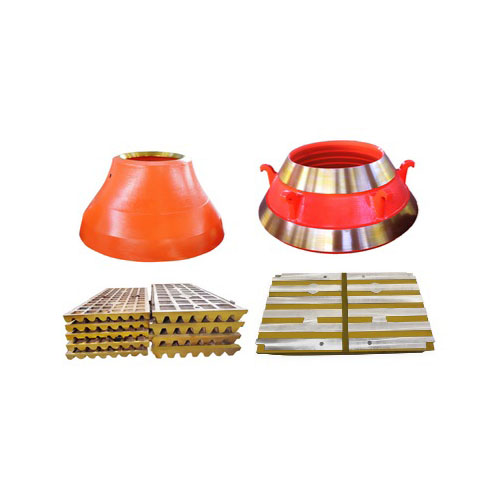
high manganese steel casting for wear resistance in mines
High manganese steel castings are made from wear‑resistant alloy materials with a high manganese content and possess outstanding impact toughness and work‑hardening capability.
When a workpiece is subjected to impact or frictional loads, its surface undergoes plastic deformation and forms a high‑hardness hardened layer, thereby significantly improving wear resistance and service life.
High manganese steel castings are suitable for heavy‑duty, high‑impact conditions such as mining crushing, sand making, feeding, conveying and washing/processing, and are the preferred replacement for conventional cast steel or low‑alloy steel parts.
Main Features of High Manganese Steel Castings
- Wear resistance: the surface work‑hardens under impact and friction to form a dense, high‑hardness working layer, significantly extending service life.
- Excellent impact resistance: the substrate maintains high toughness and can withstand repeated impacts and collisions without cracking.
- Long life and low maintenance: more durable than traditional materials, reducing spare‑part replacement frequency and maintenance costs.
- Good reparability: after appropriate heat treatment and process control, parts can be machined, welded and repaired by overlay welding, facilitating on‑site maintenance and refurbishment.
- Customizable: supports customization to drawings, samples or service conditions for dimensions, wall thickness, reinforcement structures and treatment of critical mating surfaces.
Materials and Processes
- Typical alloy composition: high manganese steel with Mn content typically in the range of about 10%–14%; C, Si, Ni, Cr and other element levels can be adjusted according to service conditions to optimize performance.
- Main process flow: drawing confirmation → pattern and core box making → melting → pouring/casting → cooling and sand removal → initial heat treatment → rough and finish machining (turning, milling, boring, etc.) → working‑surface refurbishment or overlay welding → surface treatment → inspection and packing for shipment.
- Heat treatment and process control: to ensure substrate toughness and surface hardening performance, melting temperature, pouring practice, cooling rate and subsequent heat treatments must be strictly controlled; for special parts, directional quenching or local reinforcement treatments can be applied.
Quality Control
- Chemical composition testing: use spectrometric analysis or other methods to verify alloy composition and manganese content meet design requirements and provide material certificates (MTC).
- Metallographic inspection: perform metallographic analysis to evaluate microstructure uniformity and the presence of inclusions or graphite (as required).
- Nondestructive testing: carry out ultrasonic, radiographic or magnetic particle inspection as required to detect internal cracks, porosity and inclusions.
- Dimensional and tolerance inspection: use a coordinate measuring machine (CMM) or specialized gauges to verify critical dimensions, fit tolerances and geometric shape.
- Mechanical property testing: tensile, hardness and impact tests can be provided according to customer requirements, with test reports.
- Final inspection: critical parts can undergo trial assembly or simulated service condition testing to ensure fit and interchangeability.
Typical Applications
High manganese steel castings are widely used for mining crushing equipment (jaw plates, hammer heads, liners), sand making and washing equipment (cone liners, cone shells, impeller liners), conveying and crushing systems (liners, wear parts), wear components in the metallurgical and building materials industries, tunnel and mining equipment, and other key components operating under high‑impact, high‑wear conditions.