
 English
  Français
  Tiếng Việt
  Italiano
  Nederlands
  Türkçe
  Svenska
  Polski
  Română
  Latviešu
  한국어
한국어  Русский
  Español
  Deutsch
  Українська
  Português
  العربية
  Indonesian
  Čeština
  Suomi
Suomi  Eesti
Eesti  Български
  Dansk
Dansk  Lietuvių
  Bokmål
  Slovenčina
  Slovenščina
  Ελληνικά
  Magyar
  עברית
עברית 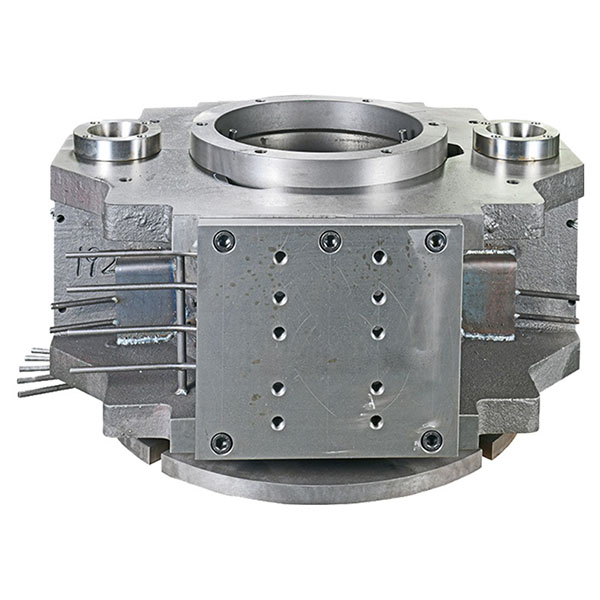
gravity die casting molds for complex metal assemblies
Gravity die casting molds are precision-machined from wear-resistant materials with good thermal conductivity, ensuring stable cavity dimensions and uniform solidification, thereby improving casting consistency, surface quality and repeatability, and reducing downstream machining costs.
Gravity die casting molds are specifically designed and manufactured for the gravity pouring process, suitable for small-to-medium and mass production of alloys such as aluminum, copper, magnesium and zinc.
Main features of gravity die casting:
- High dimensional stability: Through precision machining and heat treatment processes, the molds maintain stable cavity dimensions and geometric accuracy during repeated pours, facilitating reproducible production.
- Excellent thermal conduction and cooling control: Mold material and cooling design enable uniform solidification, reducing the risk of shrinkage cavities, sinks and internal stress-related defects.
- Wear and corrosion resistance: Surfaces are treated by nitriding, carburizing or wear-resistant coatings to extend mold life and reduce maintenance frequency.
- Maintainability by design: Mold structures are designed for easy replacement of wear parts (such as cores, bushings and gating assemblies), reducing downtime and controlling operating costs.
- Flexibility and modifiability: Support for minor cavity modifications, core adjustments and cold-runner/system optimization, enabling rapid iteration based on casting trial results.
Mold structure and material selection:
- Common materials: High-strength mold steels, preformed heat-resistant cast iron or specialized alloy steels are selected according to production volume, alloy type and process requirements.
- Structural design: Reasonable parting surfaces, gating and riser systems, venting and overflow channel design, combined with mold reinforcing ribs and locating pins, ensure smooth filling and reliable mold closure.
- Cooling system: Water or oil cooling circuit layouts are optimized according to cavity shape and solidification needs, supporting localized rapid cooling or insulation control.
Mold manufacturing processes:
- Precision machining: CNC milling, wire EDM, spark erosion (EDM) and precision grinding processes are used to ensure high accuracy of mold cavities and locating surfaces.
- Heat treatment and tempering: Appropriate heat treatment is applied to relieve internal stresses and increase fatigue strength, ensuring long-term mold stability.
- Surface treatments: Depending on operating conditions, nitriding, hard chrome plating or ceramic/thermal-spray surface reinforcement processes are selected to enhance anti-stick, wear and corrosion resistance.
Typical application scenarios:
Gravity die casting molds are widely used for batch production of automotive parts, pump and valve bodies, lighting heat sinks, structural brackets, instrument housings and various medium-to-large metal components, and are suitable for products with high requirements for dimensional consistency and surface quality.