
 English
  Français
  Tiếng Việt
  Italiano
  Nederlands
  Türkçe
  Svenska
  Polski
  Română
  Latviešu
  한국어
한국어  Русский
  Español
  Deutsch
  Українська
  Português
  العربية
  Indonesian
  Čeština
  Suomi
Suomi  Eesti
Eesti  Български
  Dansk
Dansk  Lietuvių
  Bokmål
  Slovenčina
  Slovenščina
  Ελληνικά
  Magyar
  עברית
עברית 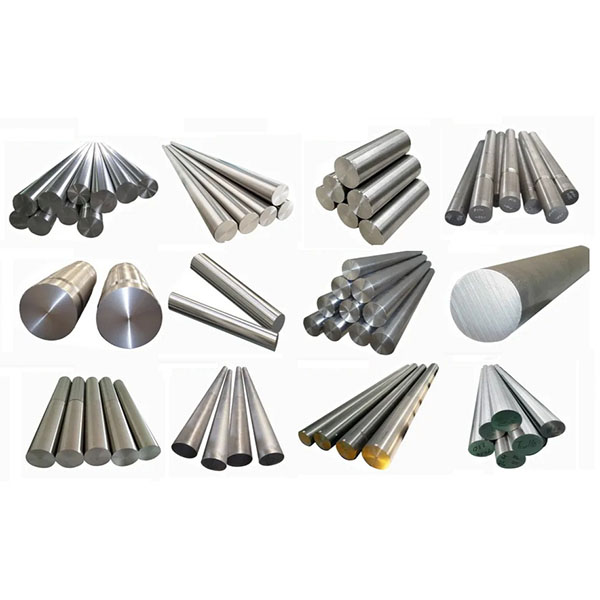
forged titanium alloy components for high performance use
forged titanium alloy components are made from high-performance titanium alloys and manufactured through a process route that combines forging and precision machining, suitable for critical components that demand strict requirements for strength, toughness, corrosion resistance and lightweighting.
titanium alloy materials have excellent specific strength and resistance to seawater and chemical corrosion, enabling forgings to perform exceptionally well in aerospace, medical, marine engineering, chemical, and high-end industrial equipment.
manufacturing process:
- forging forming: drop-hammer, hydraulic forging, closed-die forging and other processes are used to optimize metal flow lines, refine the microstructure and eliminate casting defects, improving control over porosity and segregation.
- solution treatment and aging, heat treatment: solution treatment, aging or other thermal processes are applied according to alloy type to achieve the desired balance of strength and toughness.
- precision machining: key mating surfaces and functional holes are machined using cnc turning, cnc milling, grinding and edm to ensure dimensional accuracy and surface quality.
- surface treatment and protection: surface treatment options such as anodizing, chemical polishing, shot peening or coatings are offered and selected according to the service environment to improve wear resistance, fatigue resistance and corrosion resistance.
- non-destructive assembly and joining processes: for composite structures requiring welding, brazing or mechanical assembly, strict assembly procedures and quality control processes are implemented to ensure joint reliability.
performance characteristics of forged titanium alloy components:
- lightweight and high strength: titanium alloys have an excellent strength-to-weight ratio, enabling significant structural weight reduction without sacrificing load-bearing capacity.
- excellent corrosion resistance: they exhibit good resistance to seawater, salt spray and various chemical media, making them suitable for marine and chemical environments.
- good fatigue performance and toughness: proper forging and heat treatment processes can achieve excellent fatigue life and impact resistance.
- biocompatibility: some pure titanium grades and specific alloys meet material standards for medical devices and implants.
- machinability and assembly friendliness: after precision machining, they offer good interchangeability, facilitating subsequent assembly and maintenance.
applications:
forged titanium alloy components are widely used in aerospace structural parts, engine components, medical device components, marine engineering connectors, chemical and oil & gas equipment, racing and high-end sports equipment, precision machinery and transportation equipment, and other scenarios that require lightweighting, high strength and corrosion resistance.