
 English
  Français
  Tiếng Việt
  Italiano
  Nederlands
  Türkçe
  Svenska
  Polski
  Română
  Latviešu
  한국어
한국어  Русский
  Español
  Deutsch
  Українська
  Português
  العربية
  Indonesian
  Čeština
  Suomi
Suomi  Eesti
Eesti  Български
  Dansk
Dansk  Lietuvių
  Bokmål
  Slovenčina
  Slovenščina
  Ελληνικά
  Magyar
  עברית
עברית 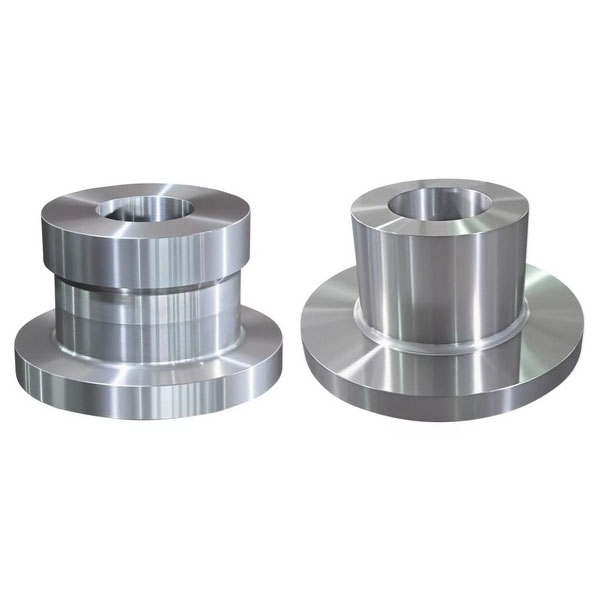
forged pipe flange for durable high pressure pipeline use
Compared with cast flanges or forged-and-welded flanges, forged flanges offer superior strength, toughness, and fatigue resistance, making them suitable for pipeline system connections and sealing requirements under high pressure, high temperature, and severe operating conditions.
The forged pipe flange is produced by forging processes and features a dense metallographic structure and excellent mechanical properties.
Materials and models:
- Common materials: carbon steel (e.g., A105, WCB), alloy steel (e.g., F11, F22), stainless steel (e.g., 304, 316, 316L), duplex steel and corrosion-resistant alloys.
- Types and specifications: supports various flange types — slip-on flanges, butt-weld flanges, socket-weld flanges, blind flanges, weld-neck flanges, etc. — and materials and dimensions can be customized according to customer drawings or standards.
- Material certificates: material test certificates (MTC), third-party inspection certificates, and reports of chemical composition and mechanical properties can be provided.
Manufacturing process of forged pipe flange:
- Forging blanks: high-quality forging blanks are selected, with strict control of chemical composition and forging temperature to ensure a dense, porosity-free internal structure.
- Hot working: open-die or closed-die forging processes are used to form the flange blank, ensuring dense structure and uniform mechanical properties.
- Machining: CNC turning, milling, drilling, and multi-axis machining are used to finish the flange face, flange holes, and neck, ensuring fitment accuracy and sealing surface finish.
- Heat treatment: normalizing, quenching and tempering, or annealing is performed according to the material to stabilize the structure and improve strength and toughness.
- Surface treatment: phosphating, sandblasting, painting, electroplating, or polishing; stainless steel products can be passivated to enhance corrosion resistance.
Performance features of forged pipe flange:
- High strength and high toughness, excellent impact and fatigue resistance.
- Accurate dimensions and high concentricity, facilitating pipeline installation and sealing.
- Good pressure, temperature, and corrosion resistance, suitable for harsh operating conditions.
- High consistency between welding performance and machined surfaces, facilitating subsequent installation and maintenance.
Applications:
Widely used in oil and gas, petrochemical, chemical, power generation, shipbuilding and offshore engineering, boilers and pressure vessels, water supply and drainage, metallurgy, pharmaceuticals, papermaking, and other industries; suitable for projects with high pressure and temperature, corrosive media, and high reliability requirements.