
 English
  Français
  Tiếng Việt
  Italiano
  Nederlands
  Türkçe
  Svenska
  Polski
  Română
  Latviešu
  한국어
한국어  Русский
  Español
  Deutsch
  Українська
  Português
  العربية
  Indonesian
  Čeština
  Suomi
Suomi  Eesti
Eesti  Български
  Dansk
Dansk  Lietuvių
  Bokmål
  Slovenčina
  Slovenščina
  Ελληνικά
  Magyar
  עברית
עברית 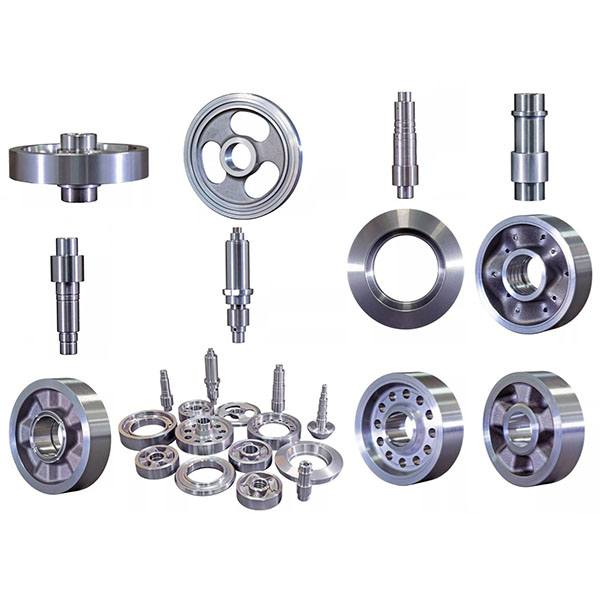
forged automotive parts engineered for lasting strength
Forged automotive parts are critical load-bearing and transmission components manufactured by forging processes, featuring a dense metallographic structure and excellent mechanical properties.
Compared with cast or welded parts, forged parts offer significant advantages in strength, toughness, fatigue resistance and impact resistance. They are suitable for critical areas such as engines, drivetrains, chassis and suspension, ensuring vehicle safety and reliability under complex operating conditions and high load conditions.
Materials and common part types:
- Common materials: carbon and alloy steels (e.g., 45#, 20CrMnTi, 42CrMo, 35CrMo, SCM435, etc.). Low-alloy carburizing steels and quenched-and-tempered steels are used to balance surface wear resistance and core toughness; stainless steels or corrosion-resistant alloys are used for special environments or component requirements.
- Typical parts: crankshafts, connecting rods, gears, wheel hubs, bearing housings, steering gear housings, driveshaft splines, flanges, pins, bushings, fasteners, etc.
- Specification support: dimensions, tolerances and heat-treatment depths can be customized according to customer drawings or samples; single-piece prototypes, small-batch pilot runs and mass production are supported.
- Certificates and reports: material test certificates (MTC), chemical composition and mechanical property reports can be provided; third-party inspection and certification are supported.
Manufacturing process:
- Forging: open-die or closed-die forging is used to optimize metal fiber flow, reduce internal defects, and improve microstructural density and mechanical uniformity.
- Heat treatment: normalizing, quenching and tempering, carburizing or quench-and-temper processes are applied according to material and service requirements to achieve the required surface hardness and core toughness.
- Precision machining: CNC turning, milling, grinding, gear machining, deep-hole machining and multi-axis machining centers are used to machine critical dimensions, mating surfaces and transmission components, ensuring interchangeability and assembly accuracy.
- Surface strengthening: optional processes include carburizing + quenching, nitriding, induction hardening, shot peening, carbonitriding, etc., to enhance surface wear resistance and fatigue life.
- Surface protection: sandblasting, phosphating, galvanizing, chrome plating, thermal spray coating or painting are applied to meet corrosion protection, rust prevention and appearance requirements.
Performance characteristics of forged automotive parts:
- High strength and high toughness: forging microstructure combined with appropriate heat treatment provides excellent load-bearing capacity and impact resistance.
- Excellent fatigue resistance: continuous fiber flow and absence of harmful casting defects significantly improve fatigue life, making forged parts suitable for cyclic load conditions.
- Good dimensional stability and interchangeability: precision machining and strict inspection ensure accurate fitment and ease of maintenance and replacement.
- Localized performance optimization: by selecting suitable materials, heat treatments and surface-strengthening combinations, a hard, wear-resistant surface layer can be achieved while retaining core toughness.
- Reliable durability: suitable for high-temperature, high-load and frequent-impact service scenarios, reducing failure rates and maintenance frequency.
Applications:
Forged automotive parts are suitable for critical areas of passenger cars, commercial vehicles, construction vehicles and special-purpose vehicles, including engine and driveline systems, gearboxes, differentials, drive axles, suspension and chassis components. They can also be applied to racing cars, performance upgrade parts and high-performance industrial transmission equipment.