
 English
  Français
  Tiếng Việt
  Italiano
  Nederlands
  Türkçe
  Svenska
  Polski
  Română
  Latviešu
  한국어
한국어  Русский
  Español
  Deutsch
  Українська
  Português
  العربية
  Indonesian
  Čeština
  Suomi
Suomi  Eesti
Eesti  Български
  Dansk
Dansk  Lietuvių
  Bokmål
  Slovenčina
  Slovenščina
  Ελληνικά
  Magyar
  עברית
עברית 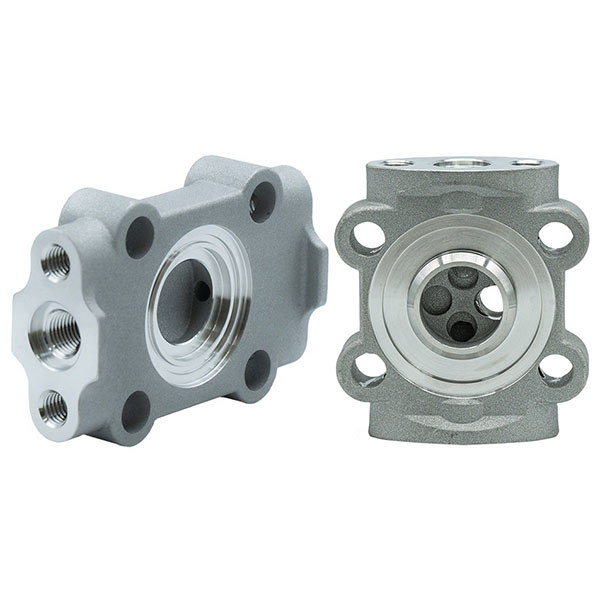
flange casting for reliable piping and pressure work
Flange casting provides high-strength cast flanges for pipeline and equipment connections, and is widely used for pipe interfaces, equipment connections and sealing and positioning at pressure-bearing locations.
Depending on the service conditions, flange casting can be made from gray cast iron, ductile (nodular) cast iron, stainless steel, alloy steel, copper alloys or corrosion-resistant alloys. It can meet the requirements of conventional transfer systems and is also suitable for demanding conditions such as high temperature, high pressure, seawater and corrosive media. Flange casting can be manufactured to ANSI, DIN, JIS, GB and other flange standards, and special sizes and non-standard customizations are supported.
Key features of flange casting:
- High strength and durability: the integral cast structure provides uniform stress distribution and is suitable for conditions subject to high stress and long-term cyclic loads.
- High sealing-face accuracy: flange sealing faces are precision machined to ensure flatness and concentricity of the sealing surface, reducing leakage risk and enabling reliable sealing.
- Multiple material options: suitable materials such as 304 and 316 stainless steel, alloy steels or corrosion-resistant alloys can be selected according to the media and service conditions to meet corrosion and wear resistance requirements.
- Machining accuracy and interchangeability: critical holes, bolt holes and flange faces can be finish machined and drilled/tapped to ensure interchangeability with pipelines and equipment.
- Customizable: supports manufacturing to drawings, samples or customer specifications, including special hole patterns, reinforced (thicker) designs, added ribs or flow-guide grooves.
- Easy installation: proper dimensions and standardized hole patterns facilitate on-site installation and maintenance, reducing installation costs.
Materials and processes:
- Common materials: gray cast iron, ductile (nodular) cast iron, stainless steel (304, 316, 316L), carbon and alloy steels, copper alloys and corrosion-resistant alloys.
- Main process flow: design confirmation, pattern and core box making, melting and charge preparation, casting and molding, sand removal and surface treatment, heat treatment (stress relief or quenching and tempering), rough and finish machining (turning, milling, drilling, tapping), sealing-face processing, flange face turning or grinding, surface treatments (shot blasting, coating, anti-corrosion coatings), inspection and packing for shipment.
- Machining capabilities: capable of flange face turning, flatness and concentricity control, bolt hole drilling and positioning, special hole pattern machining and finish machining after heat treatment, meeting ASME, EN, ISO and other industry standards.
Application areas:
Flange casting is widely used in oil and gas, chemical and petrochemical, power and boiler systems, marine engineering and seawater desalination, water supply and municipal pipeline networks, wastewater treatment, HVAC, shipbuilding and metallurgy, for various flange connections, valve interfaces, equipment flanges and pressure-bearing piping systems.