
 English
  Français
  Tiếng Việt
  Italiano
  Nederlands
  Türkçe
  Svenska
  Polski
  Română
  Latviešu
  한국어
한국어  Русский
  Español
  Deutsch
  Українська
  Português
  العربية
  Indonesian
  Čeština
  Suomi
Suomi  Eesti
Eesti  Български
  Dansk
Dansk  Lietuvių
  Bokmål
  Slovenčina
  Slovenščina
  Ελληνικά
  Magyar
  עברית
עברית 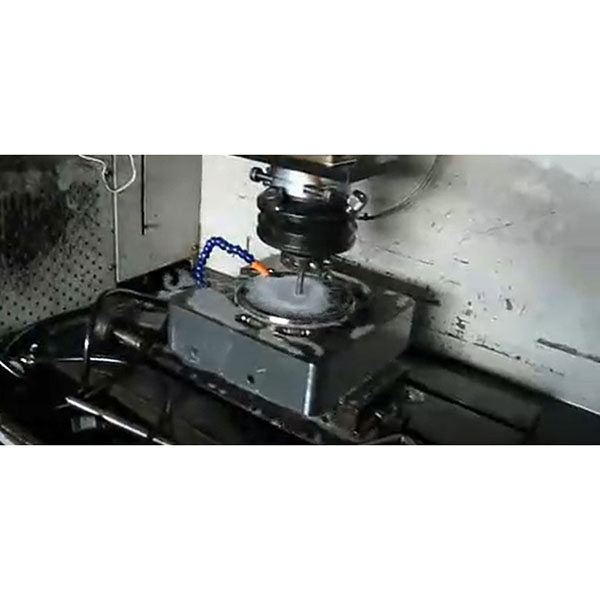
Electrical Discharge Machining for precision mold making
Electrical Discharge Machining (EDM) is a non‑conventional machining process based on pulsed discharge principles; by generating controlled electrical discharges between the electrode and a conductive workpiece in a dielectric fluid, localized melting and vaporization occur and are flushed away, thereby forming complex shapes, fine features and deep cavity profiles.
We provide a variety of EDM services including Wire EDM, Die‑sinker EDM and EDM drilling, combined with CNC control systems and mature process parameters, suitable for mold making, precision parts, hard material machining and complex internal cavity forming.
Basic principle of Electrical Discharge Machining
Controlled micro‑sparks are generated between the electrode and the workpiece by a high‑frequency pulsed power supply; each discharge instantaneously produces high temperature that melts or vaporizes a micro area of material, and the dielectric fluid (typically oil or deionized water) provides cooling, insulation and flushing of debris. The process does not rely on mechanical cutting forces, so it can machine brittle and high‑hardness materials.
Main types of EDM
- Wire EDM (Wire EDM / WEDM): uses an electrode wire (typically brass or alloy wire) that moves along a predefined path to cut the workpiece, suitable for complex 2D contours and mold cavity splitting.
- Die‑sinker EDM (Die‑sinker EDM / Sinker EDM): uses a shaped electrode to spark and form three‑dimensional cavities or blind holes in the workpiece, commonly used for mold cores and cavities.
- EDM Drilling: used to machine small‑diameter deep holes or holes in conductive materials that are difficult to drill with conventional drill bits.
Advantages of EDM
- Capable of machining high‑hardness materials and heat‑treated parts, such as hardened steel, cemented carbide, tool steels and difficult‑to‑machine alloys.
- Can produce complex internal cavities, slender passages and fine contours with high geometric freedom.
- No mechanical contact cutting forces, minimal fixture deformation, suitable for thin‑walled and precision parts.
- High machining accuracy and controllable surface morphology; combined with post‑processing, it can meet mold‑grade surface requirements.
- Pulse parameters can be optimized for different workpieces and processes to balance machining speed and surface quality.
Applicable materials and machining capabilities
- Supported materials: any conductive material can be machined, including tool steel, hardened steel, stainless steel, aluminum alloys, copper and copper alloys, titanium alloys, cemented carbides, etc. Nonconductive materials require special treatment or conductive coating processes.
- Wire cutting capability: cutting wire diameters can range from 0.02 to 0.1 mm (depending on equipment and wire), suitable for complex contours and narrow‑pitch cutting.
- Die‑sinker EDM capability: electrodes can be custom made to drawing specifications, suitable for machining depth and complex surfaces. detail size and accuracy depend on electrode manufacturing precision and discharge parameters.
- Drilling capability: can machine very small diameter holes (below 0.5 mm) and high length‑to‑diameter ratio holes, suitable for fuel injector holes, cooling holes and other small‑hole requirements.
Common application scenarios
- Mold making: precision cavities, cooling channels and parting surfaces for injection molds, die casting molds and stamping dies.
- Precision parts: complex contour parts, micro devices and high‑precision transmission components.
- Aerospace and medical: complex internal cavities in high‑temperature alloys and titanium alloy components.
- Electronics and semiconductors: metal masks, heat sink channels and microstructure machining.
- Automotive industry: injector holes, fuel nozzles, transmission parts, etc.
Equipment and electrode management
- Use high‑performance CNC EDM machines, precision pulse power supplies and efficient dielectric filtration and circulation systems to ensure processing stability and repeatability.
- Electrode materials and manufacture: die‑sinker EDM electrodes can be made of copper, copper‑tungsten or graphite, and electrode manufacturing accuracy directly affects forming precision. Wire cutting uses high‑quality wire combined with tension and tension control systems to avoid vibration.
- Cooling and chip removal: efficient dielectric filtration, cooling and flushing systems are key to ensuring machining consistency and surface quality.
Quality control and inspection
- Before machining: process review, fixture positioning verification and first‑piece trial cutting inspection.
- During machining: spot checks of critical dimensions and monitoring of process parameters (pulse voltage, current, gap, feed speed, etc.).
- Final inspection: provide detailed inspection reports (dimensions, form and position tolerances, surface condition) using CMM, profile projector, surface roughness tester, microscope and visual inspection.
- Can provide Material Test Reports (MTR), heat treatment reports and batch traceability documents.