
 English
  Français
  Tiếng Việt
  Italiano
  Nederlands
  Türkçe
  Svenska
  Polski
  Română
  Latviešu
  한국어
한국어  Русский
  Español
  Deutsch
  Українська
  Português
  العربية
  Indonesian
  Čeština
  Suomi
Suomi  Eesti
Eesti  Български
  Dansk
Dansk  Lietuvių
  Bokmål
  Slovenčina
  Slovenščina
  Ελληνικά
  Magyar
  עברית
עברית 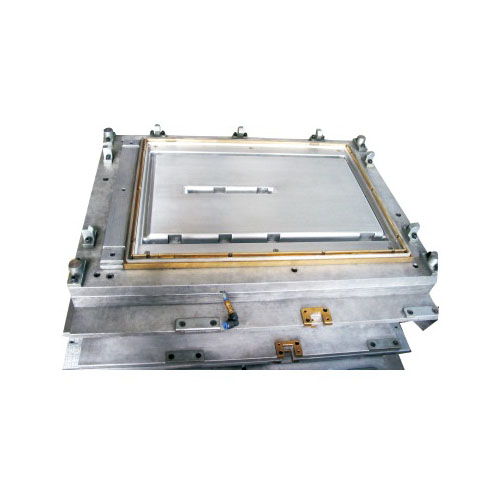
door foam mold for insulated doors with durable cores
Door foam molds are used to form one‑step foam insulation and core filling inside door panels or door cores; through injection foaming, pour‑in foaming, or pour‑casting foaming processes they create uniform closed‑cell or semi‑closed‑cell foam structures within the mold cavity.
Using door foam molds can significantly enhance a door’s thermal insulation, structural rigidity, and sound insulation performance while achieving reliable bonding between the foam and the door surface or core material. They are suitable for various door types such as exterior doors, insulated doors, cold-room doors, fire doors, industrial doors, and composite decorative doors.
Key features of door foam molds:
- Foam uniformity: Precisely designed cavities, runner systems, gate layouts, and matched foaming formulations ensure uniform foam density and closed-cell ratio, resulting in stable thermal conductivity, mechanical performance, and long-term resilience.
- Thermal insulation and thermal-bridge control: By optimizing foam layer thickness and cavity zoning, thermal-bridge paths are effectively reduced and the overall thermal resistance of the door is increased to meet building or cold-chain insulation requirements.
- Structural reinforcement and lightweighting: Integrating ribs, stiffeners, or reserved insert locations in the mold design enhances bending and compression strength while optimizing material usage to achieve a balance between strength and weight reduction.
- Sound insulation and vibration damping: Closed-cell foam structures and zoned filling designs help reduce sound transmission and improve the acoustic performance of the door, suitable for noise-sensitive applications.
- Temperature control and venting design: Properly configured heating/cooling zones and efficient venting channels optimize cure profiles, reduce bubbles and voids, and improve surface quality and yield.
- Production efficiency: Supports multi-cavity and multi-stage continuous production layouts and automated loading/unloading systems, shortening cycle times, increasing capacity, and lowering per-unit energy consumption.
- Mold life and maintenance: Uses corrosion-resistant alloy steels and surface hardening treatments, with replaceable inserts and wear parts designed for easy local repair and replacement to extend mold service life.
- Environmental performance and safety: Can be paired with low‑VOC, low‑odor, or non‑toxic foaming systems, and supports flame‑retardant formulations and material solutions that comply with applicable regulations.
Applicable materials:
Compatible with a wide range of foam material systems and composite formulations, including polyurethane (PU), polyisocyanurate (PIR), EPE, EVA, polyester-based composite foams, and other polymer composite materials. Formulations can be adjusted according to insulation performance, flame‑retardant rating, resilience, and long-term weatherability requirements.
Typical application scenarios:
Exterior doors, insulated doors, cold-room doors, cold-chain transport doors, fire partition doors, industrial and warehouse doors, soundproof and insulated doors, decorative composite doors, and other situations requiring high levels of thermal insulation, sound insulation, strength, and durability.