
 English
  Français
  Tiếng Việt
  Italiano
  Nederlands
  Türkçe
  Svenska
  Polski
  Română
  Latviešu
  한국어
한국어  Русский
  Español
  Deutsch
  Українська
  Português
  العربية
  Indonesian
  Čeština
  Suomi
Suomi  Eesti
Eesti  Български
  Dansk
Dansk  Lietuvių
  Bokmål
  Slovenčina
  Slovenščina
  Ελληνικά
  Magyar
  עברית
עברית 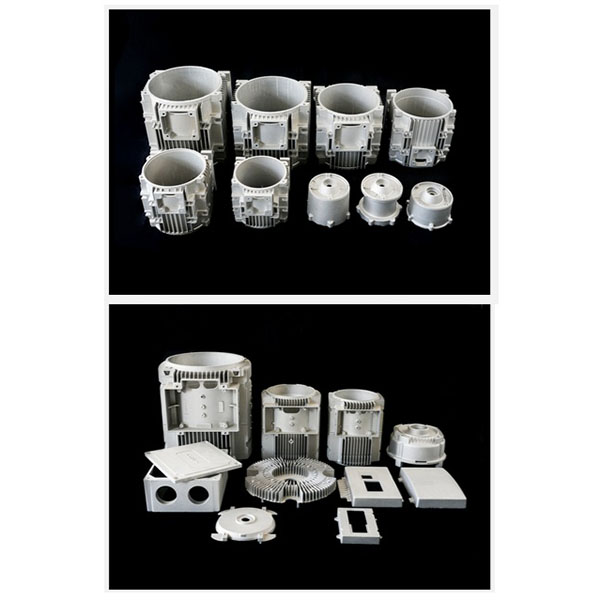
die-cast motor housing with precision cooling and vents
Die-cast motor housing is a critical component designed for motor housing structures and optimized die casting processes, suitable for high-speed mass production with light metal materials such as aluminum alloys.
Die-cast motor housings possess good structural strength, heat dissipation performance, and dimensional stability. With proper gating, venting, and post-processing operations, they can meet the requirements for long-term reliable motor operation and are widely used in motor manufacturing, new energy, household appliances, and industrial transmission equipment.
Materials and surface treatments:
- Common materials: Typically use aluminum alloys such as ADC12 and A380 or customer-specified light alloy materials, selecting the alloy grade based on required application strength and thermal performance.
- Surface treatments: Depending on the operating environment, sandblasting, polishing, anodizing, powder coating, or special anti-corrosion coatings can be provided to improve appearance and enhance corrosion resistance and insulation properties.
- Precision machining and boring: Perform precision boring or milling on critical mating surfaces to ensure the fit accuracy for motor bearings, flanges, and end covers.
Structure and design key points:
- Cavity and cooling channel design: Optimize cavity geometry and wall thickness distribution, and where necessary design internal cooling ribs or stiffening ribs to improve heat dissipation efficiency and reduce thermal deformation.
- Gating and venting layout: Arrange gates, runners, and vent grooves appropriately to reduce the risk of air entrapment, shrinkage, and cold shuts, ensuring casting density and mechanical performance.
- Machining allowances and locating datums: Reserve machining allowances for critical assembly surfaces and specify locating datums in the design to facilitate subsequent assembly and inspection.
- Structural reinforcement and weight optimization: Achieve lightweight design by adding ribs and optimizing wall thickness while ensuring strength and stiffness, reducing material and energy costs.
Manufacturing processes of die-cast motor housings:
- Die casting process control: Use appropriate filling speeds, holding pressure, and cooling curves, and optimize mold-change cycles and pouring parameters to ensure yield and dimensional stability.
- Post-processing operations: Include deburring, cleaning, heat treatment (if required), surface treatments, and precision machining to ensure surface quality and assembly fits.
- Assembly inspection: Perform assembly tests on mating surfaces, mounting holes, and locating features, and perform rework or secondary machining if necessary.
Typical application areas of die-cast motor housings:
- Various motor housings (drive motors, pump motors, fan motors, etc.).
- Motor housings for new energy and electric vehicles.
- Housings for household appliance motors and small industrial motors.
- Functional housing parts that require good heat dissipation, structural strength, and dimensional accuracy.
Die-cast motor housings possess good structural strength, heat dissipation performance, and dimensional stability. With proper gating, venting, and post-processing operations, they can meet the requirements for long-term reliable motor operation and are widely used in motor manufacturing, new energy, household appliances, and industrial transmission equipment.